
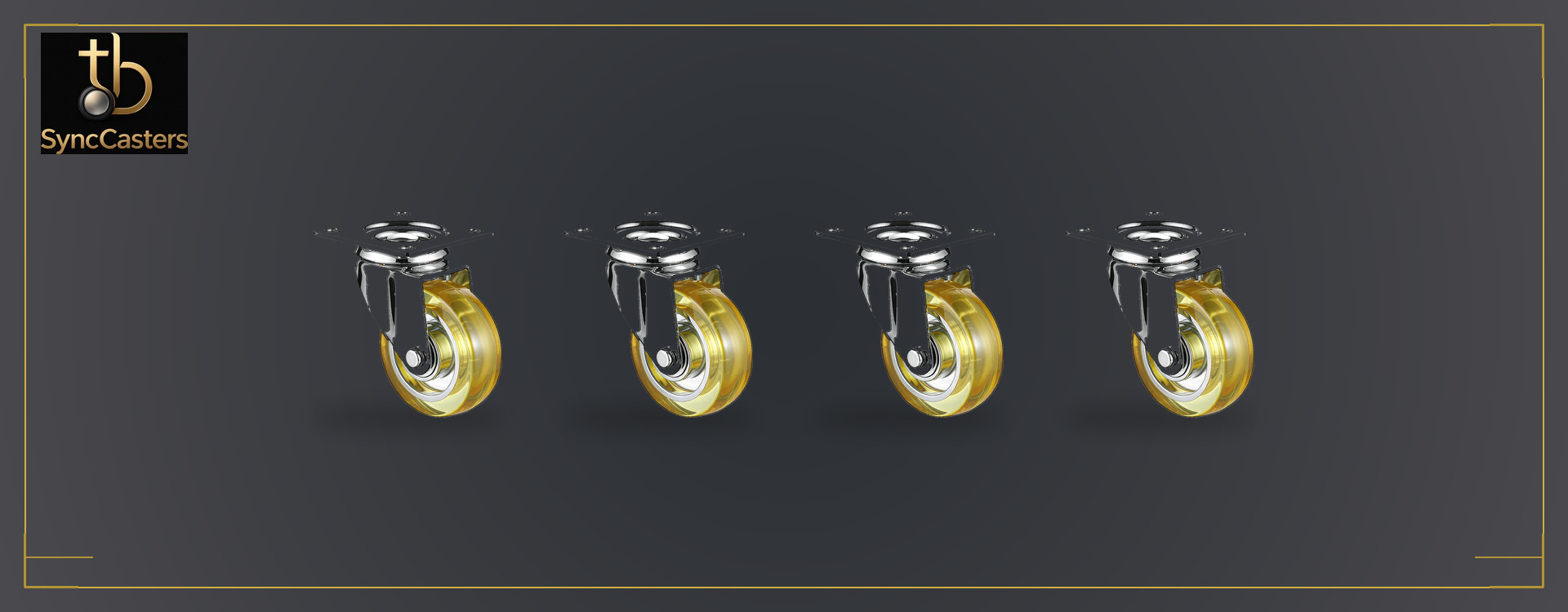
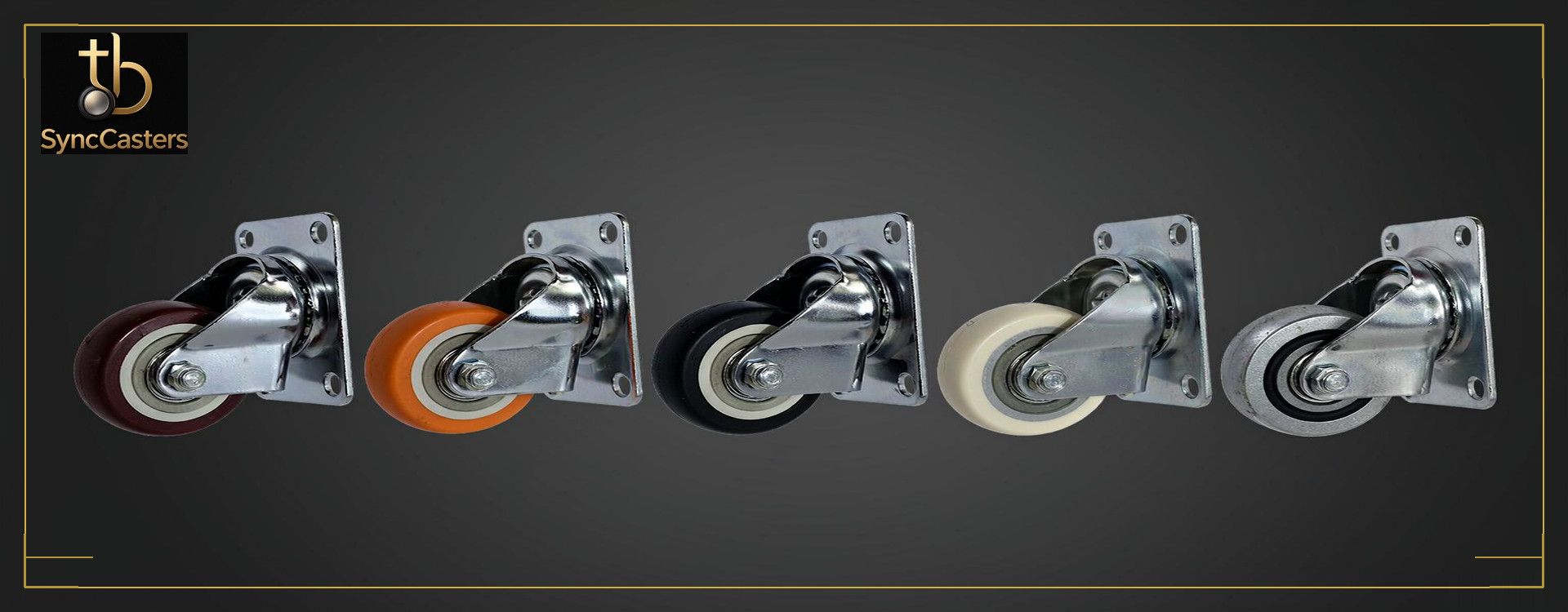
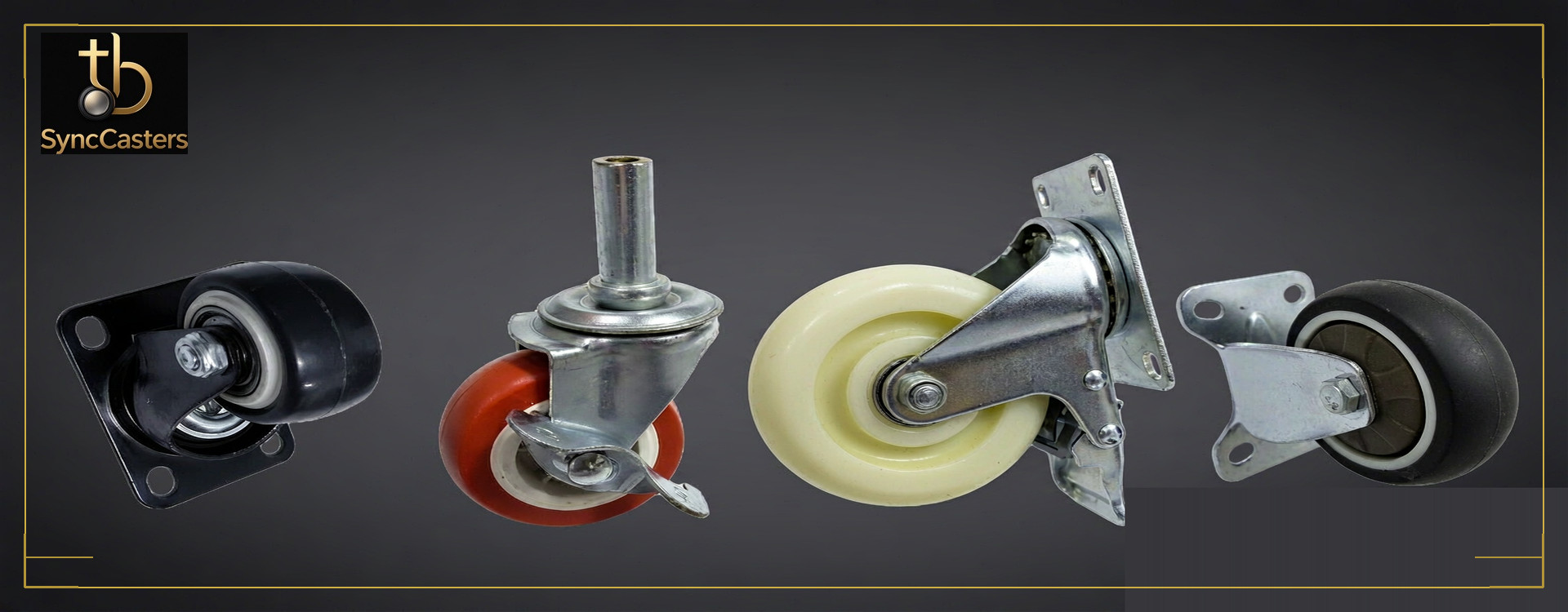
SyncCasters light duty TPR silent casters are quiet, floor-friendly wheels for furniture, trolleys and light medical equipment. Available in 1" to 3" sizes, these TPR (thermoplastic rubber) wheels deliver low noise and excellent floor protection. Swivel, rigid, single brake and double brake versions are available for different applications.
Light Duty TPR Silent Casters for Quiet Mobility
Our light duty TPR silent caster series features soft thermoplastic rubber wheels in 1" to 3" diameters, offering the quietest rolling performance in our light duty range. TPR wheels absorb vibration and protect polished floors, making them ideal for hospitals, offices, libraries and retail environments. Mounting options include swivel, rigid, single brake and double brake to cover all furniture and equipment needs.
Why Choose TPR Silent Casters
TPR wheels are made from soft thermoplastic rubber that absorbs impact and vibration, delivering whisper-quiet movement on hard floors. Unlike hard nylon wheels, TPR leaves no marks on polished surfaces and grips the floor for stable rolling. These features make TPR casters the preferred choice for hospitals, showrooms, offices and quiet environments.
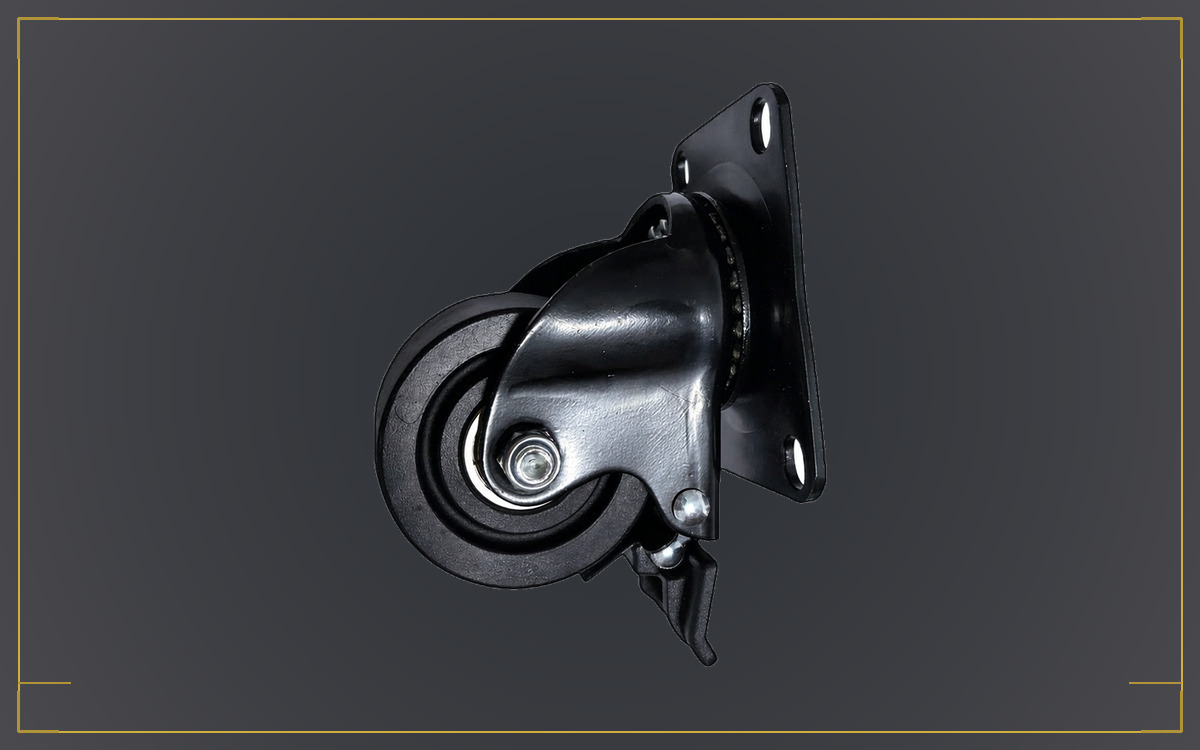
Utility Brake Caster
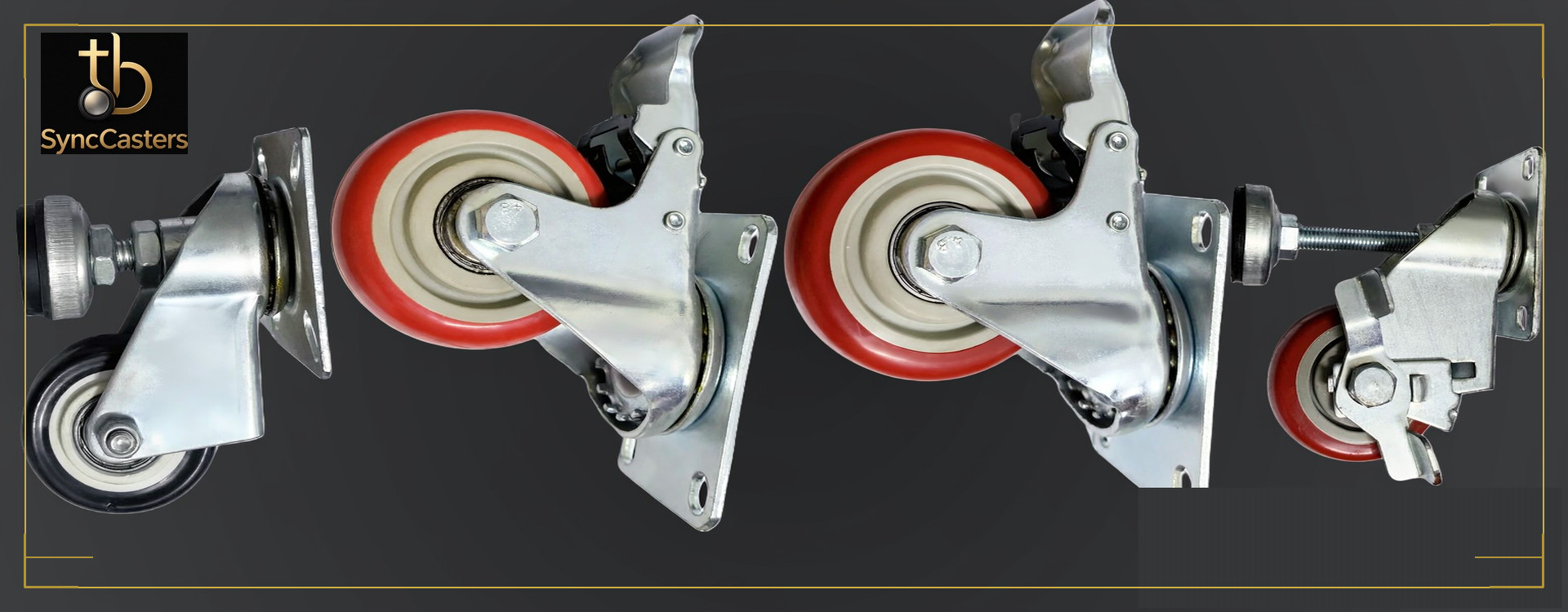
Utility caster with compact design and reliable brake in 1.5 in – 3 in sizes for platform trucks, dollies and light industrial carts. Durable wheel for safe, smooth handling.
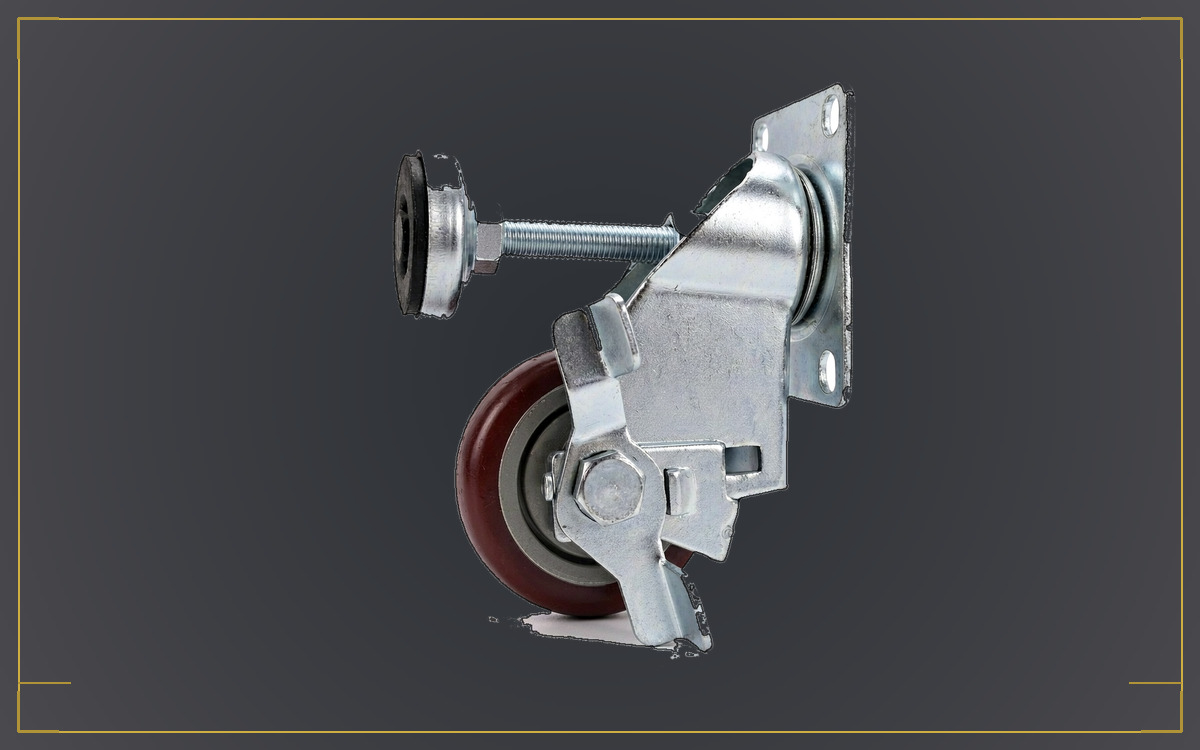
Leveling Caster
Leveling caster with precise height adjustment for machines, display racks and industrial equipment. Sizes 2.5 in – 4 in with sturdy metal construction and easy operation.
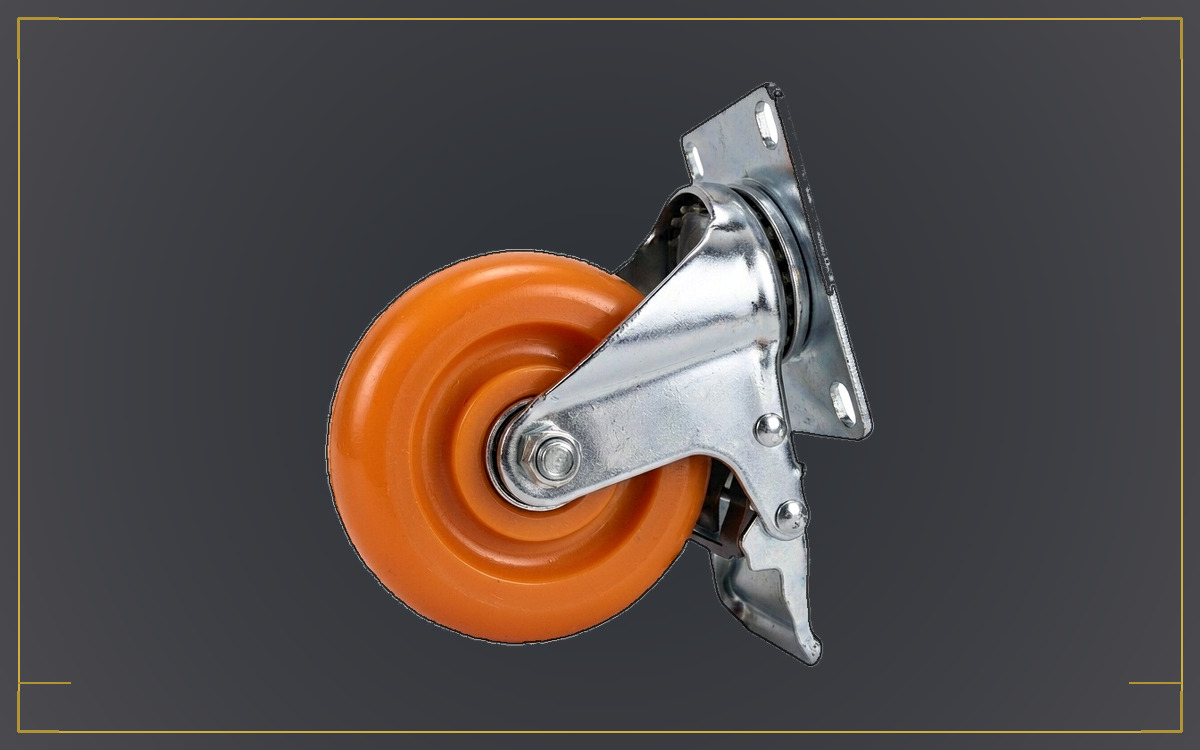
Medium Duty Brake Caster
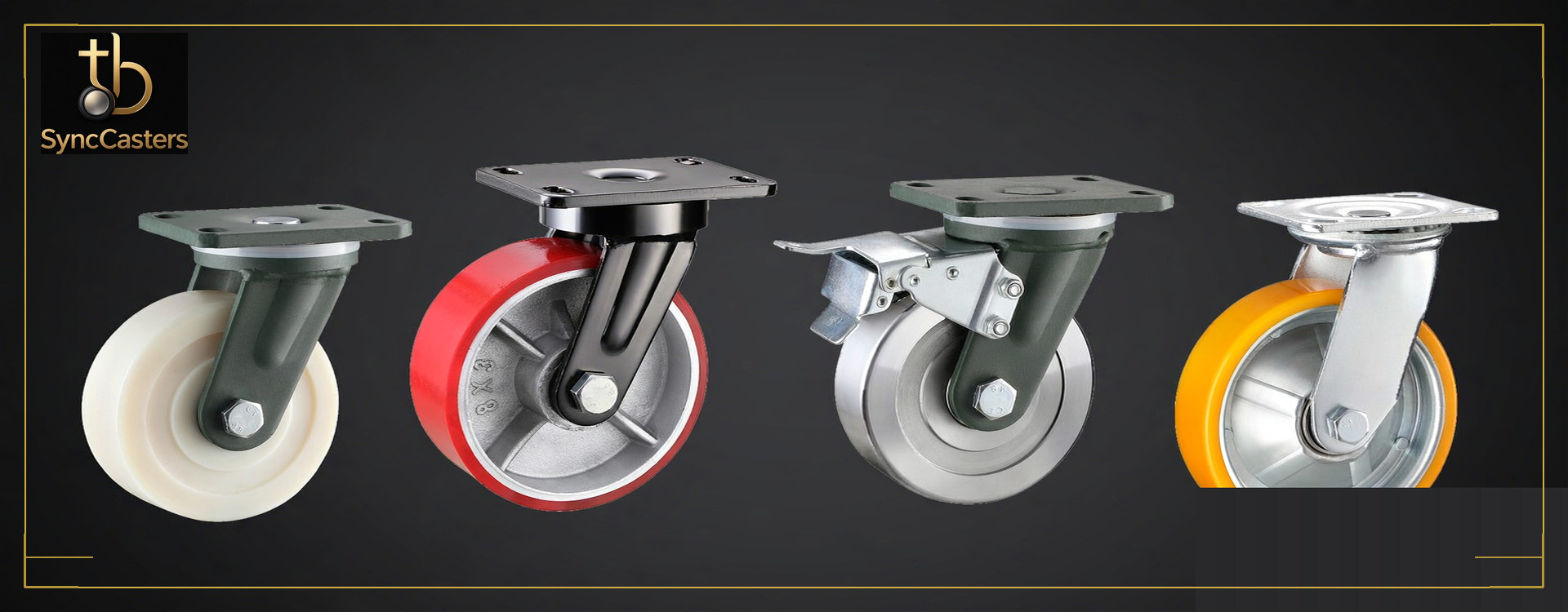
Medium-duty swivel caster with steel bracket, total-lock brake and heavy-load wheel in 3 in – 5 in sizes for carts, workbenches and light industrial equipment. Strong capacity with stable movement.
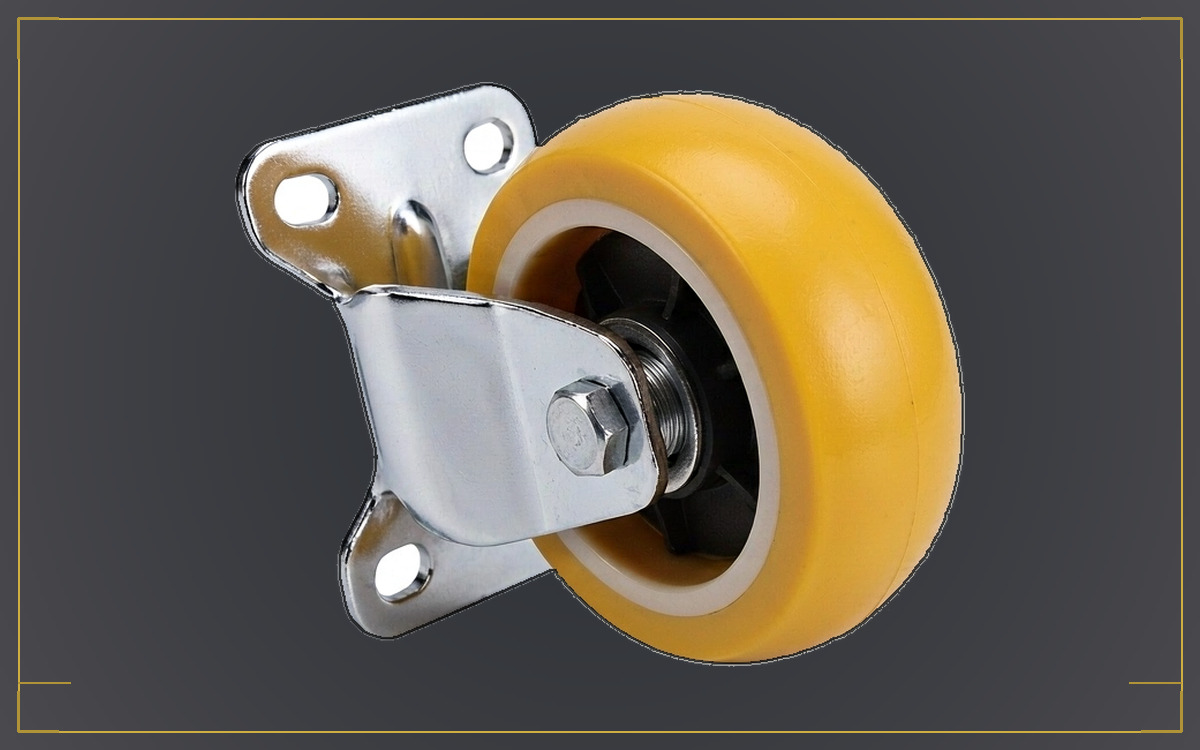
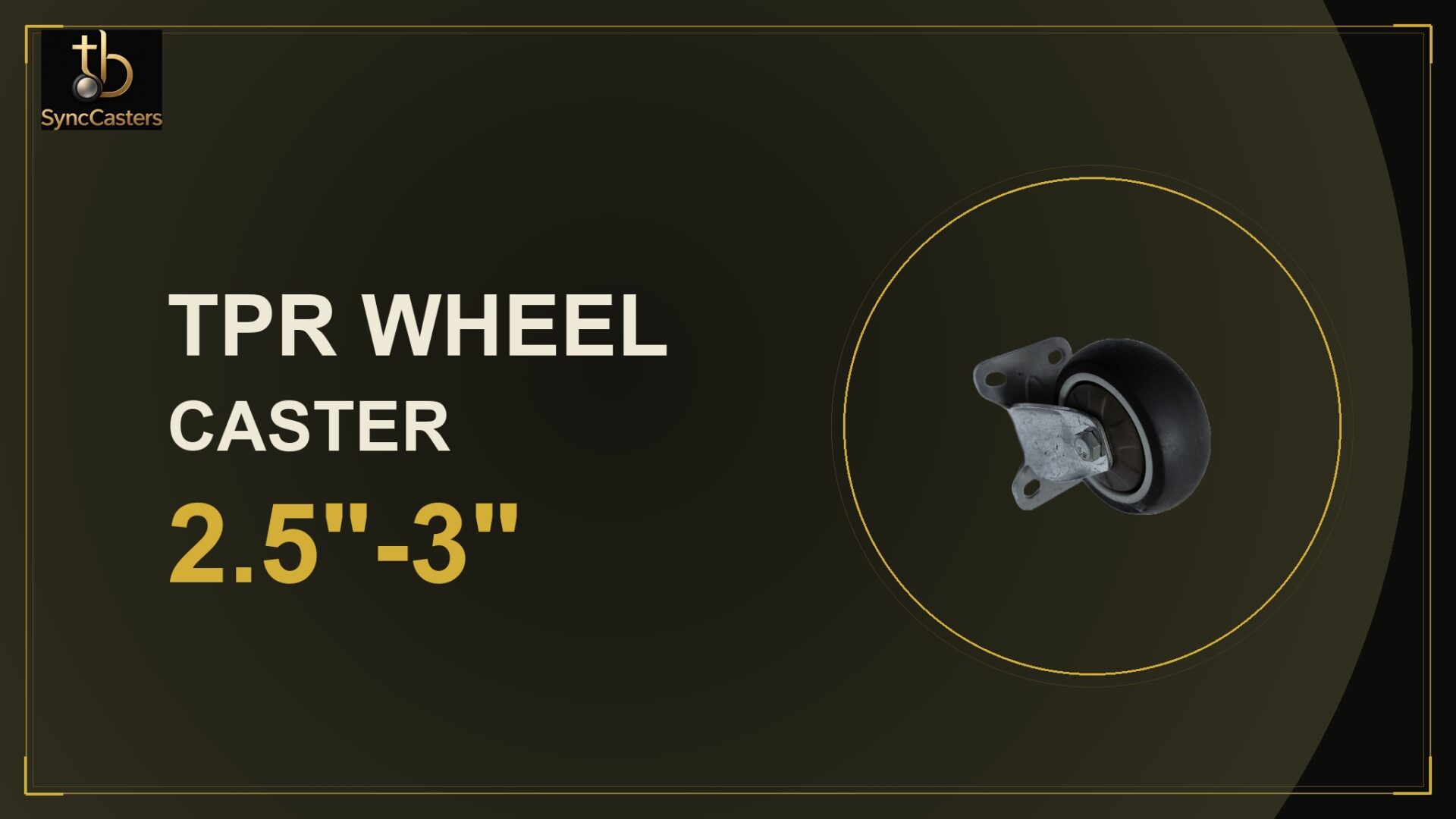
TPR Silent Caster
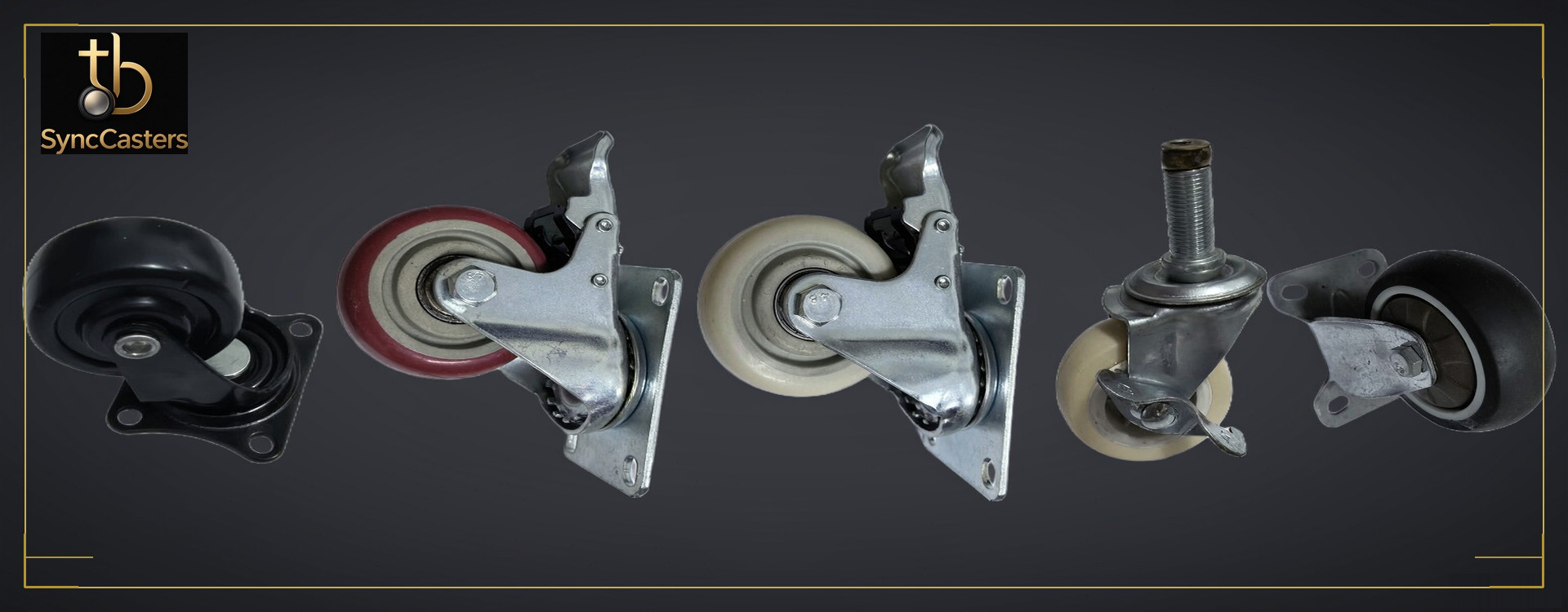
TPR silent caster with quiet thermoplastic rubber wheel in 2.5 in – 3 in sizes for furniture, medical equipment and trolleys. Low noise, floor-friendly and shock absorbing.
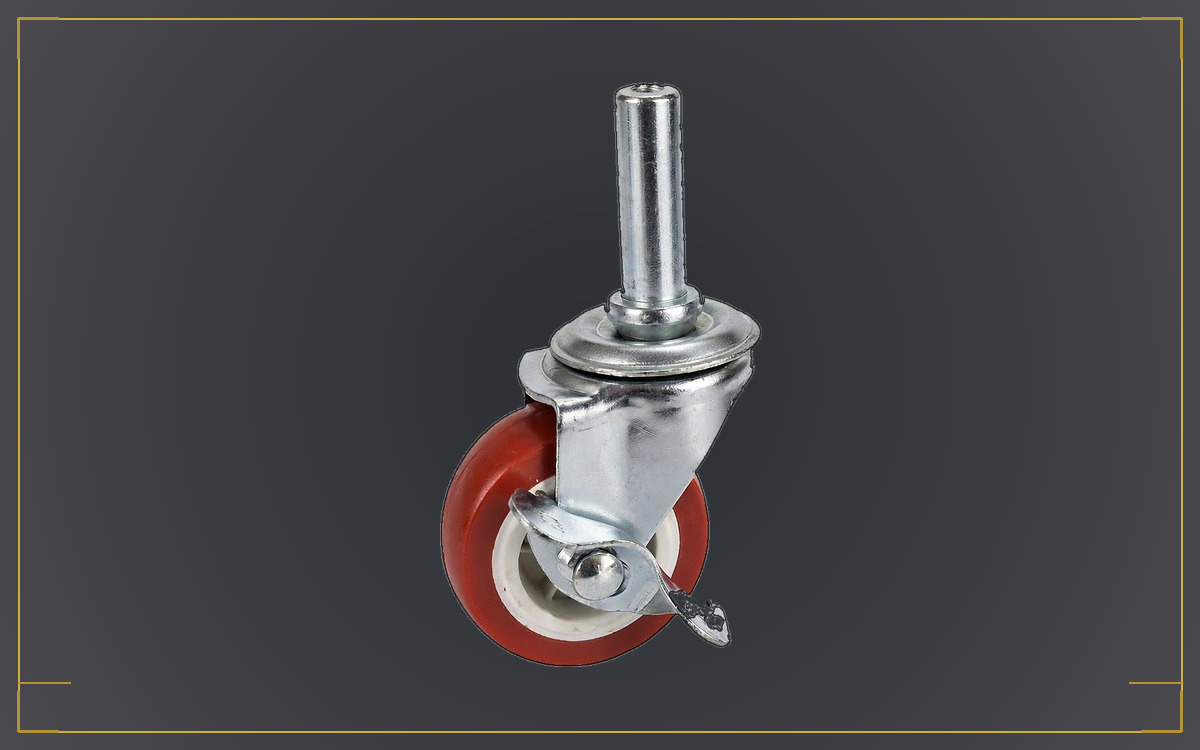
PP Wheel Caster
Light-duty caster with durable polypropylene wheel in 2 in – 3 in sizes for trolleys, display racks and light furniture. Corrosion-resistant, easy-rolling and cost-effective.
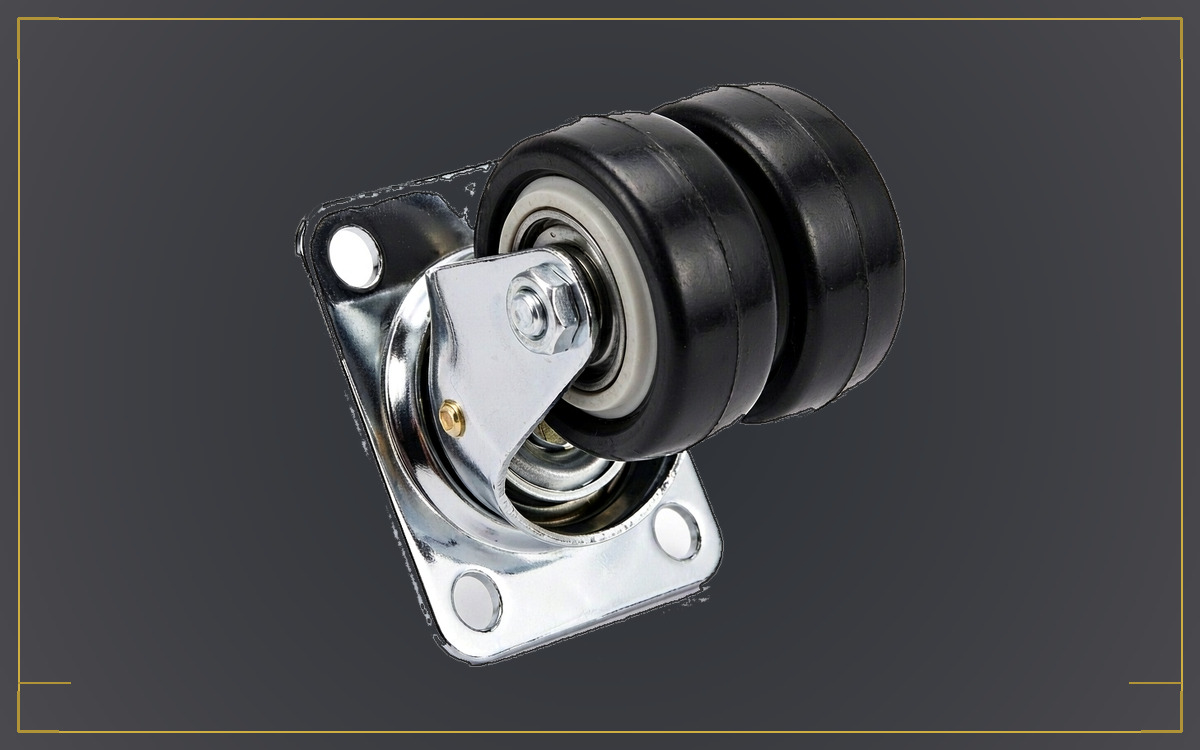
Diamond Series Caster
Diamond series swivel caster with chrome-plated steel bracket and premium wheels in 2 in – 3 in sizes. Smooth rolling, low noise and long service life for furniture, trolleys and light-duty applications.
OEM TPR Casters for Your Brand
As a professional TPR caster manufacturer, SyncCasters supports OEM customization of wheel color, hardness, bracket finish and packaging. Whether you need silent casters for medical equipment, office furniture or retail displays, we offer factory-direct pricing and fast sample delivery.
TPR Caster Applications
Perfect for medical carts, hospital beds, office chairs, display stands, library carts and retail furniture where quiet movement and floor protection are essential. The soft TPR wheels also perform well on tiles, laminate and wood floors.
TPR Silent Caster Applications
Ideal for hospitals, offices, libraries and retail environments where low noise and floor protection matter. TPR wheels roll quietly on tiles, laminate and wood floors.
TPR vs PP Caster Wheels
TPR wheels are softer and quieter with better floor protection, while PP wheels are harder and more economical. Choose TPR for noise-sensitive environments and PP for cost-sensitive high-volume applications.
TPR Caster Production
Our TPR wheels are precision molded from high-quality thermoplastic rubber, paired with smooth bearings and rust-resistant brackets for long-lasting performance.
- > Quality Management and Certification in Caster Manufacturing
- > Load, Life and Swivel Rotation Testing for Casters
- > Salt Spray and Corrosion Testing for Caster Finishes
- > Final Random Inspection of Finished Casters
- > In-Process Quality Control in Caster Manufacturing
- > Incoming Material Inspection for Caster Manufacturing
TPR Silent Casters Video
Watch our TPR silent casters rolling tests in our video library.
SyncCasters News: TPR Casters
News about our TPR silent caster range and quiet mobility solutions.
Blog: TPR Caster Guide
Guide to choosing quiet TPR casters for medical, office and retail applications.
FAQ: TPR Silent Casters
Q: What sizes are available? A: 1" to 3". Q: Are TPR wheels quiet? A: Yes, they are our quietest wheel type. Q: Do they protect floors? A: Yes, soft TPR leaves no marks. Q: Can you customize wheel color? A: Yes, OEM supported.
Q How do leveling casters differ from standard casters? ▼
The core difference is what happens after the equipment stops. A standard caster only provides mobility: it lets the equipment roll, but once released the equipment still rests on the wheels, which can drift under vibration, settle unevenly on imperfect floors, and never become truly stable or level. A leveling caster does both jobs in one component: it rolls when you push the equipment, and it levels and locks when you screw down the adjustable foot, transferring the weight off the wheels onto a solid support so the machine stands perfectly still and level. This matters for machine tools, workbenches, display racks and laboratory instruments that must operate without rocking or unintended movement. Leveling casters also protect floors: once leveled, the load rests on a broad, stable foot rather than concentrating on small wheel contact points, and the equipment no longer creeps or scuffs the floor during operation. Choose standard casters when mobility alone is enough and the equipment does not need to stay precisely positioned; choose leveling casters when the equipment must roll into place and then remain perfectly stable and level while it works. In many equipment designs, a practical compromise is to use leveling casters on the load-bearing corners and ordinary casters on the remaining corners, gaining both mobility and stability without paying for leveling feet everywhere.
Q Can you customize load capacity or size for our equipment? ▼
Yes. SyncCasters supports both OEM and ODM customization for leveling casters, so we can build to your exact load, size and mounting rather than only supplying catalogue models. We can customize wheel diameter, overall mounting height, bracket thickness and shape, load rating, mounting plate pattern or stem, wheel material and tread, the leveling foot adjustment range, and surface finish such as zinc plating, black coating or stainless steel for washdown areas. The process starts when you share your equipment weight, floor type, available height and a drawing or photo; our engineers then design the caster and quote it clearly, including any one-time tooling cost and the unit price separately. We produce a physical sample for you to test on the real equipment and revise it together with you until it passes, and only then move to production. After approval, the specification is frozen and reproduced consistently for repeat orders. Whether you need a higher capacity for a heavy machine, a lower overall height for tight clearance, or a brand-specific mounting, send us the requirement and we will confirm what is achievable, the cost and the lead time. Customization usually adds only a modest tooling cost, and for ongoing volumes the per-unit price stays close to a standard caster, so tailored mobility is more affordable than many buyers expect.
Q What materials and load capacities do leveling casters offer? ▼
SyncCasters leveling casters are built with sturdy steel brackets and a strong metal structure, designed to carry the weight of industrial equipment while keeping the machine level and stationary. The bracket is formed from steel for rigidity, and the leveling foot uses a precision threaded stud with a stable base plate that distributes the load across the floor and protects the surface. Load capacity scales with the wheel size and duty class: the light 1.5 inch and 2 inch models suit light-duty fixtures, display racks and small equipment; the 2.5 inch and 3 inch medium-duty models handle general machine tools, packaging lines and workstations; and the 4 inch heavy-duty model is rated for larger, heavier machines and industrial frames. The wheel tread material can be selected to match your floor, so the caster rolls easily during positioning without marking finished surfaces. Because the exact capacity depends on the bracket thickness, wheel material and the number of casters under the equipment, we recommend calculating the load per caster with a safety margin rather than selecting by size alone. Send us your total equipment weight, the number of corners and the floor type, and we will confirm the right capacity and material combination for your application.
Q How does the leveling adjustment work? ▼
A leveling caster combines a moving wheel with an adjustable leveling foot on a precision threaded stud. To position equipment, you push it on the casters just as you would with ordinary wheels. Once it is in place, you screw the leveling foot down against the floor until it takes the weight: the threaded foot extends until it lifts the wheels slightly off the ground, transferring the load from the rolling wheels to the solid foot. With the wheels no longer carrying weight, the equipment cannot roll or drift, and the foot compensates for small floor unevenness at each corner so the machine sits perfectly level and rock-solid. To move the equipment again, you simply unscrew the foot back up so the wheels touch the floor once more. This makes the same caster do two jobs: mobility when you want it, and fixed leveling when the machine is working. Some designs also offer a spring-assisted leveling foot with adjustment ranges such as 30 mm or 60 mm, which absorbs small vibrations and tolerates slightly rougher floors while still providing a stable base. The result is equipment that rolls when you need it to and stands precisely level and stationary when it works.
Q What sizes are available for leveling casters? ▼
SyncCasters leveling casters are offered across a practical range of wheel diameters to suit different equipment weights and working heights. The available sizes cover 1.5 inch, 2 inch, 2.5 inch, 3 inch and 4 inch wheels. The smaller 1.5 inch and 2 inch sizes sit in the light-duty class and suit lighter equipment such as compact workbenches, display fixtures, small instrument stands and portable machines where space and overall height are limited. The 2.5 inch and 3 inch sizes form the medium-duty range, which is the most common choice for general machine tools, packaging equipment, workstations and medium carts that need both mobility and a stable, level base during operation. The 4 inch size is the heavy-duty option, built for larger and heavier machines, industrial frames and equipment that carries substantial loads while still requiring precise leveling. Because load capacity rises with wheel and bracket size, choosing the right size is tied to both your weight and your available height. If your equipment needs a non-standard diameter, overall height or mounting, our OEM and ODM program can customize the size to your frame, so the range above is a starting point rather than a strict limit. Tell us your required overall height, mounting style and load, and we will confirm the closest available or custom size.








