
How an OEM Caster Project Actually Starts
When an equipment brand wants casters engineered for its own product, the project does not begin with picking a catalogue wheel. It begins with the equipment drawing: the mounting points, the total load, the floor, the duty cycle and the brand's target cost. A professional OEM caster factory reads that drawing first, because almost every dimension of a caster, from the bracket thickness to the thread pitch of a leveling foot, is decided by what the equipment actually does. This is how a real custom caster development process runs, and where your engineering input has the most leverage.
Step 1: Load Study and Mounting Review
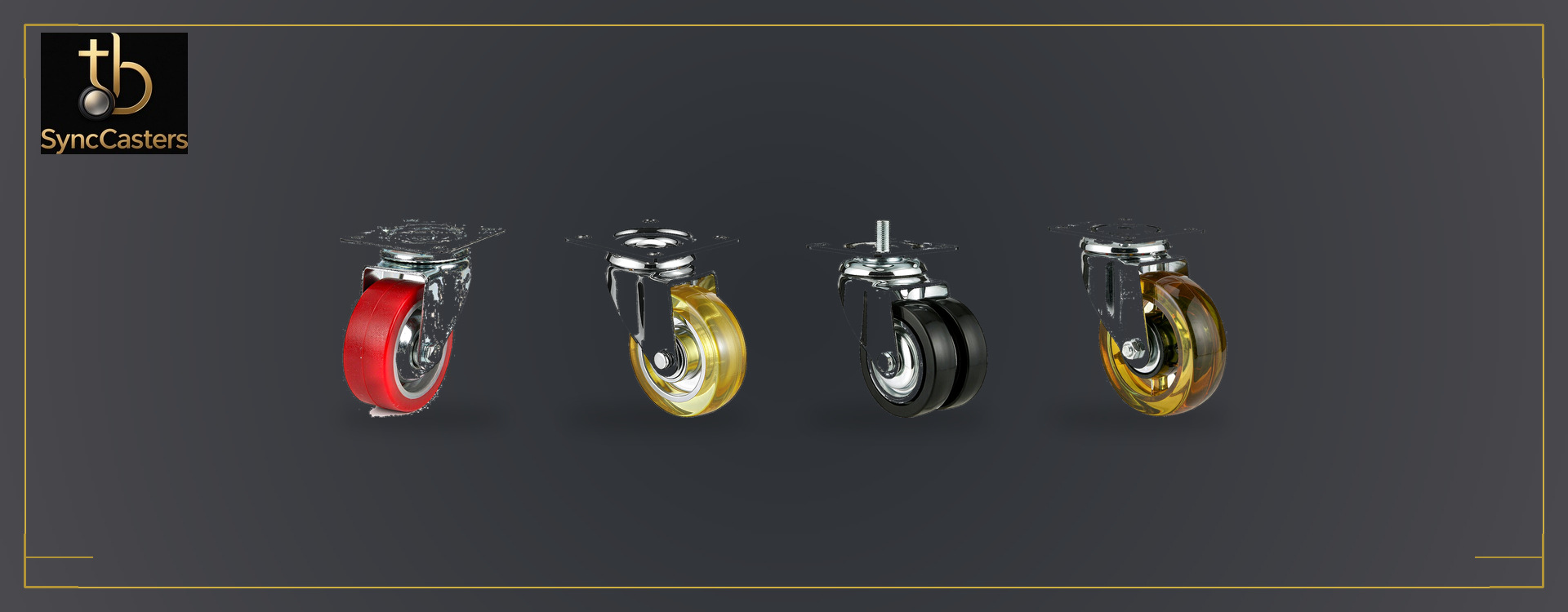
The first working session is a load study. The factory engineer takes the loaded weight of the equipment, divides it across the caster positions and applies the N-1 method, because on an uneven floor one caster periodically lifts and the rest carry the full load. A safety factor is then applied according to the environment, typically 1.25 for smooth indoor concrete and higher for docked or towed equipment. For a leveling caster used under machine tools and workbenches, the engineer also confirms the mounting interface: top plate size, hole spacing, threaded stem or a precision height-adjusting foot. SyncCasters leveling casters span 1.5 to 4 inches, with light-duty models at 1.5 to 2 inches, medium at 2.5 to 3 inches and heavy at 4 inches, so the mounting review decides which series the whole project will be built on before any design work starts.
Step 2: Bracket and Wheel Configuration
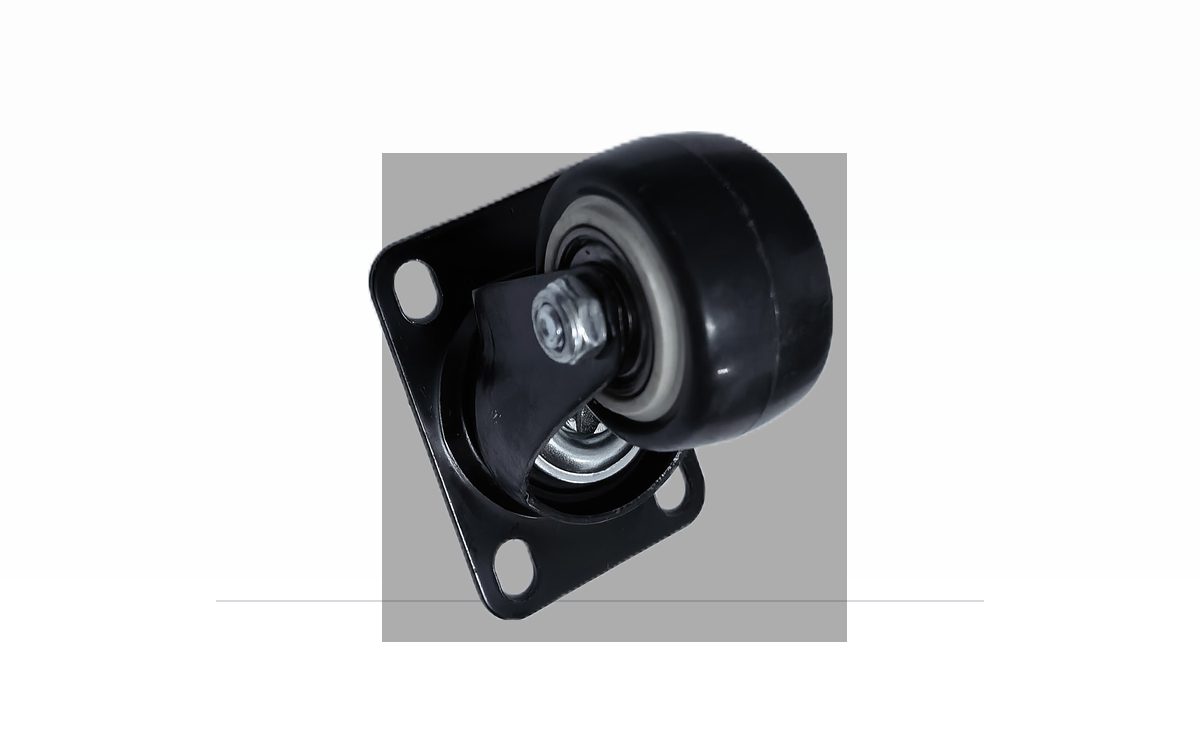
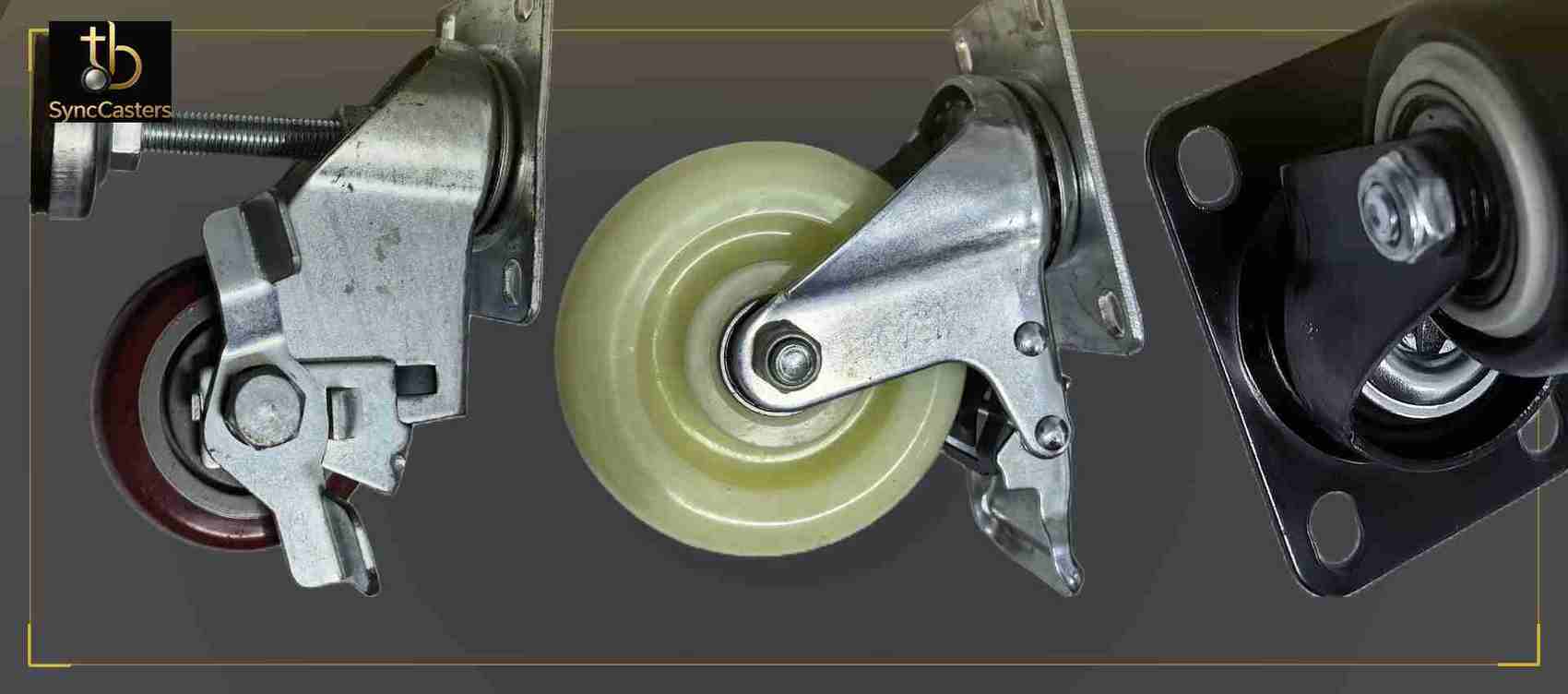
Once the load and mounting are fixed, the design moves to configuration: swivel versus rigid positions, brake type, and wheel material matched to the floor and noise target. A display rack needs quiet, floor-friendly movement, so a soft-tread wheel is chosen; a heavy machine base needs a sturdier bracket and a threaded leveling foot that takes the weight off the wheel during operation. The swivel and rigid positions are arranged so the cart or equipment tracks predictably, and brakes are selected by whether they only lock the wheel or lock both wheel and swivel. For equipment that must absorb vibration, optional spring-loaded versions with 30 mm or 60 mm travel can be specified. Every choice here is documented so the customer's team can sign off before any tooling is cut.
Step 3: 3D Layout and Design Freeze
The approved configuration is turned into a 3D layout that shows how the caster sits under the equipment, the installed height and the swept radius when the swivel turns. This step catches interference problems early: a bracket that collides with a cabinet leg, or a wheel that sits too low for a conveyor transition. The layout also confirms that the overall equipment height stays within the customer's requirement, because a 4-inch heavy caster raises the base significantly compared with a 1.5-inch light one. A design freeze locks dimensions, material grades, finish and brake configuration, and becomes the reference for the sample. The goal is that the first sample already reflects the final product, so the customer validates performance rather than re-engineering, saving both time and tooling cost.
What Makes an OEM Design Partnership Work
A strong design process is only half the story; the other half is how the partnership is run once the drawing is approved. Communication, engineering transparency, confidentiality and a manufacturable design determine whether your OEM caster project launches on time and keeps performing for years. The points below explain what to look for in the working relationship, and why they matter as much as the initial design.
Engineering Support That Saves You Cost
The best OEM partners challenge your specification instead of just executing it. If a 4-inch heavy leveling caster is over-specified for a light display frame, an engineer will tell you and move you to a 2.5-inch medium model, cutting both unit cost and shipping weight. They will also suggest where a standard wheel works instead of a custom compound, and where a slightly heavier bracket is worth the small price for the safety margin it adds. This kind of value engineering is how a good supplier becomes a long-term partner rather than a transaction. SyncCasters works with equipment brands on leveling casters for machine tools, retail display racks, workbenches and industrial equipment, matching bracket, wheel and adjustment range to the actual application and budget.
Confidentiality and IP Protection
Custom caster projects involve your product drawings, load envelopes and often your brand design. A professional OEM factory signs a non-disclosure agreement before drawings are exchanged, keeps your tooling and samples under your own reference, and does not reuse your bracket design for competitors. For buyers sourcing AGV platforms, medical carts or proprietary machines, this confidentiality is as important as the price, because a copied design undermines the product differentiation they engineered. The factory should also store your drawings securely and share them only with the engineers working on your project. Ask about it early in the relationship, and treat hesitation as a warning sign.
Why the Design Stage Decides Delivery Later
A decision made during design ripples through production. A bracket hole that is slightly off, a thread pitch that is hard to source, or a wheel compound that has long lead time all become delivery problems months later. Experienced OEM factories design for manufacturability from day one, choosing standard components where they do not compromise performance and reserving custom parts for where they truly matter. They also anticipate plating, assembly and packaging steps when they size the bracket, so nothing has to be redesigned at the tooling stage. This is the reason a well-run project ships on schedule while an over-customized one slips quarter after quarter, and why the front-loaded engineering effort pays back many times over.
Start Your OEM Caster Project with SyncCasters
SyncCasters manufactures leveling, light, medium and heavy duty caster series and supports full OEM and ODM development: load study, 3D layout, custom bracket and wheel configuration, branded finishes and private labeling. Whether you build machine tools, retail displays, workbenches or industrial equipment, our engineering team turns your drawing into a caster built for your product, with manufacturability and cost considered from the first meeting. We protect your designs under NDA and freeze each project against a documented golden sample. Share your load, mounting and floor requirements, and we will return a reviewed design and a sample plan.








