
At SyncCasters, we combine design innovation with practical engineering to create heavy duty caster solutions that perform reliably in the toughest industrial environments. Our design philosophy starts with understanding the real-world application of every caster.
Every heavy duty caster we design is optimized for maximum load capacity, smooth operation, durability, and ease of maintenance.
Design Capabilities and Innovations
Our engineering team can design custom heavy duty casters based on your specific requirements:
- Custom mounting plates: various sizes and hole patterns
- Special wheel materials: nylon, PU, forged steel, cast iron, rubber
- Brake systems: total lock, directional lock, foot brake, hand brake
- Corrosion resistance: zinc plating, powder coating, stainless steel options
- Heat resistance: high-temperature wheels for oven and furnace applications
Key design innovations:
- Low profile design: reduced installation height while maintaining load capacity
- Double bearing structure: smoother rotation and longer life under heavy loads
- Reinforced bracket: thick steel plates and precision welding for impact resistance
Send us your application requirements, and our engineering team will design a custom heavy duty caster solution for you.
CAD Design and Design-for-Manufacturing Support
Our engineering team works directly in CAD, so when you send a drawing, a reference photo or a verbal requirement, we model the caster, bracket and wheel configuration before any metal is cut. CAD design lets us simulate load points, swivel geometry and mounting hole positions, and it lets you see the design as a drawing or render before sampling. Iterations are fast at this stage: a revised bracket angle or a different mount format is a few hours of modeling, not a week of rework.
We also apply Design-for-Manufacturing (DFM) principles early in the project. DFM means reviewing the design from the factory's standpoint at the concept stage: can the bracket be stamped without distortion, is the weld accessible, will the wheel compound flow correctly in the mold, are tolerances realistic for the equipment we run? Problems caught at this stage cost far less than problems caught after tooling, and DFM review is included in every ODM project rather than offered as a premium service.
When the model is agreed, we validate it with physical samples. Soft-tooled or hand-built prototypes are tested on our bench and, where useful, shipped to your site for real-world trials. Sample validation closes the loop between the drawing and the part you will eventually receive in volume, and it is the reason our custom designs go into stable production on the first or second try rather than the fifth.
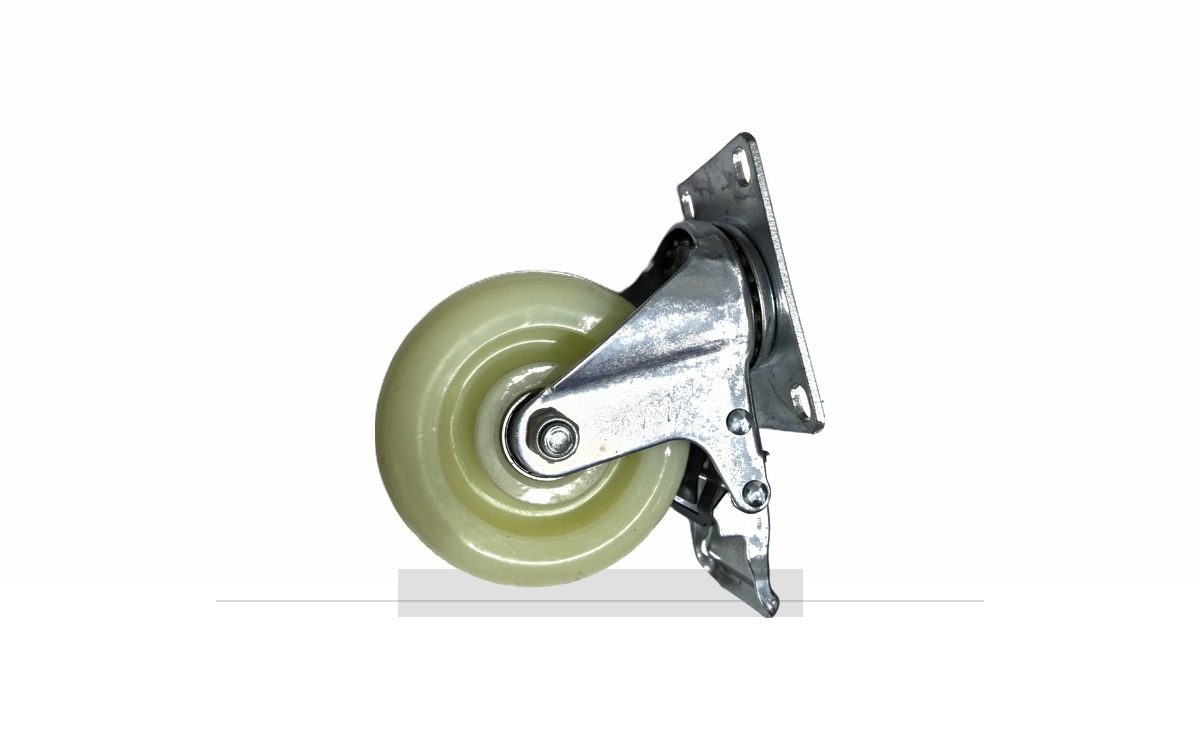
Smart Casters for AGV and AMR: Conductive, Encoder and Guide Compatible
How casters for automated guided vehicles and autonomous mobile robots require conductive wheels, en...
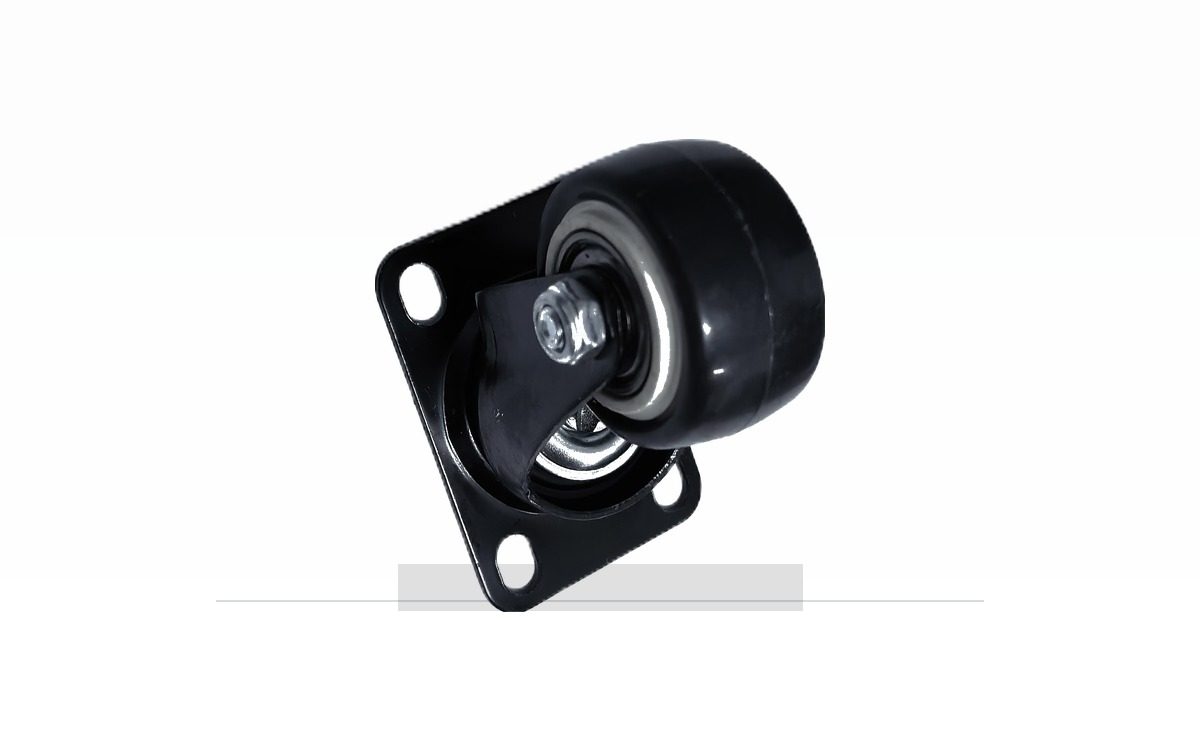
Modular Caster Design: Replaceable Parts That Cut Downtime
How modular, tool-free caster designs with interchangeable wheels, brackets and brake pads reduce ma...
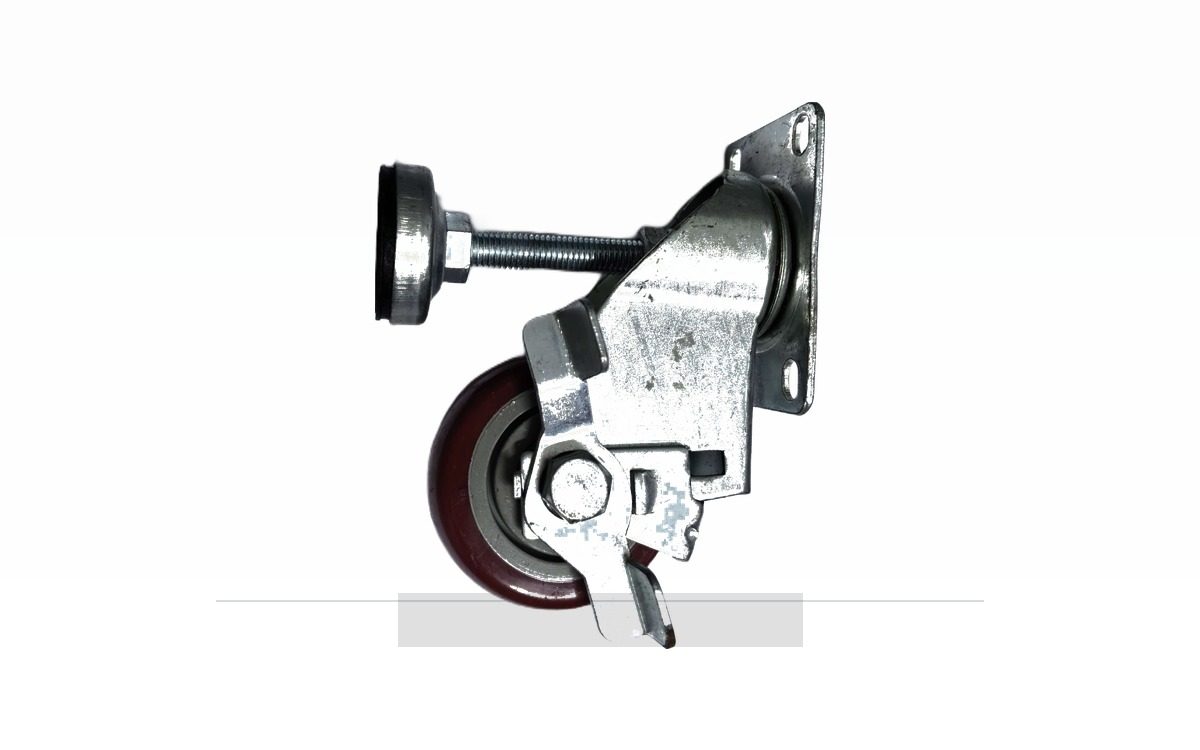
Brake and Locking Innovation: Secure Movement and Leveling Control
How caster brakes evolved from simple side locks to total-lock, directional and integrated leveling-...
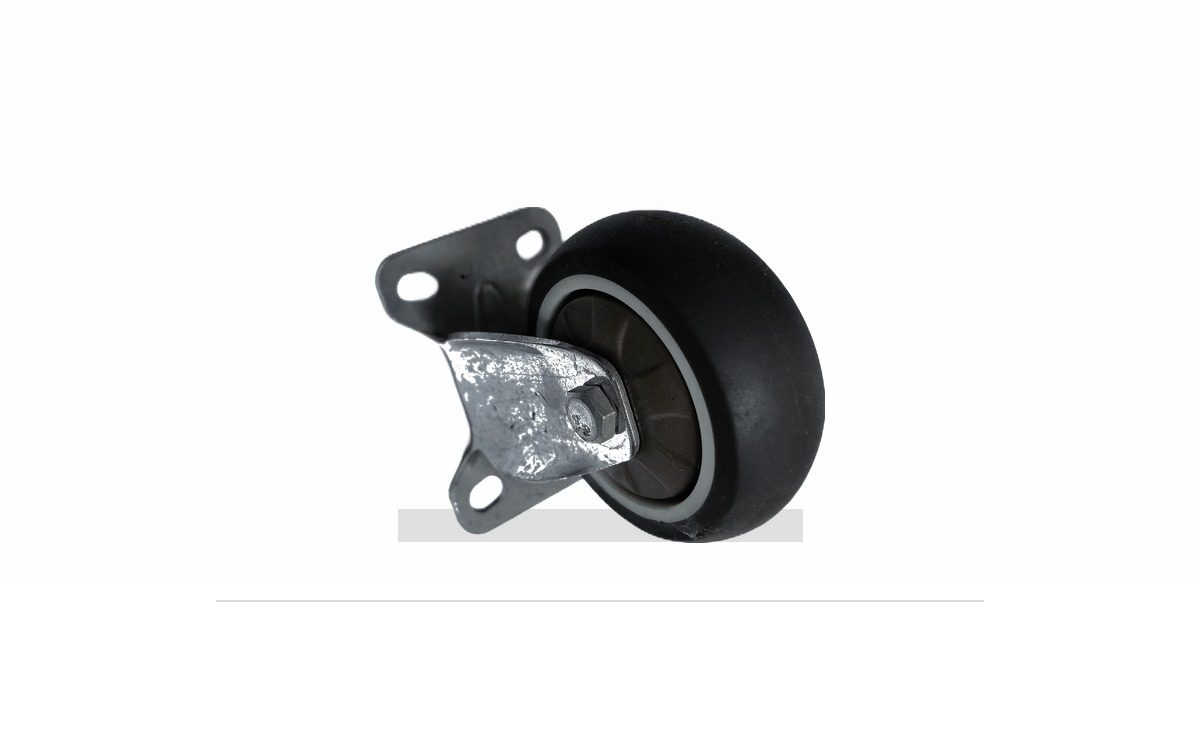
Caster Wheel Material Innovation: PU, Nylon, TPR and PP Evolution
How wheel materials evolved from hard plastic to engineered PU, nylon, TPR and PP compounds, and how...
From First Sketch to Mass Production: Our Design-to-Manufacturing Flow
Bringing a custom caster from an idea to a production part is a six-stage flow that we run the same way for every ODM project. Each stage ends with a documented decision, and the buyer signs off before the next stage starts. The flow is deliberately linear, because skipping a stage in product development is how budget overruns happen.
Stage one, design. Your requirement is translated into a CAD model: bracket type, swivel or rigid, wheel material, brake style, mount format and finish. We present dimensions, proposed load ratings and renderings, and we flag anything in the request that looks impractical from a manufacturing standpoint. Your feedback shapes the first revision, and we do not move on until the model reflects what you actually intend to build.
Stage two, engineering. Our engineers refine the model with load calculations, material choices and manufacturing constraints. This is where DFM review happens: stamping feasibility, weld access, wheel molding flow, bearing fit and inspection methods are all checked. The output is a finalized drawing pack and a confirmed specification sheet, signed by both sides. From this point, any change becomes a logged revision, which protects both sides from scope drift during sampling.
Stage three, prototype. We build samples on soft tooling or by hand. These are not saleable units; they are test vehicles. They come to our bench for load, rolling and brake trials, and a set ships to your site so your team can test fit, rolling feel and appearance against the real equipment. A prototype that only exists in our factory answers only half the questions; the other half is answered on your floor.
Stage four, testing. Prototype performance is measured against the agreed specification: load capacity, deflection, wear, brake function and environmental behavior. Any gap becomes a redesign note. The loop repeats until the prototype passes the test bench and your site trial in writing. We never move a project to tooling with open test failures, even when the schedule is under pressure.
Stage five, tooling. Once the design is frozen, production tooling is cut: stamping dies, welding fixturing, wheel molds. Tooling is sampled and inspected against the frozen drawing, and first articles are compared with the approved prototype so that the transition from sample to tooled part is controlled rather than assumed. This first-article comparison is the checkpoint that catches tooling drift before it reaches your production order.
Stage six, mass production. The tooled design enters batch production on our Zhongshan lines, with route cards, in-process inspection and outgoing sampling tied to the frozen specification. Production records are retained for traceability, and the first few production batches are reviewed more closely until the process is stable. After stabilization, the design becomes a repeatable catalog item for you, and reorders run on the documented batch process rather than the project conversation.
Through all six stages, one engineering contact owns your project from start to delivery. That means the person who reviewed your CAD file is the same person who answers questions about your first production run, and the same person who approves your reorders. Continuity of ownership is what turns a one-off custom design into a lasting supply relationship.
Engineering review meetings are short and technical rather than ceremonial. We bring the load calculation, the material choice and the manufacturing method to every revision discussion, and we flag trade-offs openly: a cheaper bracket that will not last, a brake option that is overkill for the load, a wheel diameter that will raise the equipment height beyond your mounting limit. Design collaboration is faster when both sides understand the constraints, and our team treats your engineering staff as partners in the process rather than a gate to get past.
Why We Insist on Sample Validation Before Tooling
Cutting production tooling is the point where a design stops being flexible. Once dies and molds exist, changing a dimension means re-cutting steel, which costs time and money. That is why we never skip the sample stage, even when a design looks simple on screen and the buyer is eager to place volume.
Physical samples reveal what CAD cannot: how a polyurethane wheel actually rolls on your floor, how the brake lever feels under load, how the bracket fits against your mounting plate, and how the finish holds up in your environment. A sample program lets your team test the part in the real application, not in a meeting room, and it gives both sides a physical reference that future production batches will be measured against.
We run two validation loops. First, our bench tests the sample to the agreed specification. Second, your site trial tests it in your world. Only when both pass in writing do we release tooling. This discipline is not delay; it is what prevents expensive re-tooling later, and it is why our ODM projects reach stable production faster than most buyers expect. A few extra weeks in sampling routinely saves months of correction later. The approved sample is also retained as the reference standard for the production run, so every later batch is compared against the physical part you signed off, not against a reinterpretation of the drawing.








