
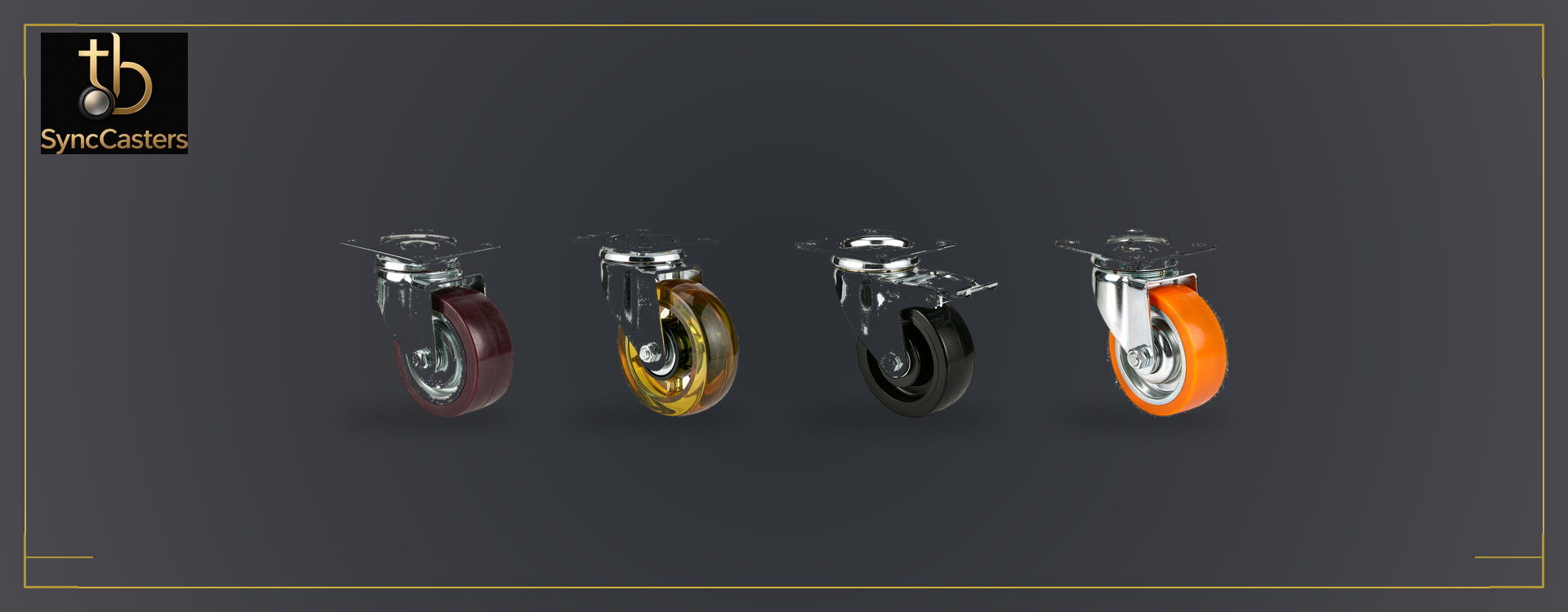
Explore real-world applications of SyncCasters heavy duty casters. Our casters are used in various industries and equipment worldwide, from warehouse logistics to heavy industrial machinery.
Learn how different types of heavy duty casters are applied in specific scenarios to help you choose the right caster for your equipment.
Common Heavy Duty Caster Applications
Our heavy duty casters are commonly used in:
- Warehouse and logistics equipment: carts, trolleys, rack systems, picking equipment
- Industrial machinery: machine bases, equipment stands, production line workstations
- Heavy transport: trailers, dollies, mold carriers, heavy duty platform trucks
- Food and pharmaceutical industry: stainless steel casters for washdown environments
- Automotive manufacturing: assembly line equipment and tool carts
- Material handling: drum handlers, lift tables, conveyor systems
Each application guide includes recommended caster types, load capacity guidelines, wheel material recommendations, and brake options for safety.
Application Segments We Serve
Our heavy duty casters are used across five broad sectors, and each sector brings its own load, floor and compliance profile. Matching the caster to the sector is the first decision our engineers make on every inquiry.
Manufacturing lines rely on swivel and rigid casters on carts, fixture stands and mobile equipment: medium to heavy loads, smooth concrete floors, often constant daily use. Durability and swivel smoothness dominate the specification here, because a line stops when its trolley stops.
Warehousing pushes the load capacity higher: racks, trolleys and AGV peripherals on large floor areas, where rolling effort and noise matter as much as raw capacity. Healthcare applications demand non-marking polyurethane wheels, quiet swivel action and corrosion-resistant finishes for beds, trolleys and equipment stands.
Food processing requires washdown-safe materials, sealed bearings and designs that clean easily without harboring debris. Logistics and distribution use casters on sorting carts, roll cages and container equipment: frequent movement, threshold crossings, mixed flooring. Understanding which segment you operate in lets us recommend the right wheel, bracket and brake combination from the start rather than by trial and error on your dime. We also see crossover equipment, such as a medical-grade cart used in a clean industrial line, and in those cases we build the specification from the stricter of the two environments rather than splitting the difference.
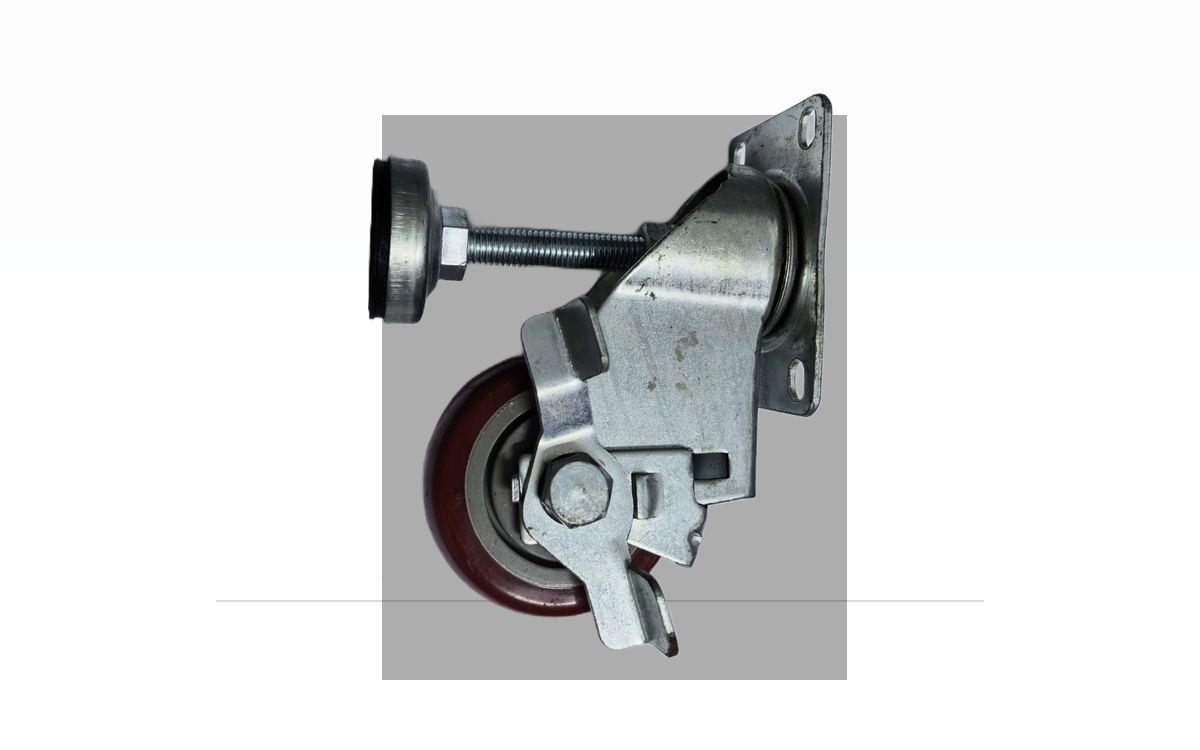
Leveling Casters: Precision Height Adjustment for Machines
How leveling casters combine mobility with precise height adjustment for machine tools, di...
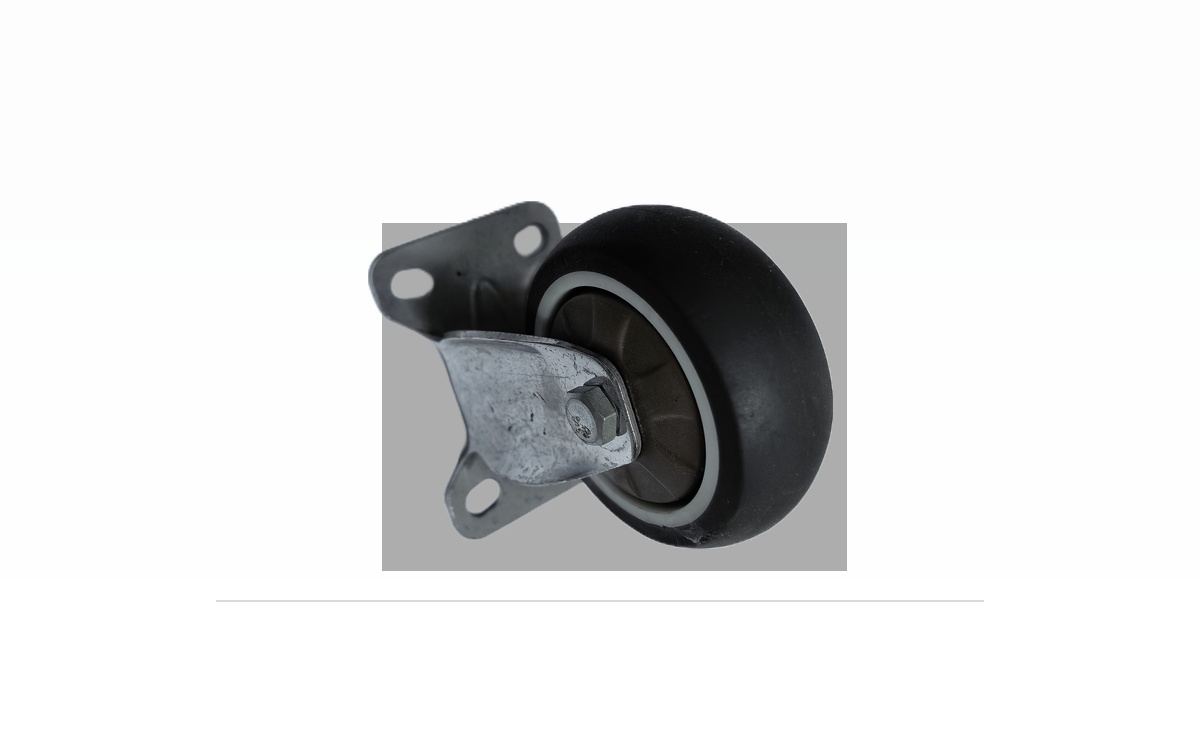
Medical Equipment Casters: Quiet, Clean and Safe Mobility
What makes a caster suitable for hospital beds, instrument carts and IV stands: low noise,...
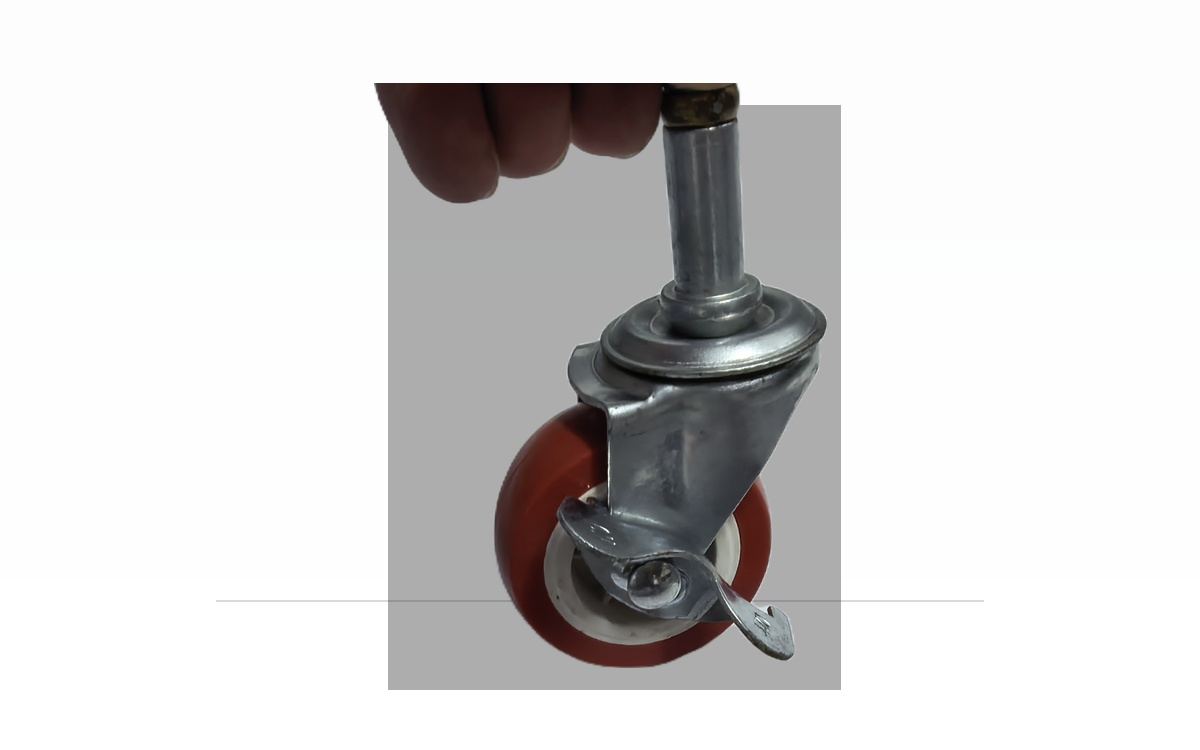
Food Service and Commercial Kitchen Casters
Casters for commercial kitchens and food service: heat and moisture resistance, easy clean...
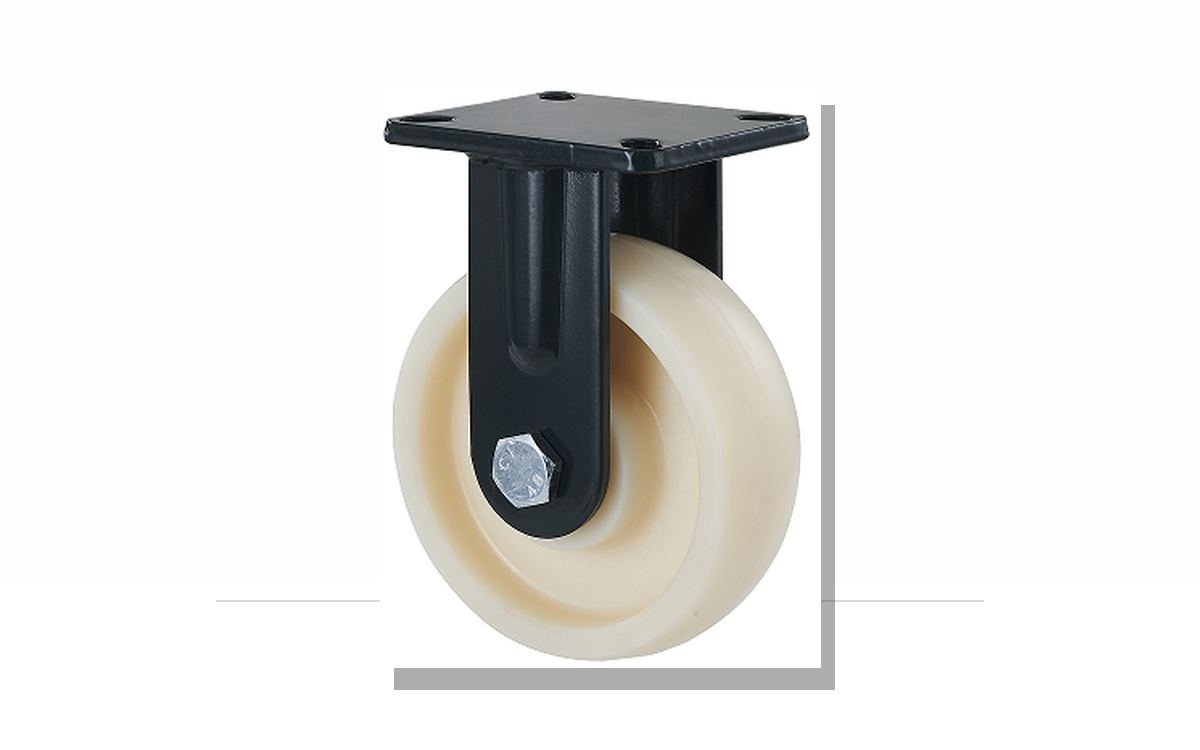
Warehouse and Logistics Casters: Moving Loads Faster and Safer
Casters for picking carts, AGV platforms and dock equipment in modern warehouses: load dis...
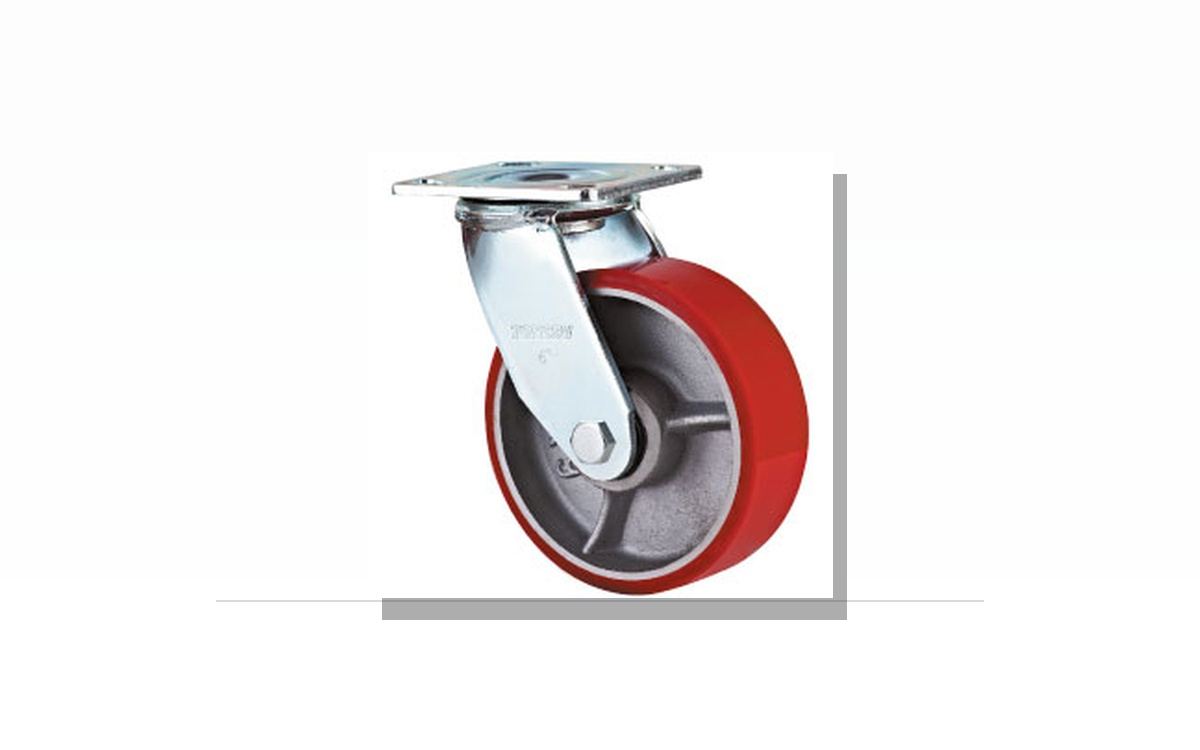
Heavy Duty Casters in Manufacturing and Assembly Lines
How heavy duty casters keep manufacturing moving: load calculations, wheel material select...
Customized Applications: Load, Floor, Environment and Compliance
Most buyers come to us with an application, not a catalog number. A trolley, a machine base, a display unit or a container rack has its own load, its own floor, its own environment and, often, its own compliance expectations. Our customization work is built around those four dimensions, and each one changes the configuration in a concrete way.
Load customization starts with the real weight to move. We calculate the load per caster, apply the standard safety margin, and size the bracket, swivel race, wheel and bearing set accordingly. Light-duty catalog casters are not scaled up by luck; heavy loads require thicker-section brackets, precision swivel bearings and wheel compounds chosen for the load density, not just the diameter. Getting this wrong is the most expensive mistake in caster selection, because an under-rated bracket bends in service rather than failing gracefully.
Floor customization determines wheel material and tread. Soft floor protection calls for polyurethane or rubber treads that roll easily without marking; rough outdoor surfaces need wider wheels and tougher compounds; clean rooms and ESD environments require conductive or static-dissipative wheels with matched rigs. The floor also decides wheel diameter: larger wheels cross thresholds and expansion joints more easily, which changes the whole bracket height and often the mounting geometry with it.
Environment customization covers the conditions the caster lives in. Cold storage needs bearings and compounds rated for low temperatures; hot areas need phenolic or metal wheels instead of polyurethane. Washdown and chemical environments demand sealed bearings, plated or stainless hardware and wheel materials resistant to cleaning agents. Outdoor use drives corrosion protection choices across brackets, fasteners and finishes, and a caster chosen for a dry warehouse will not survive a year on an uncovered loading dock.
Compliance customization covers what your market or industry requires. Food contact and washdown applications follow food-handling material expectations; medical equipment follows mobility and quiet-operation norms; export destinations may require declarations, RoHS or REACH-related documentation, or specific labeling. We map these requirements at quotation rather than discover them after production, because a compliant product is only half the solution if the paperwork your customer expects is missing.
Each customized application is documented: load calculation, selected configuration, approved samples and batch records. If your application is unusual, that is the starting point, not the obstacle. Send us the load, the floor and the environment, and we will come back with a configuration proposal and a sample path. We would rather tell you early that a request needs rethinking than ship a caster that looked right on a quote and failed on your floor.
After delivery, the customization is not left to drift. If the application evolves, the caster specification can be revisited: a heavier load added to a trolley, a new floor coating, a change in washdown chemicals, a destination market that introduced a new documentation requirement. Because the original application is documented, any revision starts from a known baseline rather than a fresh guess, and reorders stay consistent with the configuration you already validated in the field. Buyers who treat their caster choice as a one-time selection usually revisit it too late, when a wheel has already failed on the floor; buyers who treat it as a documented application record get a quick, low-cost adjustment instead. Whether your application is a standard trolley or a one-off engineered piece of equipment, the starting conversation is the same: what is the load, what is the floor, what is the environment, and what must the result comply with. From those four answers, a workable configuration follows, and the configuration is documented well before any metal is cut.
Information We Need to Specify Your Application
The more precise your initial information, the faster we can propose a workable configuration. Four items matter most. First, the total weight to move and how many casters will carry it; we then calculate the load per caster with a safety margin. Second, the floor: concrete, tile, epoxy, outdoor, or mixed, plus any thresholds, gaps or elevations to cross.
Third, the environment: indoor or outdoor, temperature range, washdown or chemical exposure, noise sensitivity, food or medical context. Fourth, the compliance or documentation your industry or destination requires. Mounting details and brake preferences come next: top plate or stem, face brake, total lock, or no brake at all.
Send photos, drawings or reference samples if you have them. With this information we return a proposed configuration, a quotation and a sampling plan. If some of these details are still uncertain, describe the application in words. Our engineers will ask the follow-up questions needed to close the gaps, and the first draft of any proposal will list the assumptions we made so you can correct them before tooling is ever discussed. Well-prepared inquiries move fast; under-specified inquiries move carefully, and we prefer the careful kind because it ends in a part that actually works.








