
What a Load Rating Actually Means
When a caster is rated for a certain load per wheel, that number is the result of systematic testing, not a guess. R&D departments push prototypes through static load tests, dynamic rolling tests, impact drops and swivel endurance cycles to confirm capacity before a product reaches production. Understanding these methods helps buyers trust the rating on a datasheet and know how much margin a caster really has under real conditions. A published capacity is only as credible as the test program behind it. A conservative rating backed by documented tests is always preferable to an aggressive number that has never been validated.
Static and Dynamic Load Testing
Static load testing applies a steady weight to the caster to confirm it does not deform, crack or crush under maximum rated load, often with a safety multiplier. Dynamic testing goes further: the loaded caster is rolled repeatedly on a test track to simulate years of service, measuring wheel wear, bearing temperature and bracket deflection. The difference between the two reveals how much a caster can carry while moving versus while sitting, and engineers set published ratings conservatively based on dynamic results rather than static peaks. This distinction is why a caster that looks strong on paper may still fail in daily use if the rating was set from static tests alone.
Impact and Shock Loading
Real equipment hits thresholds, dock plates and uneven concrete, so impact testing drops a loaded wheel onto a hard surface to measure how the bracket, kingpin and wheel absorb the shock. Kingpinless brackets and reinforced swivel races are designed precisely to survive these impacts without bending. Test engineers also simulate the sudden load transfer that happens when a cart hits a seam at speed, because fatigue from repeated impacts, not steady weight, is what breaks most industrial casters in service. A caster rated for smooth, static loads will not survive a factory floor full of joints and transitions.
Swivel Endurance and Rolling Resistance
A caster swivels thousands of times a shift, so swivel endurance testing cycles the race until it measures wear or play, confirming the bracket stays smooth and tight over years. Rolling resistance testing measures the force needed to move a loaded wheel, which directly affects operator effort and AGV battery life. Together these tests reveal whether a caster rated on paper will actually feel light and turn freely after months of heavy use, not just on the day it is new. This is the difference between a datasheet number and a caster that performs well in service.
Translating Test Results Into Real Specification
The N-1 Method and Safety Factors
Testing establishes the caster's capacity; specification applies it conservatively. The industry-standard N-1 method divides total loaded weight by the number of casters minus one, then applies a safety factor such as 1.25 for indoor concrete, 1.35 for dock plates and 1.5 for towed equipment. This accounts for the fact that on uneven floors one caster lifts off and the others carry the full load. Buyers who ignore these factors and simply divide weight by the caster count routinely under-specify and fail early. Applying the right safety factor is the cheapest insurance a buyer can add to a caster program.
Floor, Duty Cycle and Temperature in Testing
R&D test programs increasingly replicate the actual environment: rough versus smooth floors, continuous versus intermittent duty, and temperature ranges that affect wheel compounds. A PU wheel tested at room temperature may soften near hot equipment, and a PP wheel may become brittle in cold storage, so published ratings carry temperature limits. Understanding these test conditions prevents buyers from applying a room-temperature rating to an application the caster was never validated for. A caster tested only on ideal floors will not behave the same way on a real, worn industrial surface.
Testing Leveling Casters for Stationary Stability
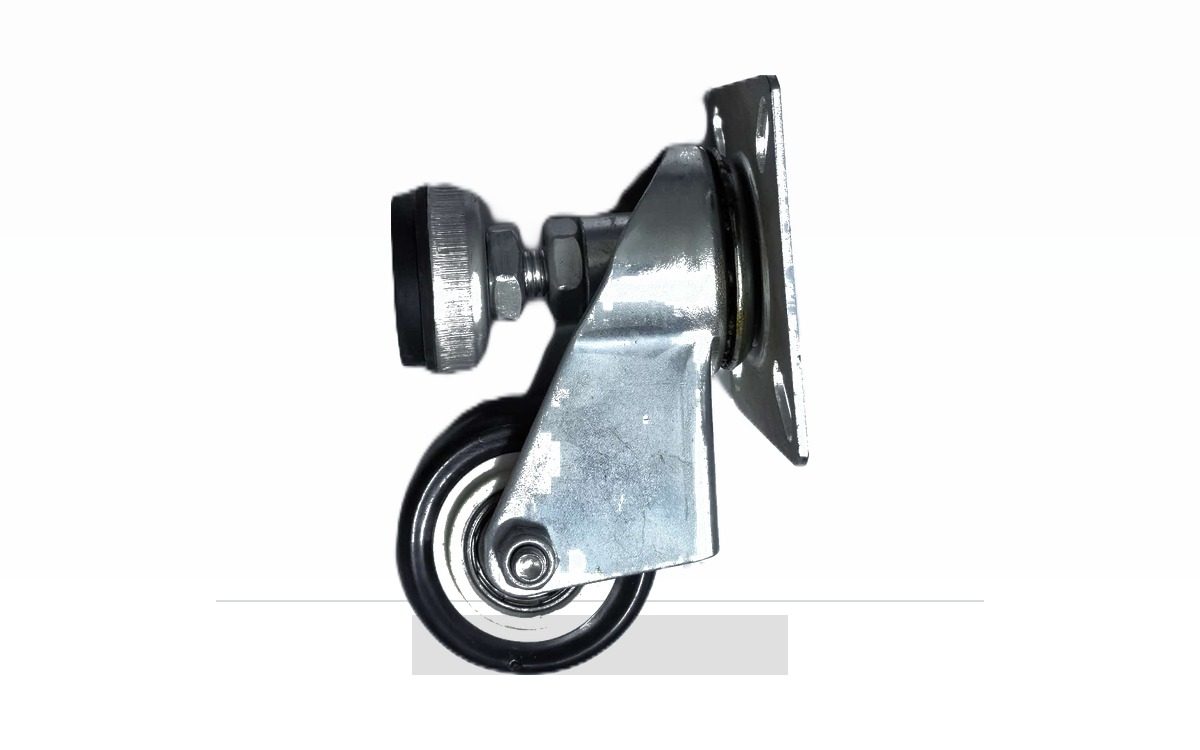
Leveling casters are tested for a different property: how securely the precision threaded foot supports stationary load. R&D verifies that the foot holds rated weight without settling, that the thread does not strip under repeated adjustment, and that the combination of wheel and foot stays stable when the equipment is leveled. SyncCasters leveling casters in 1.5 to 2 inch light, 2.5 to 3 inch medium and 4 inch heavy sizes are validated for machine tools, display racks, workbenches and industrial equipment, with optional 30 mm and 60 mm spring-shock versions tested for vibration absorption. This stationary-load validation is what makes a leveling caster trustworthy under a heavy machine.
SyncCasters Tested, Rated and Built to Last
Every SyncCasters model is validated through internal load, impact and endurance testing before it enters production, with load ratings set conservatively for real industrial duty rather than peak lab numbers. Our engineering team supports OEM and ODM projects with customized testing for special loads, temperatures and duty cycles, and provides the data buyers need to specify with confidence. Whether you need a trolley wheel, a heavy-duty series or a precision leveling caster, contact us for tested, documented capacity that keeps your equipment moving safely. When you can see the test method behind a load rating, you can spec with confidence rather than hope, which is the advantage tested caster data delivers.








