
When Standard Heavy Duty Is Not Enough
Some loads exceed what ordinary heavy duty casters can carry safely. Die carts, heavy machine bases, large industrial racks and towed equipment demand brackets and wheels built for extreme, repeated loads. SyncCasters is launching its extra-heavy Series III range to answer that demand, extending beyond our existing heavy and extra-heavy lines with twin-wheel construction, durable brackets and high-capacity wheel options. The new series is designed for the heaviest mobile loads in industry, where a caster failure is not an inconvenience but a genuine safety event that can damage equipment and injure operators.
Twin-Wheel Construction for Stability
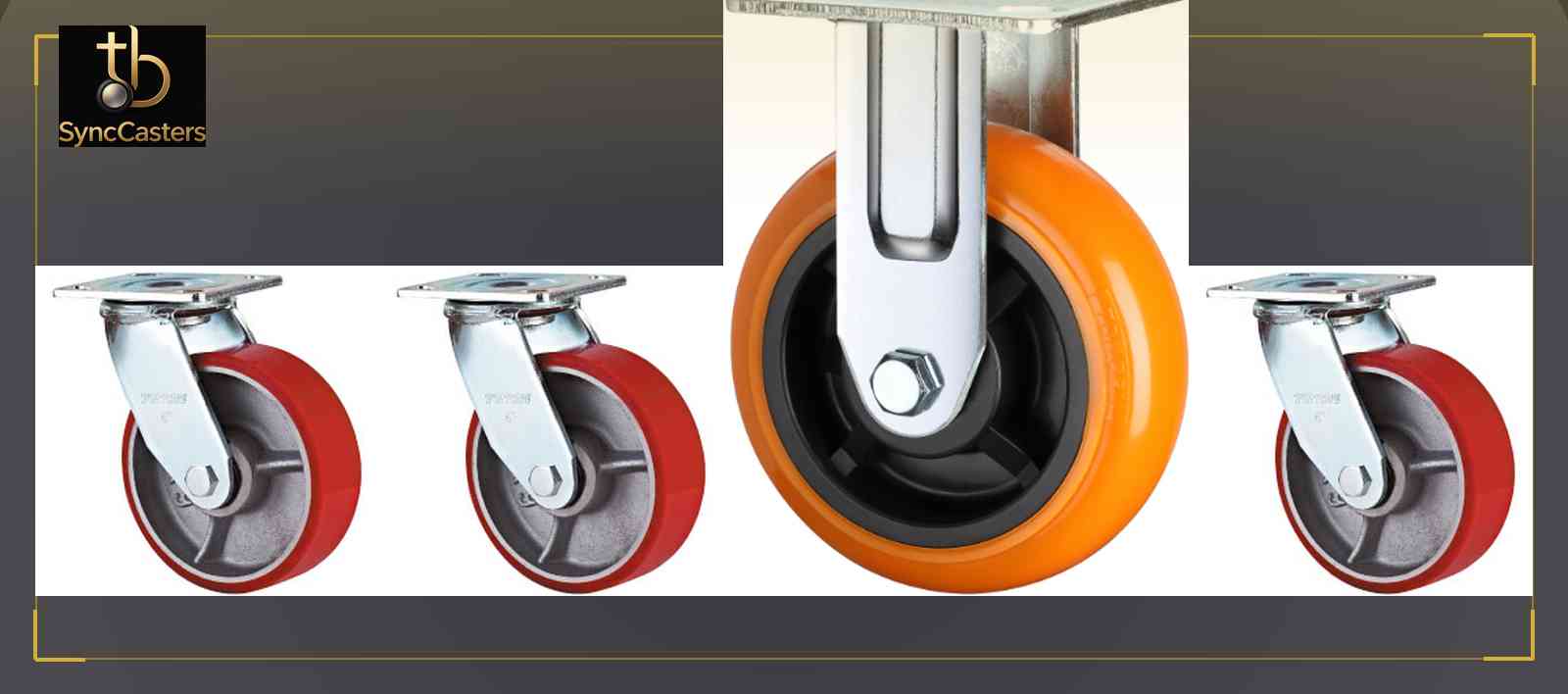
Series III uses twin-wheel, or dual-wheel, construction, which spreads the load across two wheels per caster and dramatically improves stability under heavy, often off-center loads. Twin-wheel designs also roll more smoothly over minor floor irregularities and resist shimmy better than single wheels at high loads. For carts carrying dies, molds or heavy machinery, that stability matters both for safety and for control. The bracket is reinforced to handle the concentrated forces these loads generate, with kingpinless construction preferred for the heaviest duties because it handles impacts without a single kingpin to shear.
Wheel Options for Extreme Loads
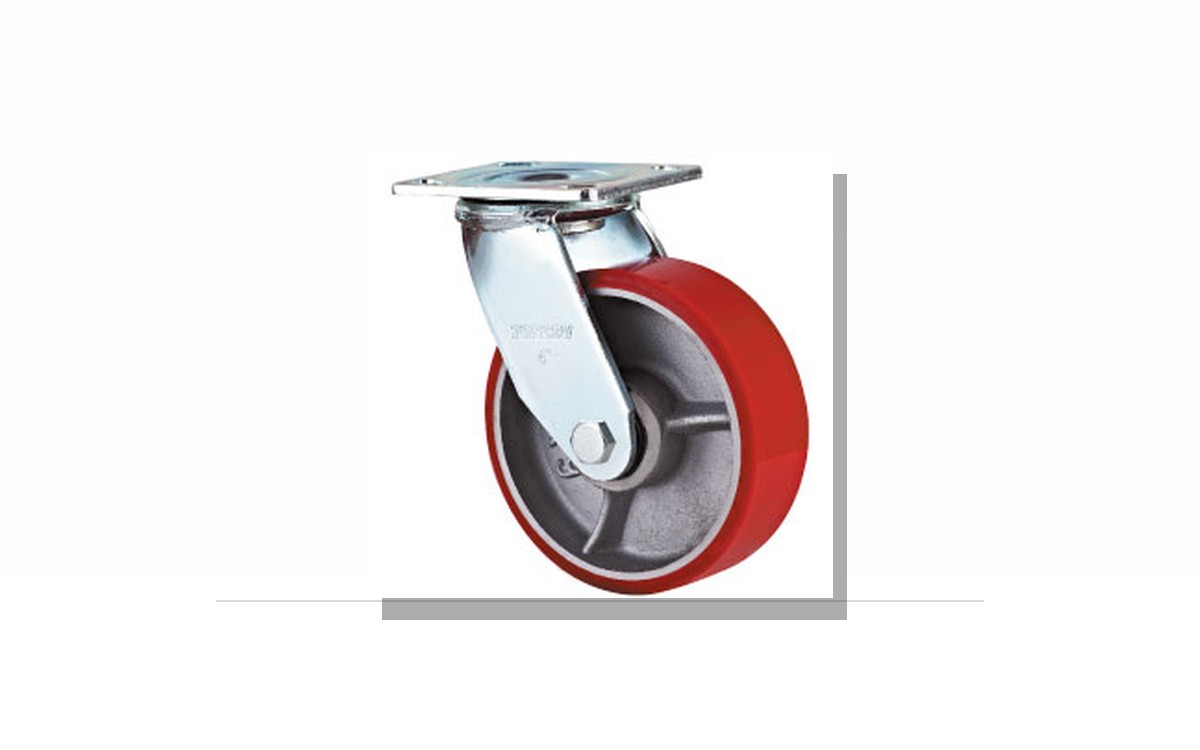
Series III offers high-capacity wheel materials matched to the job: nylon twin wheels for maximum load on smooth concrete, and iron-core polyurethane wheels for load capacity with floor protection and low rolling resistance. Wheel diameters extend to the largest sizes in our range, because larger wheels roll more easily under heavy weights and clear small obstacles. Installation heights scale accordingly, giving equipment builders the dimensional range they need for heavy platform designs. The iron-core PU option reaches 10 inch diameters for the very highest per-wheel capacities, while nylon twins suit cost-sensitive heavy-duty concrete-floor duty.
Built for Continuous Industrial Duty
Heavy-duty environments are rough: chips, oil, occasional impacts and long hours of operation. Series III brackets are built to resist these conditions, with sealed bearings that keep debris out and brake mechanisms tested for repeated heavy use. Total-lock brakes are essential on equipment this heavy, because a runaway cart carrying several hundred kilograms is genuinely dangerous. Every brake and swivel component in the series is specified for loads where failure is not acceptable, and the brackets carry enough steel to absorb the impacts that come with moving dies and heavy fixtures all day.
Specifying the Extra-Heavy Series III
The Series III extends our capacity range, but choosing correctly is what keeps heavy loads moving safely. These points cover sizing, wheel choice and brake configuration for the heaviest mobile equipment.
Start With the N-1 Load Calculation
For loads this heavy, correct sizing is non-negotiable. Use the N-1 method: divide the total loaded weight by the number of casters minus one, then apply a safety factor. For heavy industrial and towed service, factors of 1.5 or higher are prudent, and for outdoor or dock duty 1.75. For platforms carrying extreme weights, erring on the side of a higher rating is far cheaper than the consequences of a caster that bottoms out. Series III ratings are specified to give buyers that margin with confidence, and our engineering team can review the calculation before you commit to a specification.
Match the Wheel to the Floor
Even at maximum load, the wheel material must suit the floor. Nylon wheels carry the most weight per size but are noisy and can mark softer floors, so they suit smooth concrete in heavy industrial settings. Iron-core polyurethane wheels deliver nearly as much capacity while protecting floors and rolling more quietly, making them the preferred choice for finished plant floors. Choose based on floor condition and noise requirements, not capacity alone, because the strongest wheel on the wrong surface still marks the floor and fatigues operators.
Configure Brakes and Swivel for Safety
On heavy equipment, configuration is a safety decision. Swivel casters on the leading corners give maneuverability; rigid casters at the rear give tracking. Total-lock brakes on all corners hold a heavy platform firmly while it is loaded or unloaded. Directional locks keep long heavy carts tracking straight. Because the equipment weighs a lot, brake quality and placement should be verified against how the cart is actually used in service, rather than chosen from catalog defaults. A well-configured heavy cart stops where the operator intends, every time.
Order Series III From SyncCasters
SyncCasters' extra-heavy Series III is built for the most demanding mobile loads in industry, with twin-wheel construction, reinforced brackets, nylon and iron-core polyurethane wheels, and tested total-lock braking. Alongside it we supply our full light, medium and heavy ranges plus leveling casters for stationary machines from 1.5 to 4 inches. For die carts, heavy racks and high-load platforms, contact our engineering team with your loaded weight, floor and towed or pushed duty, and we will spec a caster that carries the load safely.








