

When Standard Is Not Enough
Some equipment has unusual loads, tight height limits, special floor requirements, or brand-specific mounting that no catalogue caster can satisfy. In Step 3 we move beyond the standard range and design a caster built for your exact application, then price it clearly so there are no surprises.
What We Can Customize
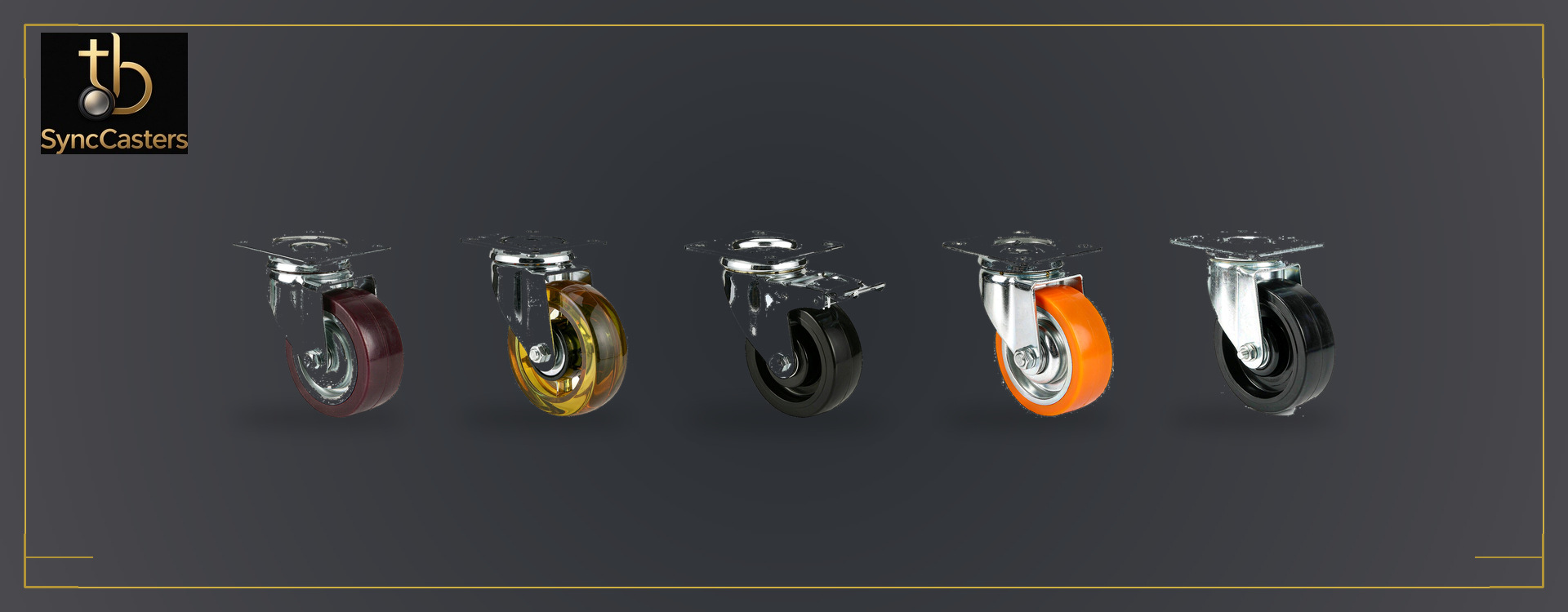
Customization covers wheel diameter and width, load capacity, bracket thickness and shape, mounting plate pattern or stem size, wheel material and hardness, brake type, swivel lock, and surface finish such as zinc plating, black coating or stainless steel for washdown areas. We can also add branding, laser marking, color-coded wheels or special packaging. Manufacturers like Goodich Hardware demonstrate how far caster customization can go, and our OEM and ODM program is built around the same flexibility, adapting existing tooling where possible and developing new parts where needed.
The Design Review
Our engineers translate your requirements into a proposed design, often referencing tooling we already hold to reduce both cost and lead time. We check the design against the load calculation from Step 2 and flag any trade-offs openly, for example that a larger wheel improves rolling over thresholds but raises overall equipment height, or that a softer tread protects the floor but reduces maximum load. You receive the proposal with these points explained, not just a drawing and a number, so you can make an informed decision about where to compromise and where not to.
A Quotation With No Hidden Cost
The quotation lists unit price, any one-time tooling or mould charges, minimum order quantity, lead time, packaging and payment terms. We deliberately separate the one-time tooling cost from the recurring unit price so you can see exactly what drives the number and compare it fairly. If a small design change reduces cost without hurting performance, we suggest it rather than automatically quoting the most expensive option. The goal is a design that works for both your equipment and your budget.
From Proposal to Approved Design
Once the quotation is accepted, the design is locked and prepared for sampling. Any open questions are resolved before tooling begins, so the physical sample reflects the agreed specification rather than a working draft.
Engineering Your Exact Part
For ODM projects we develop the part from your concept; for OEM we adapt existing tooling to your exact dimensions. You receive drawings or 3D files for review and approval before anything is produced. This approval gate is what keeps custom projects on schedule, because the sample then matches the approved design rather than a guess that has to be revised. We keep your feedback loop short so design questions do not stall the project.
Next: The Physical Sample
With the custom design approved, Step 4 moves to sampling and confirmation. You receive a physical caster to test on your real equipment before we commit to full production, which is the safest and cheapest way to de-risk a custom specification. If the sample needs adjustment, we revise it before production rather than after, which saves both time and money compared with fixing a whole batch.
Our OEM and ODM Capability
SyncCasters offers OEM and ODM support across bracket, wheel, brake and finish, so a non-standard requirement does not mean you have to compromise on performance. We adapt existing tooling to keep costs down and develop new parts when the application demands it. Send us your drawing, your load and your constraints, and we will design a caster that fits your equipment precisely rather than making your equipment fit a catalogue.
