
Casters That Keep AGVs on Track
When an automated guided vehicle manufacturer needed support casters for a new range of mobile robots, they came to SyncCasters with a demanding brief: low rolling resistance, consistent height, precise tracking and continuous-duty load capacity. AGVs run for hours without stops, carry widely varying payloads and rely on software, sensors and navigation that only work when the wheels underneath perform. This case study explains how we specified medium and heavy duty casters that met the robot's real duty cycle rather than its nominal peak load, and what that meant for the vehicle's reliability on the floor.
Starting From the Vehicle's Duty Cycle
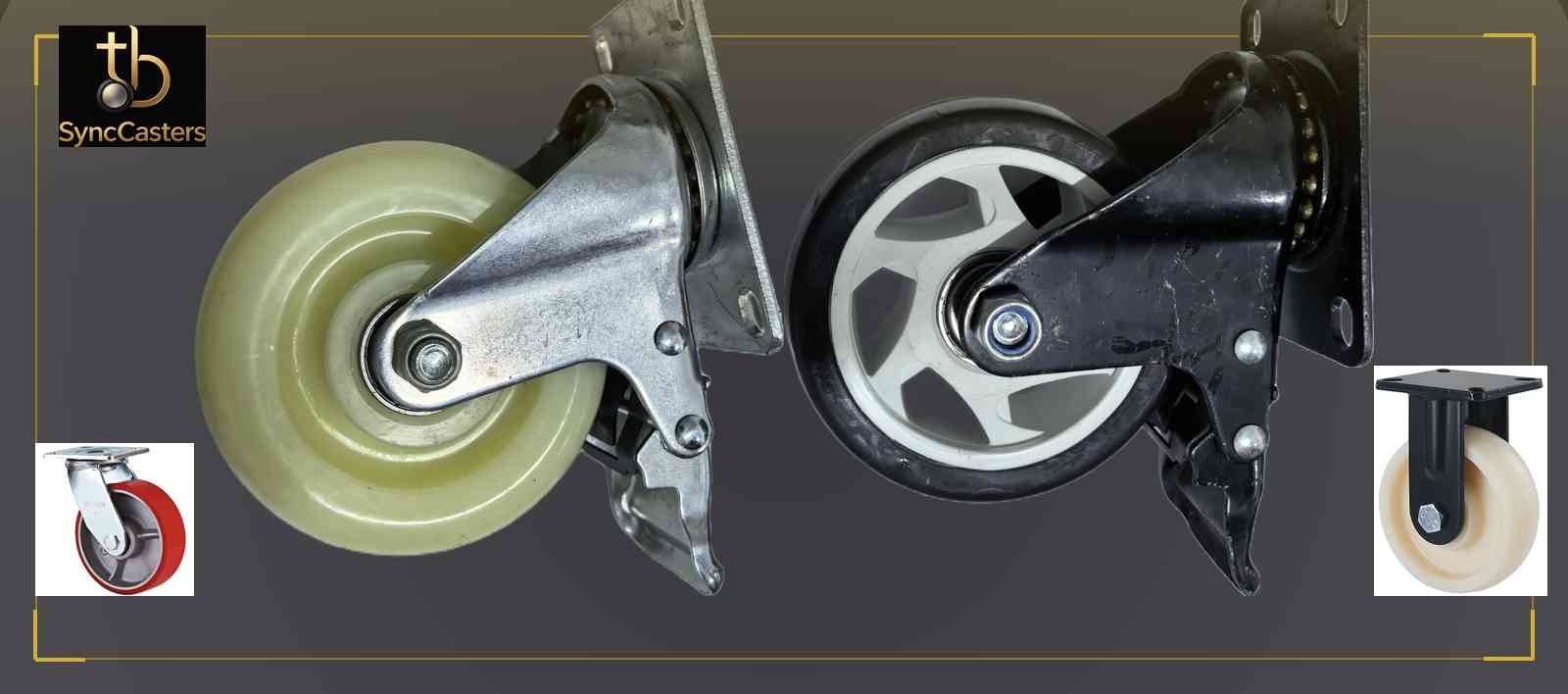
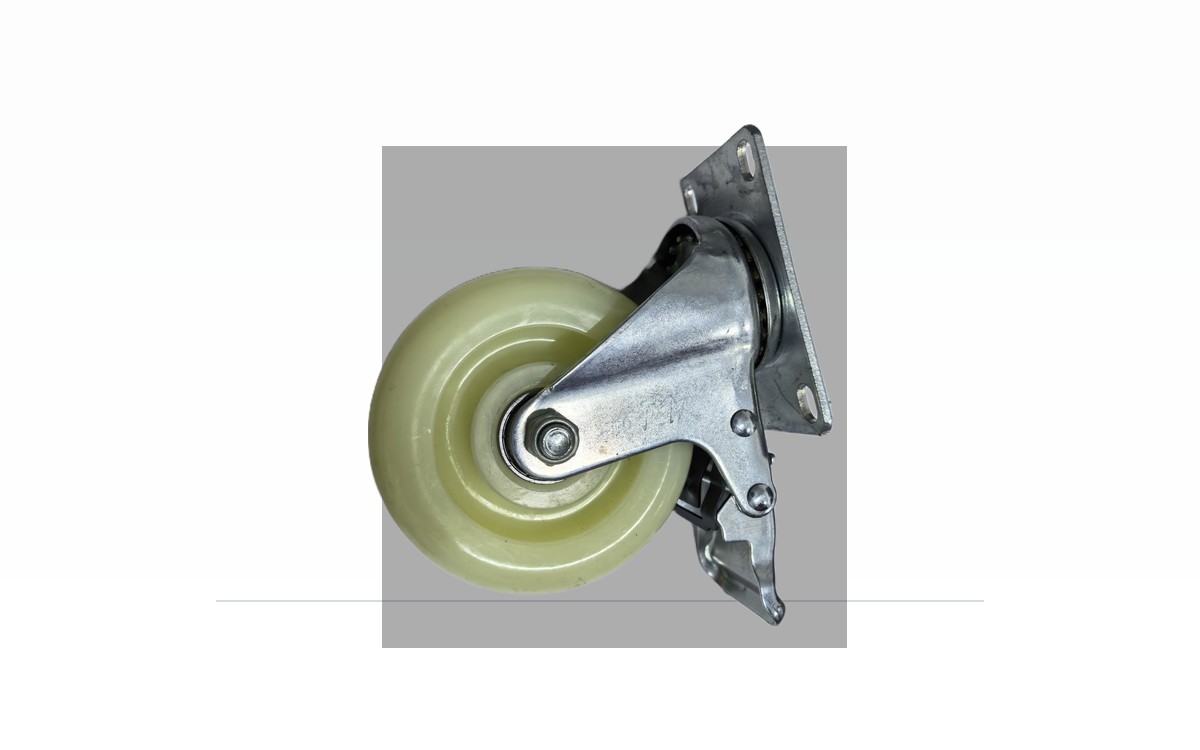
The first question was not maximum load but continuous duty. The AGVs operated in a 24/7 distribution center, so casters had to survive constant rolling without overheating or wearing. We applied the N-1 method to the vehicle's loaded weight and then added margin for continuous operation, because a caster sized for occasional movement will fail quickly under round-the-clock use. Twin-wheel configurations were preferred for the support positions, giving each platform stable tracking while the driven wheels handled propulsion. We also derated for speed and duty cycle, which is essential when a wheel never gets a rest between shifts.
Choosing Wheels for Smooth Floors and Quiet Runs
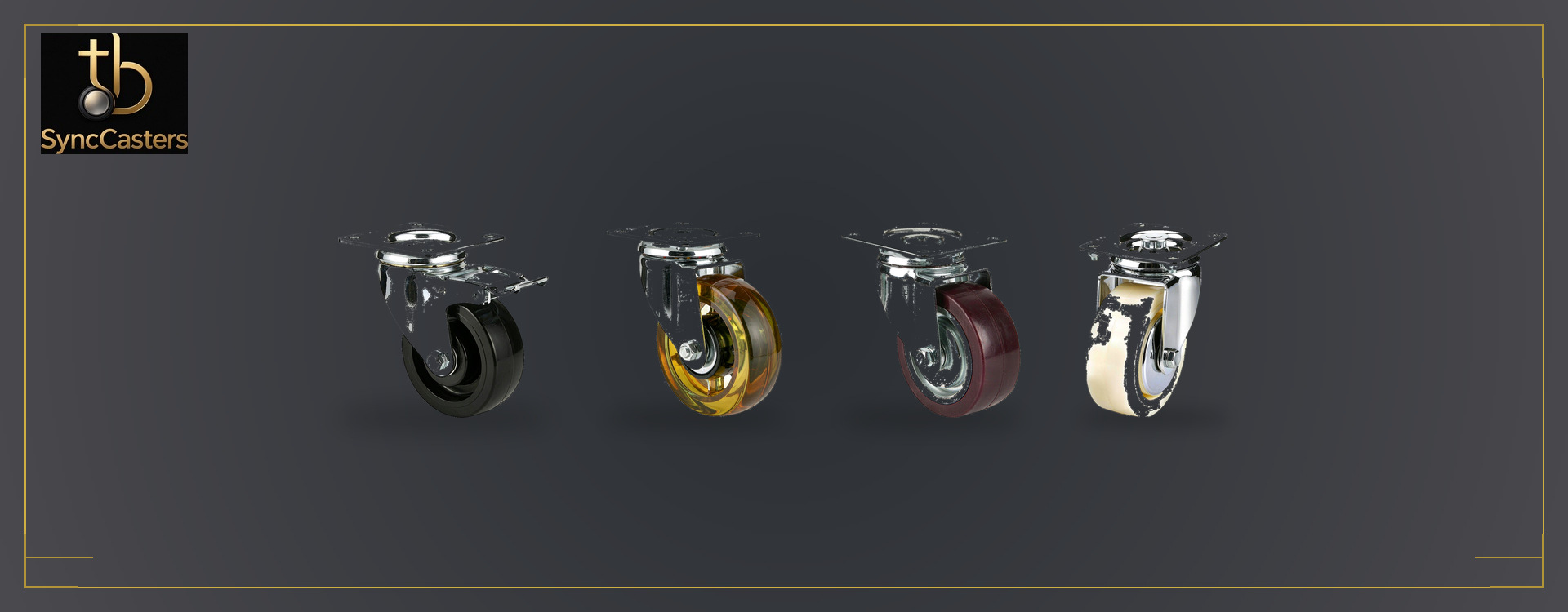
The warehouse floor was smooth epoxy, which narrowed the wheel choice quickly. Polyurethane wheels offered the best combination of low rolling resistance, floor protection and quiet running, all critical for AGVs that operate near staff. We avoided harder wheels that would transmit vibration into the robot's navigation sensors. Medium duty brackets, designed for 2.5 to 5 inch wheels, provided the right balance of compact size and load capacity for the robot's footprint. The low rolling resistance of PU also reduced the energy the robot consumed, which directly extended battery life between charges.
Matching Mounting Height to the Robot Frame
Automated platforms are engineered to tight dimensional tolerances, so mounting height and bolt pattern had to match the robot frame exactly. We supplied casters with the specified installation height and top-plate pattern, ensuring the platform sat level and the navigation sensors stayed calibrated. Even small height variations across support casters can introduce drag and drift, so dimensional consistency across the whole set was a requirement we tested and documented before shipment. For AGVs following floor-mapped navigation, that level consistency protects the accuracy the whole system depends on.
Results and Lessons for AGV Caster Spec
A successful AGV caster specification is judged on the floor, not on paper. Here is what the customer reported after deployment, what we learned about sizing support casters for robots, and how the design scaled across their fleet.
Stable Tracking Over Long Runs
Once deployed, the casters delivered the tracking the customer needed. Platforms rolled smoothly over the epoxy floor, swiveled reliably at navigation points and held consistent height across shifts. The low rolling resistance reduced the energy the robot consumed pushing itself, which extended battery life between charges. For an automated operation, every percent of reduced drag directly improves throughput and lowers operating cost over the fleet's lifetime. The customer reported fewer navigation errors traced to wheel drift, which had been a recurring issue with their previous generic support casters.
Reduced Maintenance Intervention
Sealed bearings and durable polyurethane tread meant the support casters needed little attention over months of operation. In a 24/7 facility, any manual caster intervention costs more than the part itself, because it pulls a robot out of service. The customer reported far fewer wheel-related work orders than their previous generic casters, and the casters that did require replacement were easy to swap thanks to the standard top-plate mounting. Planned swaps during maintenance windows replaced unplanned failures during operation, which is exactly how an automated fleet should run.
Scaling the Design to More Platforms
Because the specification worked, the customer adopted the same caster design across additional platform sizes. This is the real value of a well-specified component: it becomes a standard rather than a one-off. SyncCasters supported the scaling by providing consistent production runs, so the casters on platform number fifty matched the ones on platform number one. For growing AGV and AMR fleets, that predictability is worth a great deal, because validating a new caster design on every new platform model is expensive and slow.
SyncCasters for Automated Mobility
SyncCasters manufactures medium and heavy duty caster ranges suited to AGV and AMR support positions, with polyurethane and steel-core wheels, sealed bearings and tested brackets built for continuous duty. We also supply leveling casters for stationary equipment that must align with automated lines, from 1.5 to 4 inches with precision height adjustment. If you build automated platforms and need casters that match your duty cycle, contact our engineering team with your vehicle weight, floor and operating hours, and we will help you spec mobility that keeps your robots moving.








