
The Wheel Is Engineered, Not Just Poured
A caster wheel looks simple, but producing a durable, true-running tread is a precision process. Whether the wheel is injection-molded polypropylene, cast-bonded polyurethane or thermoplastic rubber, the molding and curing controls decide how long it lasts, how smoothly it rolls and how well it protects the floor. Modern wheel production balances material science with tight process control to deliver consistent quality across thousands of wheels. The manufacturing process is what turns raw compounds into a wheel that performs to its rating. Consistent production quality is what makes large repeat orders dependable rather than a gamble.
Injection Molding PP and Nylon Wheels
Polypropylene and nylon wheels are injection-molded: molten polymer is forced into a steel mold under pressure and cooled, forming a solid, dimensionally accurate wheel. This process is fast, repeatable and ideal for light-duty PP and high-strength nylon wheels, producing smooth surfaces and consistent weight. Steel-core versions overmold or assemble a metal hub inside the plastic to raise load capacity. The molding temperature, cooling time and mold design all control shrinkage, which is what keeps the wheel running true rather than wobbly. Consistent molding is why a batch of wheels all roll the same.
Cast-Bonded Polyurethane Treads
Premium PU wheels are cast-bonded: liquid polyurethane is poured around a steel or polyolefin core and cured, creating a resilient tread chemically bonded to the hub. This bonding is critical: if the tread separates from the core, the wheel fails. Cast PU delivers the best combination of load capacity, floor protection and quiet rolling, which is why it dominates medium and heavy duty. Production controls the PU formulation, pouring and curing to ensure consistent hardness, adhesion and wear resistance across the whole batch. A well-bonded PU tread will wear out before it ever separates from the core.
Thermoplastic Rubber for Quiet Wheels
TPR wheels are injection-molded from a thermoplastic rubber compound, combining the cushioning of rubber with the processability of plastic. TPR is the quiet, floor-friendly choice for medical, office and display casters, rolling smoothly and marking nothing. Production controls the TPR hardness to balance softness against load capacity, because too soft and the wheel compresses under load, too hard and it loses its quiet cushioning. The result is a wheel engineered specifically for low-noise, floor-sensitive duty. TPR's consistent molding quality is what makes it reliable across large orders.
Consistency Behind Every Wheel
Tread Hardness and Quality Control
Wheel performance is measured partly by durometer, the tread's hardness. Production checks every batch to ensure the cured hardness matches the design, because variation means some wheels roll harder or wear faster than others. Inconsistent hardness is a common failure point in cheap wheels, where one tread may be too soft and compress while another is too hard and noisy. Published wheel-material durometer comparisons help buyers understand the hardness range their application needs, and quality molding is what delivers it consistently. Consistent hardness across a fleet means every cart rolls and wears the same way. Buyers who understand this process can more reliably judge which wheel suppliers will deliver consistency at volume.
True Running and Bearing Fit
A wheel must be round and its bearing seat precise, or it will wobble and wear the axle. Molding controls and post-machining ensure the bore is sized accurately for press-fit bearings, and the outer diameter is concentric. A true-running wheel rolls with less resistance, runs quieter and lasts longer, which matters for both human-pushed carts and AGV platforms where consistent motion is essential. Poor concentricity shows up as vibration and accelerated bearing wear, even on a wheel that looks fine to the eye. Precision here protects both the wheel and the equipment it carries. This consistency protects both the rolling performance and the durability that buyers rely on across a long production run.
Wheels Built for Leveling Caster Stations
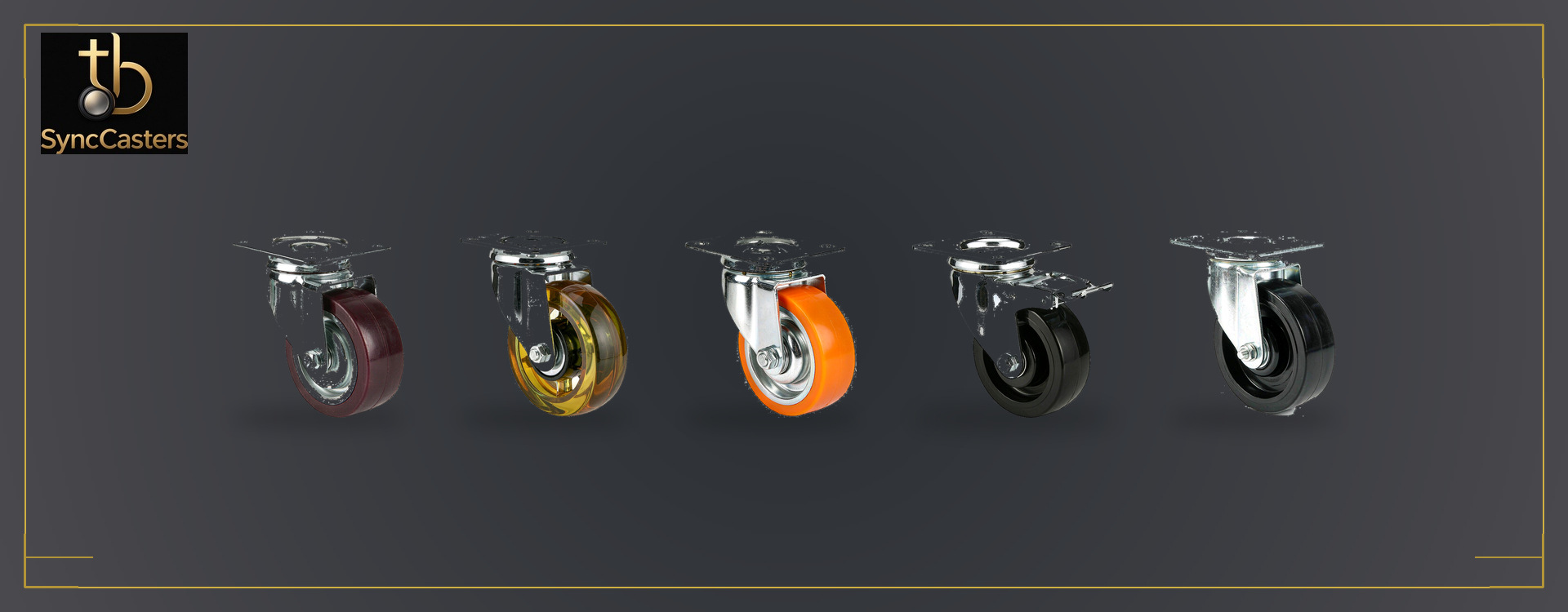
SyncCasters leveling casters use wheels produced with the same molding and bonding controls, offered in PU, TPR and PP to match the floor. In 1.5 to 2 inch light, 2.5 to 3 inch medium and 4 inch heavy sizes, the wheel rolls the machine into position while the precision threaded foot does the stationary work. Optional 30 mm and 60 mm spring-shock versions further cushion vibration for machine tools, display racks and workbenches. The wheel and foot are produced together as a matched system for reliable, long-life service. This matched production is what makes a leveling caster roll smoothly and lock solidly.
SyncCasters Wheel Production Quality
SyncCasters manufactures PP, TPR, PU and nylon wheels through controlled injection molding and cast-bonding processes, with batch testing for hardness, adhesion and true running before assembly. Our OEM and ODM program customizes tread material, durometer and hub design to each application, so buyers get a wheel matched to real load, floor and noise requirements. Contact us with your duty cycle and floor, and we will supply molded or cast-bonded wheels built to roll smoothly and last. For OEM buyers ordering thousands of wheels a year, this batch-to-batch consistency protects both the equipment and the reputation of the finished product.








