
Why Equipment Needs Precise Leveling
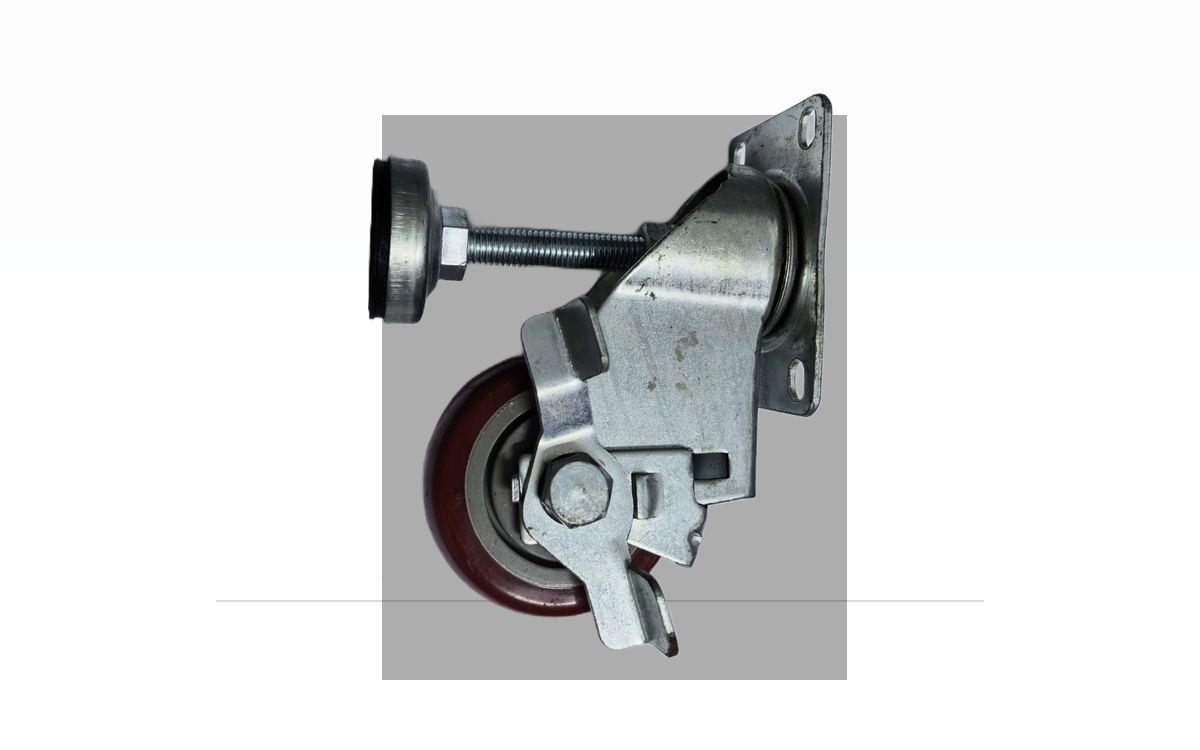
Some equipment must not only move; it must stand perfectly still and perfectly level while it works. Machine tools, packaging lines, workbenches and laboratory instruments all share this need. A standard caster provides mobility but lets the equipment settle unevenly, which causes vibration, inaccurate operation and premature wear. Leveling casters solve this by combining a wheel with an adjustable leveling foot, giving equipment both mobility and precision in a single component.
Machine Tools and Production Equipment
Machine tools such as saws, presses and assembly fixtures need stable, level support during operation. Any rocking or height difference reduces accuracy and increases wear on the machine and its tooling. Leveling casters allow operators to move the machine into position, then screw the foot down to take the weight off the wheels and set the exact height. The result is a machine that rolls when you need it to and stands rock-solid when it works.
Display Racks and Retail Fixtures
In retail and exhibition environments, display racks and fixtures must sit level on floors that are rarely perfect. A rack that rocks looks unprofessional and can be unsafe under load. Leveling casters let merchandisers adjust each corner independently, leveling the rack in seconds and locking it in place. When the display needs to move for a new layout, the same casters roll it to the new position. This flexibility is why leveling casters have become standard in modern retail fixtures.
Workbenches and Laboratory Equipment
Workbenches, lab benches and analytical instruments require a stable, vibration-free surface. Analytical balances, microscopes and test equipment are sensitive to any movement, so the bench must not settle or rock during use. Leveling casters give laboratories the ability to position equipment precisely and level it once, with the confidence that it will stay put. For environments where cleanliness matters, leveling casters with smooth designs are also easier to clean than fixed legs.
Leveling Casters vs Standard Casters
Stability During Operation
The core difference is stability. A standard caster keeps the equipment mobile but leaves it resting on wheels, which roll under vibration and settle unevenly on imperfect floors. A leveling caster, once the foot is engaged, transfers the load from the wheel to the foot, eliminating rolling and providing a stable, level base. For equipment that operates while positioned, this stability directly improves performance and safety.
Height Adjustment Flexibility
Leveling casters also solve height problems. Floors in old buildings and industrial facilities vary by several millimeters, and equipment with fixed legs often ends up rocking or stressed. The adjustable foot on a leveling caster compensates for floor variation at each corner, leveling the equipment precisely. Some designs offer significant adjustment range, which is valuable when equipment must align with conveyors or adjacent machinery.
When to Choose Leveling Casters
Choose leveling casters when the equipment must both move and stay stationary in use: machine tools, packaging equipment, display racks, workbenches and laboratory instruments. Choose standard casters when mobility is the only requirement and the equipment does not need precise positioning during operation. In many cases, a mix works best: leveling casters on the corners that carry the load, standard casters elsewhere.
SyncCasters Leveling Solutions
SyncCasters supplies leveling casters engineered for precise height adjustment, with sturdy metal construction, smooth rolling and dependable locking. Our leveling range suits machine tools, display racks, workbenches and industrial equipment, with sizes and load capacities to match different applications. Every model combines the convenience of a caster with the precision of a leveling foot, and our team supports OEM and ODM projects with custom capacities, finishes and adjustment ranges. Contact us to specify the right leveling caster for your equipment and floor conditions.








