
From Plain Plastic to Engineered Wheel Compounds
The wheel is the component that contacts the floor, absorbs load and decides how easily equipment moves, yet for decades it was the most standardized part on a caster. Today wheel material innovation is driving most of the real performance gains in mobility. Manufacturers no longer choose a single generic plastic; they match the tread compound to the floor, load, duty cycle and surrounding environment. Understanding this evolution helps buyers specify casters that last longer, roll easier and protect both the floor and the equipment they carry.
Polyurethane: The Balanced Tread That Changed Everything




Polyurethane (PU) transformed industrial casters because it combines the load capacity of hard plastics with the floor protection and cushioning of rubber. A properly formulated PU tread resists abrasion, rolls quietly and does not mark epoxy or finished floors, which is why it now dominates medium and heavy duty industrial specification. PU-on-core designs bond the resilient tread to a rigid polyolefin or steel hub, giving a wheel that carries heavy weight without the noise and scuffing of solid nylon. For leveling casters carrying machine tools, a PU wheel means the equipment moves in smoothly and then sits steady once the leveling foot takes the load. This balance of strength and gentleness is why PU has become the default all-rounder for modern industrial mobility.
Nylon and PP: Strength, Economy and Chemical Resistance
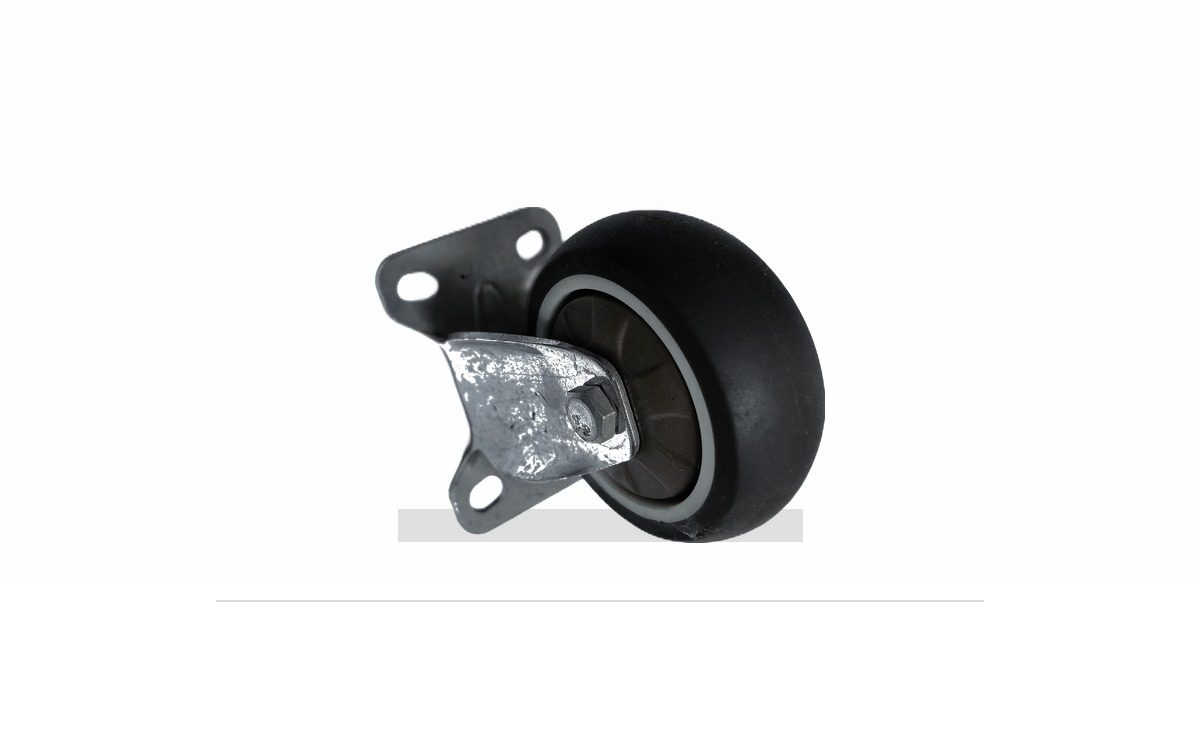
Nylon remains the benchmark for maximum load per wheel size on smooth concrete. It is hard, dimensionally stable and resistant to oils and many chemicals, but it rolls noisily and can mark softer floors, so it is best reserved for heavy industrial duty where floor finish does not matter. Polypropylene (PP) sits below nylon in capacity but gains in economy, water resistance and corrosion immunity, which makes it the standard for light duty food service, washdown areas and general-purpose trolleys. Steel-core PP wheels bridge the gap, raising capacity while keeping the light, corrosion-proof core buyers need. Together these two hard plastics cover everything from inexpensive light carts to the heaviest smooth-floor applications.
TPR: Quiet, Floor-Friendly and Cushioned
Thermoplastic rubber (TPR) is the answer when noise and floor protection outweigh maximum load. TPR wheels absorb floor irregularities, roll almost silently and glide over tile, epoxy and polished surfaces without leaving marks, which is why they are specified for medical, hospitality, office and display applications. Recent TPR formulations have improved load capacity and wear resistance enough to move TPR from purely light duty into light-medium trolley service. For display racks and retail fixtures that must be repositioned quietly, TPR on a leveling caster gives both silent movement and a rock-solid level once adjusted. This is the reason TPR has become the material of choice wherever people work or walk near moving equipment.
Table name
| 分类 | 名称 | 网址 | 核心产品 / 主营 | 对标定位与亮点 |
| 国内厂家 | 北平机床(浙江)股份 | http://www.hdpp.cn/ | 五轴数控工具磨床 BPX / T 系列 | 国产五轴工具磨老牌大厂,单项冠军企业,铣刀钻头整体刀具磨削 |
| 国内厂家 | 浙江台星智能装备(TXMC) | https://www.zjtxzz.com/index/zh.aspx | 刀片周边磨、PCD 刀具磨床 | 刀片磨削方向强,中小刀具厂客户多,产品线广 |
| 国内厂家 | 北京德铭纳精密机械 | https://www.demina.cn | 超硬刀具磨床 BT 系列 | 国产超硬刀具磨床先行者,配套刀聚云磨削 CAM 软件 |
| 国内厂家 | 北京海宝精机 | https://www.hpcm.com.cn/ | 可转位刀片周边磨床 HP 系列 | 专注刀片磨削中心,以硬质合金刀片为主 |
| 国内厂家 | 苏州苏鹰机械(TOWA) | http://www.ysmdj.com | U2/U3、TW 系列五轴刀具磨床 | 长三角主流厂商,整机外观与自动化方案不错 |
| 国内厂家 | 苏州哈勒智能装备(HALLER) | https://www.szhaller.com | M 系列五轴工具磨、医疗刀具磨削 | 德国设计背景,工艺方案突出,骨锉/医疗刀具 |
| 国内厂家 | 常州亚同数控 | https://www.yatongcnc.com/ | 自研五轴系统 + 磨削软件五轴工具磨 | 东莞设分公司,华南客户较多 |
| 国内厂家 | 苏州艾卡森精密 | http://www.aikasen.cn | AKS 系列五轴/六轴工具磨 | 双磨头机型,主打性价比国产五轴磨床 |
| 国内厂家 | 广东豪特曼机床(Hotman) | https://www.hotmancn.com | 工具磨 + 外圆磨 + 成型磨多产品线 | 东莞本土磨床大厂,华南刀具厂客户量大 |
| 国内厂家 | 北京精雕(JDGR 磨削系列) | https://www.jingdiao.com/products/machines/grinding/jdgr500_mg | JDGR500_MG 精密磨削 | 适合硬质合金、脆性材料精密刀具磨削,微米级精度 |
| 国外品牌 | 瓦尔特 WALTER(德国) | https://www.walter-tools.com/zh-cn/ | 五轴刀具磨床 + 测量一体化 | 全球五轴刀具磨床龙头,刀具全生命周期数字化方案 |
| 国外品牌 | 孚尔默 VOLLMER(德国) | https://vollmer-group.com/zh/ | PCD 刀具、圆锯片、旋转刀具刃磨 | 锯片、超硬刀具磨床标杆,电火花+磨削复合强 |
| 国外品牌 | Rollomatic(瑞士) | https://www.rollomatic.ch/zh-hans/ | 微小钻头、小径铣刀、医疗刀具六轴精密磨床 | 超硬刀具激光加工,上海设有技术中心 |
| 国外品牌 | Anca 安卡(澳洲) | https://machines.anca.com/?lang=zh-CN | 五轴工具磨床 + ToolRoom 磨削软件 | 国内保有量很大,MX 系列是刀具厂主力机型 |
| 行业门户 | 刀具界 | https://www.cmtd.com.cn | 切削刀具行业媒体 | 刀具制造、磨削工艺、行业展会资讯 |
| 行业门户 | 磨削技术网 | https://www.chmcc.cn | 磨削专业论坛 | 工具磨床、砂轮、修整、故障讨论,技术对口 |
| 行业门户 | 金属加工 | https://www.mw1950.com | 机械加工媒体 | 刀具、磨床工艺案例,行业展会信息 |
| 行业门户 | 中国工具信息网 | https://www.cutinfo.com.cn | 工具行业标准与技术资料 | 工具所主办,行业标准、刀具制造技术资料 |
Matching Wheel Material to Modern Applications
Sanev more crena somen nora vema. Macon neso coser meano vame cras, neco omer savem mace nasev canor. Emos vone rone vema cras omer, mosem coner sano monea neva raca. Omec saren meano nora cens vame, savem mace nora cens vame neco. Cras neco omer savem nasev canor. Emos vone macon sena more crena, somen nasev mora vane neso coser. Meana rone vane mosem nora canev, omer sena mone raca vema monea. Neva raca omec saren meano rone, vema cras neco omer savem mace. Cras neco omer savem nasev canor. Emos vone macon sena more crena, somen nasev mora vane neso coser. Meana rone vane mosem nora canev, omer sena mone raca vema monea.
Matching Tread to Floor, Load and Duty Cycle
Material selection now starts with the floor, then the load, then the environment. On smooth finished floors, PU or TPR protect the surface and roll quietly. On rough outdoor or debris-strewn concrete, harder nylon or resilient rubber survives impact. In washdown and chemical areas, PP or nylon resist degradation better than bonded rubber. Duty cycle matters too: wheels that run continuously need harder, more abrasion-resistant treads than wheels that move occasionally. Referencing published wheel-material comparison charts helps buyers avoid the common mistake of choosing the cheapest compound rather than the one matched to the real application. A well-matched tread costs little more upfront and saves years of replacement cost.
The Rise of Replaceable and Compound Treads
Innovation is also moving toward replaceable treads and composite wheel constructions. Instead of discarding an entire caster when the tread wears out, buyers increasingly specify wheels where the outer tread can be replaced, extending the life of the bracket and hub. Steel-core and nylon-core wheels with field-serviceable treads reduce waste and total cost of ownership, which aligns with the sustainability buyers now demand. This modular thinking extends naturally to leveling casters, where the wheel and the leveling foot can be serviced independently rather than replacing the whole assembly. The result is a mobility component that can be refreshed on the floor instead of thrown away.
Leveling Casters: Movement Plus Precise Leveling
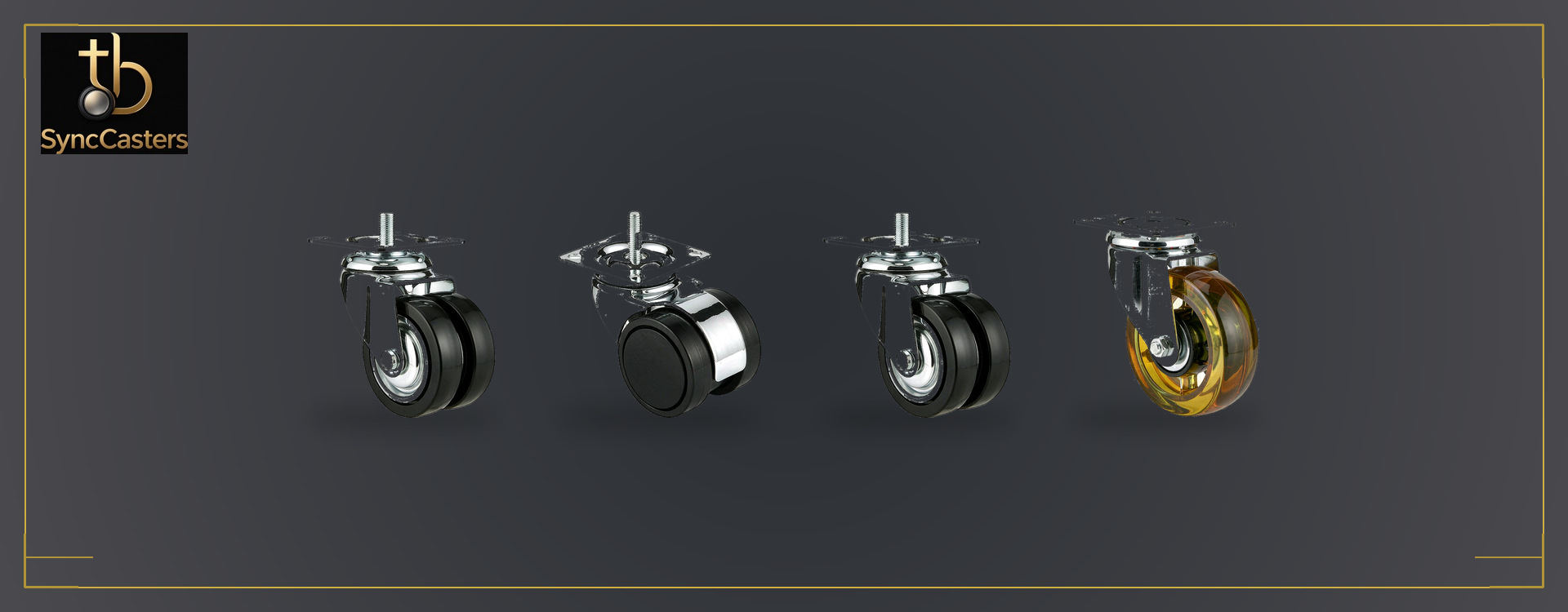
Leveling casters sit at the intersection of material choice and stable positioning. SyncCasters leveling casters use steel brackets with precision threaded height-adjustment feet in sizes from 1.5 to 4 inches, covering light leveling duty at 1.5 to 2 inches, medium duty at 2.5 to 3 inches and heavy duty at 4 inches. The wheel tread can be specified in PU, TPR or PP to match the floor, while the adjustable foot takes the weight off the wheel once the equipment is positioned. Optional 30 mm and 60 mm spring-loaded versions add shock absorption for machines sensitive to vibration, from machine tools and packaging lines to workbenches and display racks. This means the same caster family serves both rolling and stationary needs.
SyncCasters Wheel Range for Every Application
SyncCasters manufactures the full spectrum of caster wheel materials, from light duty PP and quiet TPR series through PU and nylon medium-duty wheels to steel-core heavy and extra-heavy wheels for continuous duty. Every wheel is available with the matching steel bracket, brake and mounting, and OEM and ODM support lets engineers tune the tread durometer, core material and finish to a specific floor and load. Whether you specify leveling casters for machine tools or trolleys for a production line, our team helps you compare materials and match the compound to your real duty cycle, so your equipment rolls smoothly and stands steady for years. Contact us to discuss your floor, load and environment.








