
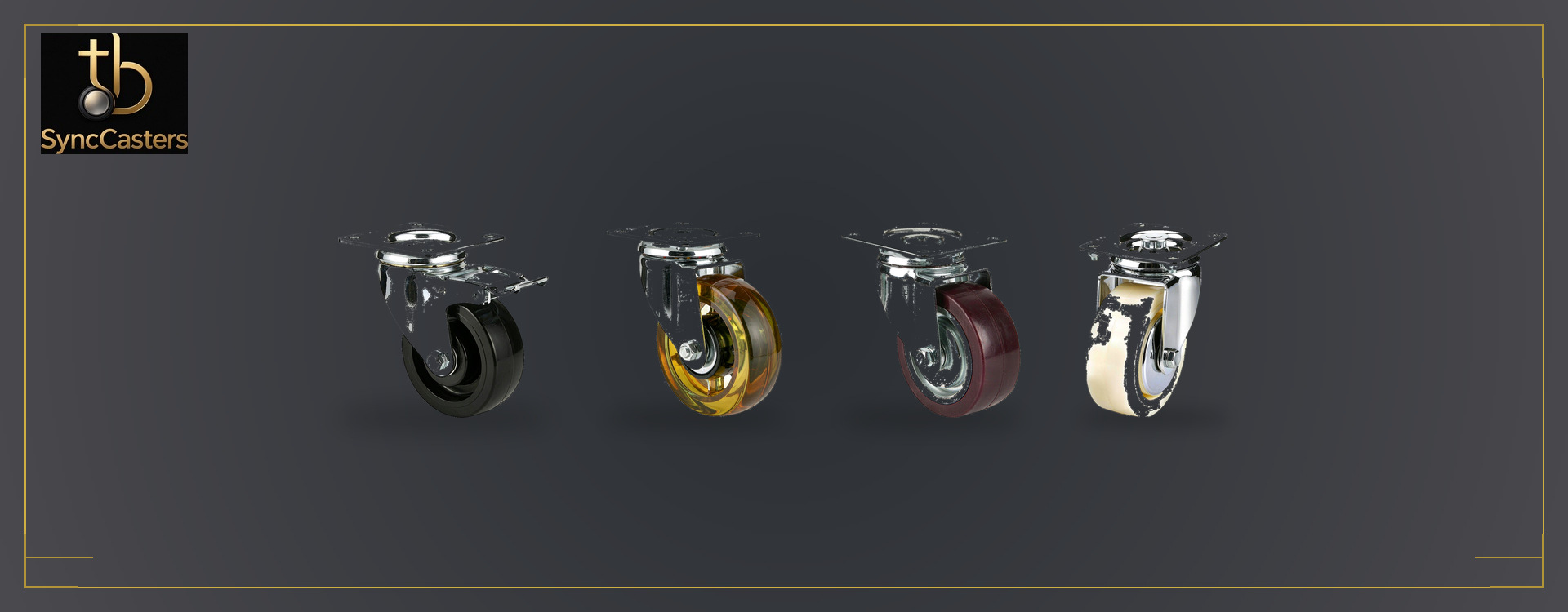
A New Production Line for More Consistent Casters
SyncCasters has commissioned a new automated caster assembly line at its Zhongshan manufacturing facility in 2026. The line automates bracket welding, wheel press-fitting, load testing and packaging for the company's light, medium and heavy duty caster ranges. The investment responds to rising global demand for reliable industrial casters, which market research values at roughly USD 5.85 billion in 2025 and projects to grow steadily through the early 2030s. The goal is not simply more output, but more consistent output: every caster that leaves the line passes the same torque, roll and brake checks before it is packed, so customers receive the same part order after order.
Automated Welding and Bracket Forming
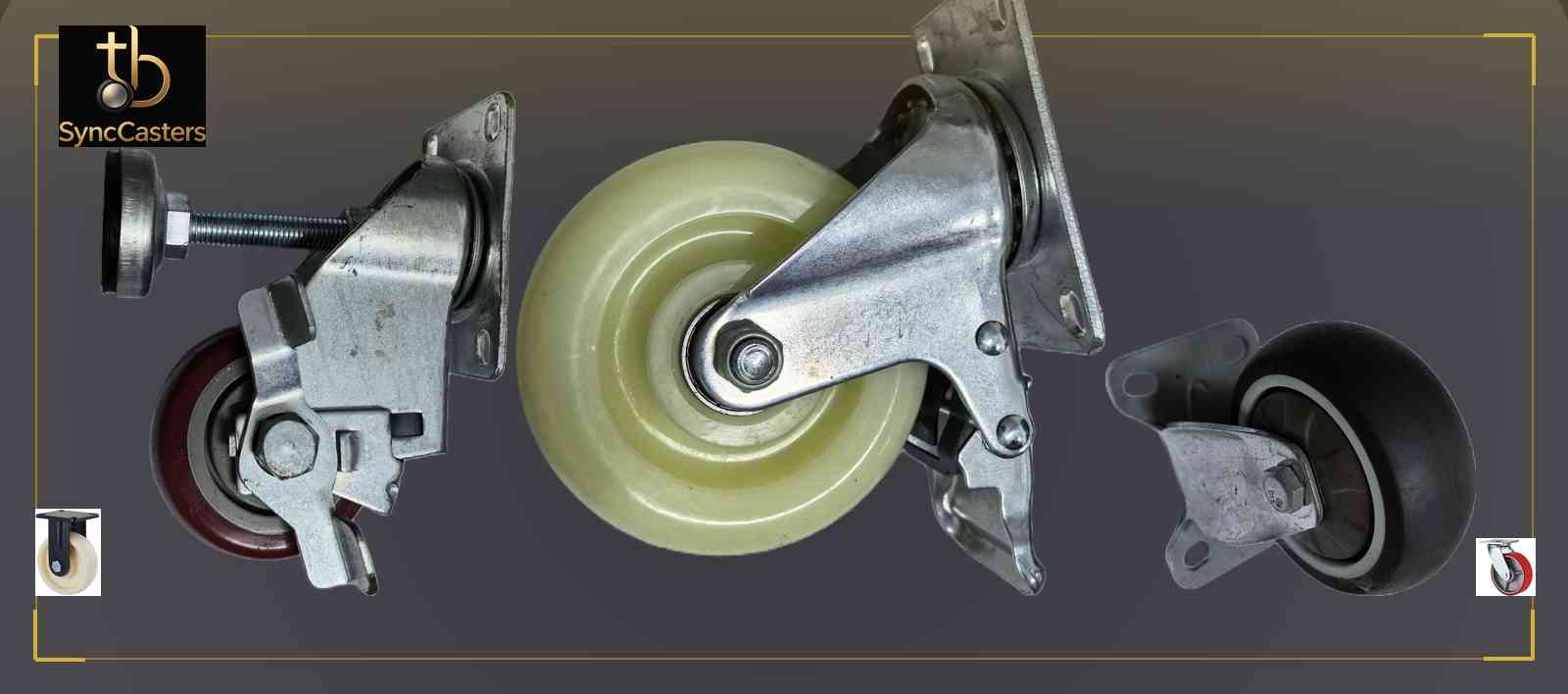
The new line begins with automated bracket forming and robotic welding. Caster brackets carry the entire load of a cart or machine, and weld quality is where cheap casters usually fail first. By moving from manual to robotic welding, SyncCasters reduces weld variation between brackets, which means swivel action stays smooth and kingpin joints stay tight across a whole production run. The steel brackets used in our leveling, medium and heavy duty ranges all benefit directly: consistent bracket geometry improves rolling performance, keeps swivel play within tolerance and extends caster life on the factory floor. Robotic cells also run repeatably through shifts, eliminating the fatigue-related inconsistency that hand-welded production inevitably develops by the end of a long day.
Inline Load Testing on Every Caster
Every caster on the new line passes an inline load test before packing. The station applies a measured load to the wheel and swivel bearing, checks roll effort against a baseline, and rejects any unit that falls outside tolerance. This matters for customers who specify casters for continuous-duty equipment: a caster that passes inline testing is far less likely to fail after installation. For heavy and extra-heavy series tested at wheel diameters from 4 to 10 inches, documented load verification gives buyers confidence that the rated capacity is real rather than nominal. The data from each test station is logged, so any production drift is caught immediately instead of surfacing as a field failure.
Faster Lead Times for Global Buyers
Automation also compresses lead times. Standard light, medium and heavy duty models can now be assembled and tested in larger batches, which means stock orders reach overseas warehouses faster. OEM customers running tight production schedules benefit most, because caster shortages are a surprisingly common cause of delayed equipment shipments. The new line is sized to handle growing export volumes to North America, Europe and Southeast Asia without the quality trade-offs that rapid scaling usually brings. Shorter lead times also mean buyers can hold less safety stock, which lowers working capital tied up in spare casters sitting on shelves.
What the New Line Means for Caster Buyers
The new line is already changing how we build and ship casters, but the details matter. The next section walks through what the upgrade means in practice for tolerances, consistency and custom projects, and how it translates into a more reliable caster on your floor.
Tighter Tolerances Across Every Series
Automated assembly controls tolerances that manual assembly cannot. Wheel seat concentricity, swivel play and mounting height variation are all narrower now, which is critical for buyers who need predictable tracking. On leveling casters, where the precision threaded foot must set an exact machine height, tighter bracket tolerances mean each corner settles the same way. Buyers specifying 1.5 to 4 inch leveling casters for machine tools and display racks notice the difference immediately: the feet adjust evenly, the machine sits flat, and no corner rocks on an uneven workshop floor. Consistent mounting heights also make it easier to swap a caster later without re-shimming the equipment.
Consistent Quality for OEM and Replacement
For OEMs, consistency across production runs is as important as peak quality. A caster ordered in January should match one ordered in October. Automated welding, press-fitting and inline testing make that repeatability predictable, which simplifies design validation and certification. For replacement buyers, knowing the caster they reorder matches the one they bought this year means maintenance and spares planning become straightforward rather than guesswork. That predictability is especially valuable for large fleets, where mixing caster vintages causes uneven wear and unpredictable spare requirements.
Capacity for Custom and OEM Projects
The new line also increases capacity for OEM and ODM projects. SyncCasters supports custom brackets, wheel materials, brake configurations and branding, and the automated line can be retooled to produce smaller custom runs without disrupting standard production. Whether a customer needs steel-core polypropylene wheels for a light duty cart, TPR silent wheels for a quiet workstation, or heavy TPE twin wheels rated for 4 to 8 inch duty, the line is built to adapt. Custom runs move faster too, because the same test equipment validates special parts as reliably as catalog stock.
Working With SyncCasters in 2026
The new automated line is part of SyncCasters' broader commitment to factory-grade mobility. Our ranges cover light, medium, heavy and extra-heavy duty casters, plus leveling casters with precision height adjustment for machine tools, display racks, workbenches and industrial equipment. With tighter tolerances, inline load testing and shorter lead times, we help equipment manufacturers and material handling operators move more reliably. Contact our team with your load, floor and duty-cycle requirements, and we will spec a caster built for continuous performance, backed by the production capacity to deliver it on schedule.








