
Certification as Standard, Not Marketing
SyncCasters has strengthened its quality management and product testing procedures to match the expectations of global industrial buyers. For export customers, a caster is only trustworthy if its capacity, brake performance and durability can be documented rather than asserted. Our production now follows a tightened inspection regime covering incoming materials, in-process testing and final load and brake checks on representative samples from every batch. The goal is simple: when a buyer specifies a caster rating, they can rely on it being real and repeatable across orders, and they have the paperwork to satisfy their own quality audits.
Documented Load and Brake Testing
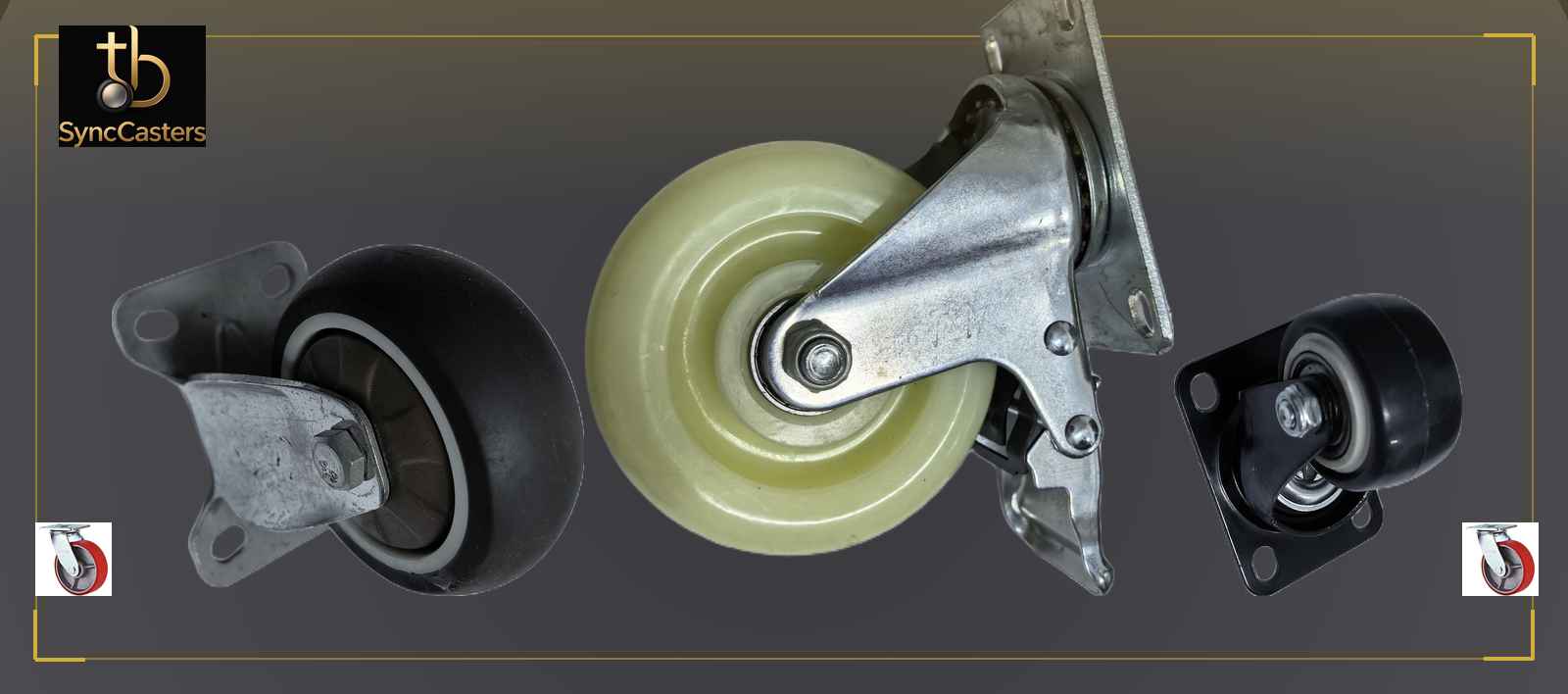
Certification begins with measurement. Every production batch includes load tests that verify the wheel and bracket perform at their rated capacity, and brake tests that confirm total-lock and side-lock mechanisms hold under the loads they are designed for. A brake that slips is a safety hazard, so brake testing is treated as seriously as load testing. For heavy and extra-heavy series rated up to several hundred kilograms per wheel, documented verification is what separates a credible supplier from a catalog of hopeful numbers. Test results are retained by batch, so a specific production run can always be traced back to the checks it passed.
Consistent Materials and Traceability
Quality depends on traceable inputs. Wheel compounds, bracket steel and bearing components are inspected on arrival so that variations in raw material do not reach the assembly line. This matters because wheel material determines almost everything about caster performance: polyurethane balances capacity and floor protection, nylon carries heavy loads on smooth concrete, TPR delivers quiet movement. By controlling these inputs, SyncCasters ensures the wheel compound a customer specifies is the one they receive, order after order. Traceability also means that if a component ever shows a trend, it can be contained before it reaches customers in the field.
Meeting Global Buyer Standards
Export customers in North America, Europe and beyond increasingly require documented quality systems before they will place a PO. Our reinforced procedures are designed to fit that procurement reality: batch records, test reports and product specifications are available for OEM and ODM buyers who need them for their own certifications. For equipment manufacturers selling machines into certified industries, a caster supplier with documented quality removes a whole layer of audit risk from the bill of materials. It also speeds up the sourcing process, because buyers do not have to spend months qualifying a supplier from scratch.
What Certification Means in Daily Use
A certified process only matters if it shows up in the equipment you actually use. Below we look at how documented quality changes day-to-day reliability, workplace safety and the procurement confidence that comes with traceable parts.
Fewer Unexpected Failures
The practical payoff of a certified process is fewer failures in service. When every bracket is welded to the same standard, every wheel press-fitted to the same tolerance and every brake tested to the same load, the caster behaves predictably over years of use. Buyers stop seeing random early failures that are impossible to trace, and maintenance teams stop replacing casters that should have lasted much longer. That reliability is worth more per caster than the small price difference buyers sometimes chase. Over a fleet of hundreds of casters, fewer unplanned stoppages easily outweigh any unit-cost saving on cheaper, untested parts.
Safer Machines and Workplaces
Certified brakes and verified load ratings are safety features. A cart carrying tools, parts or people-adjacent equipment must not run away, and a caster rated honestly must not collapse under its design load. By treating load and brake testing as core quality steps rather than optional checks, SyncCasters helps customers meet their own workplace safety obligations. For leveling casters holding machine tools and display racks stationary, a reliable support point is equally important: a foot that holds its adjustment keeps equipment stable instead of settling unexpectedly during operation.
Confidence for Replacement and OEM Supply
For replacement buyers, certified supply means the caster they reorder matches the one they already trust. For OEMs, it means design validation is not undermined by supplier variation. Whether you run a maintenance department reordering wheels for a warehouse fleet or an equipment factory specifying components for a new machine line, consistent certified supply removes uncertainty from procurement. Documentation supports audits, warranty claims and engineering review, which matters increasingly as customers demand more accountability from every tier of their supply chain.
SyncCasters Quality Commitment
SyncCasters backs every caster with documented load, brake and durability testing across our light, medium, heavy and extra-heavy ranges, plus leveling casters for machine tools, display racks, workbenches and industrial equipment. Our quality procedures are built for export, OEM and ODM customers who need proof as well as performance. Tell us about your certification and documentation requirements, and our team will provide the test reports and specifications your procurement and engineering teams need to approve our parts with confidence.








