
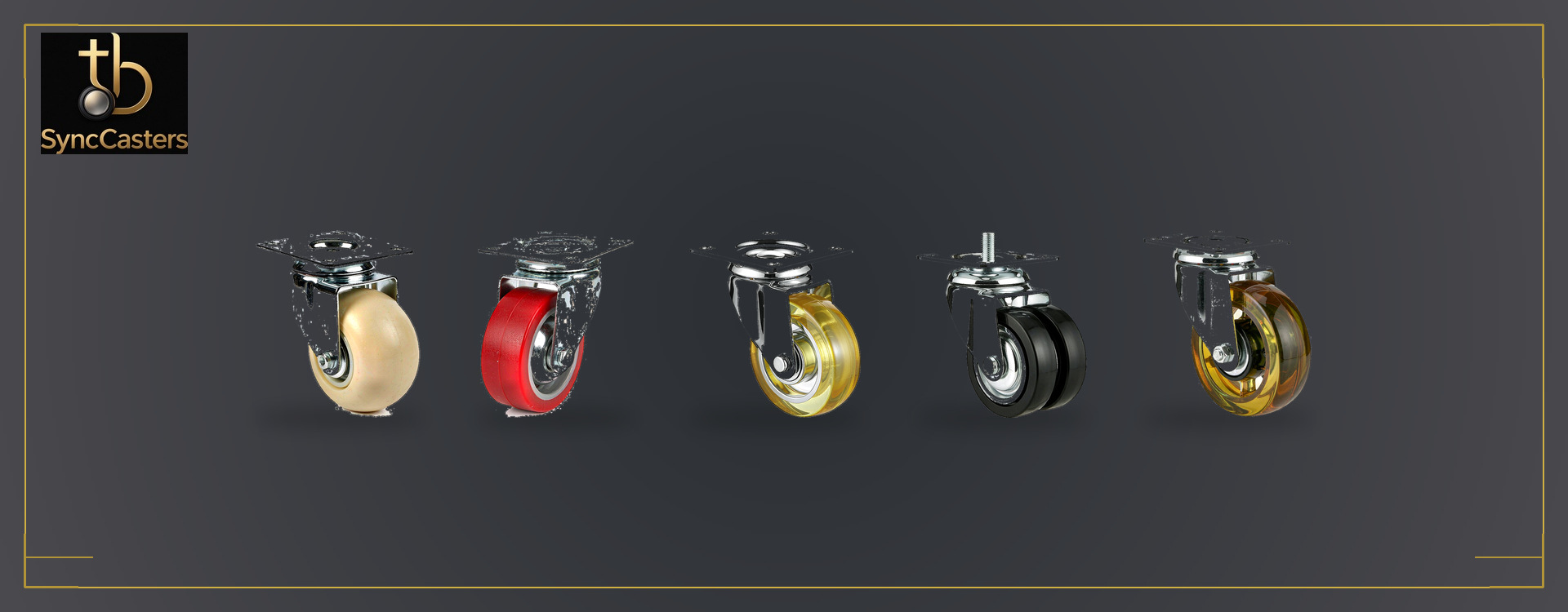
SyncCasters is a Zhongshan, China-based manufacturer focused on heavy duty and extra-heavy duty casters for industrial and commercial applications. From our factory in the heart of the Zhongshan hardware manufacturing cluster, we design, produce and supply swivel casters, rigid casters and complete caster assemblies to buyers, distributors and OEM partners worldwide. The sections below explain where we come from, how our factory runs, and why customers choose us as a long-term caster supplier rather than a one-off reseller.
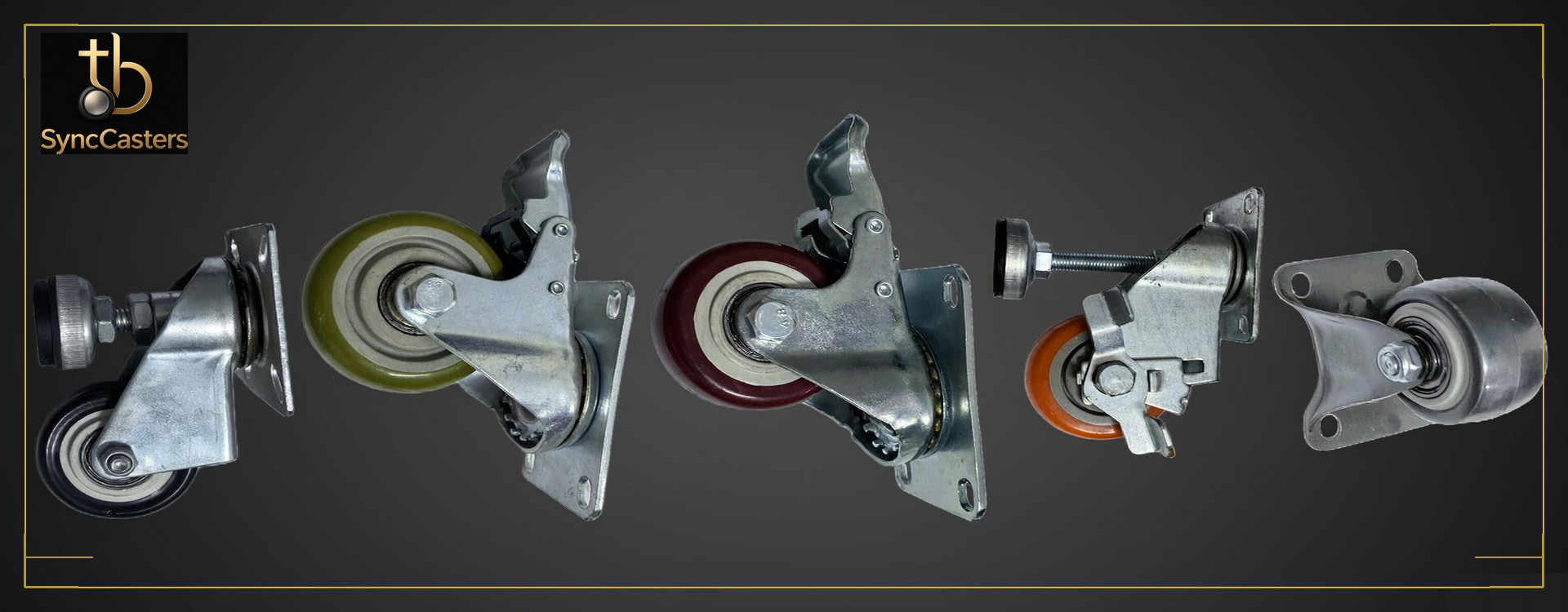
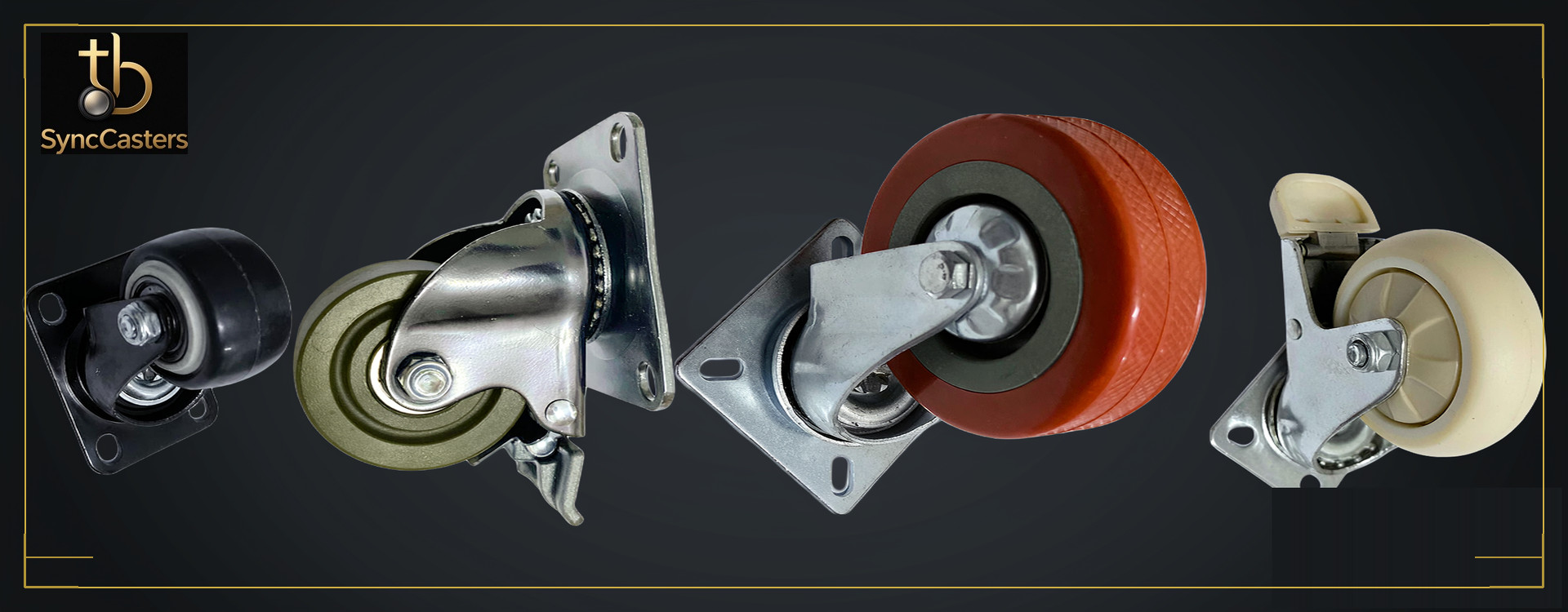
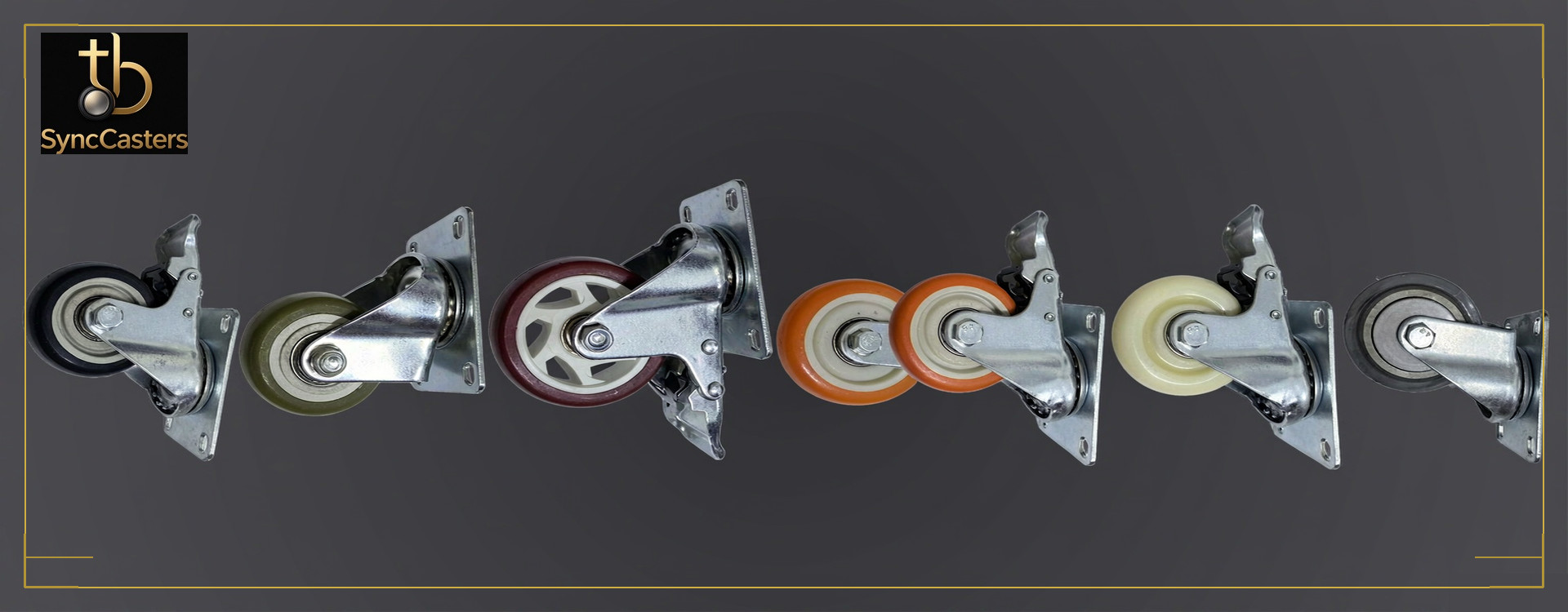
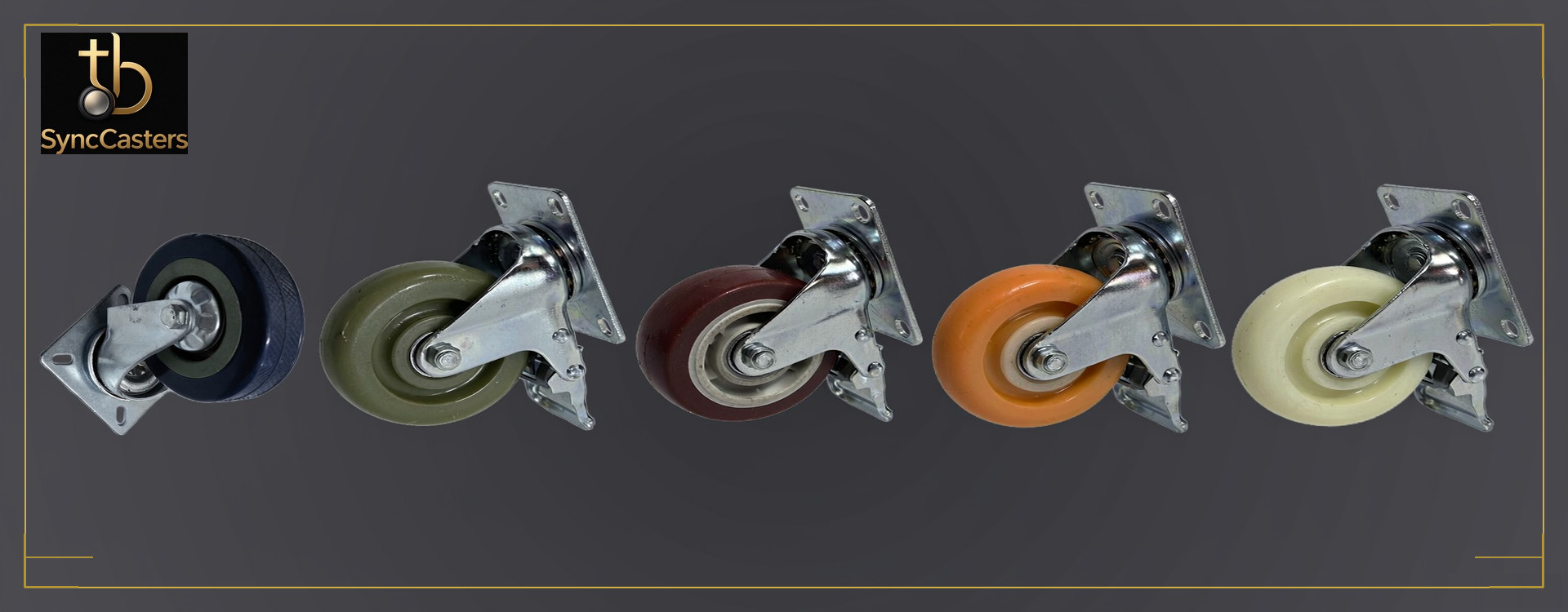
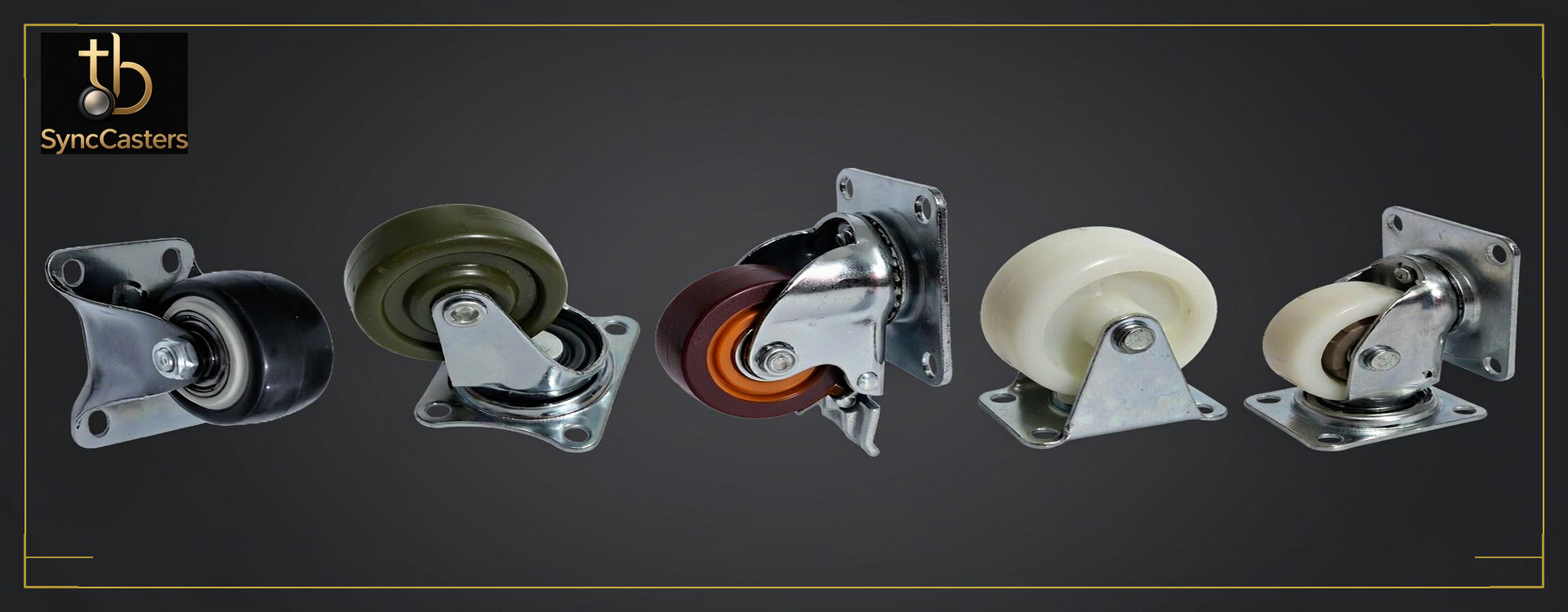

Built on Zhongshan Hardware Manufacturing Strength
SyncCasters operates from Zhongshan, a city in Guangdong province long known as one of China's most concentrated hardware and metal manufacturing regions. The local supply chain — steel strip, sheet and bar suppliers, stamping and welding shops, surface treatment lines, bearing producers and tooling workshops — developed over decades around furniture, architectural hardware and light industrial components. We grew out of that ecosystem, learning to bend, punch, weld and finish steel brackets to consistent industrial standards. Over time we narrowed our focus: instead of making general hardware, we concentrated on the product line where load, safety and movement matter most — casters.
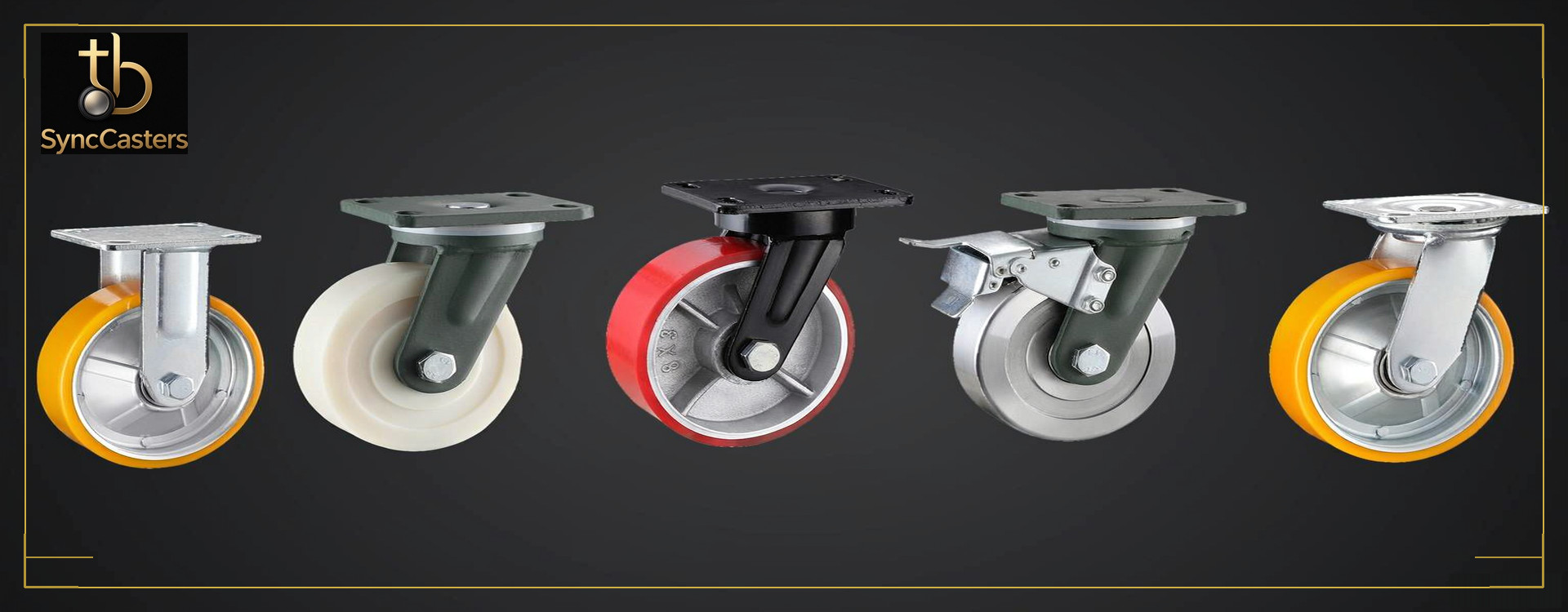
Today our specialization is heavy duty and extra-heavy duty casters. These are not the light wheels on shopping carts or office chairs. They carry frames, carts, racks, containers, machinery bases, enclosures and material handling equipment that may weigh hundreds to thousands of kilograms per set. A heavy duty caster has to hold a rated load without deforming the bracket, roll smoothly on industrial floors, pivot without excessive play, stop reliably with a brake, and survive years of thermal cycles, dust, moisture and occasional impact. Designing and building that kind of caster requires controlled material, precision forming and disciplined assembly — not a one-off fabrication.
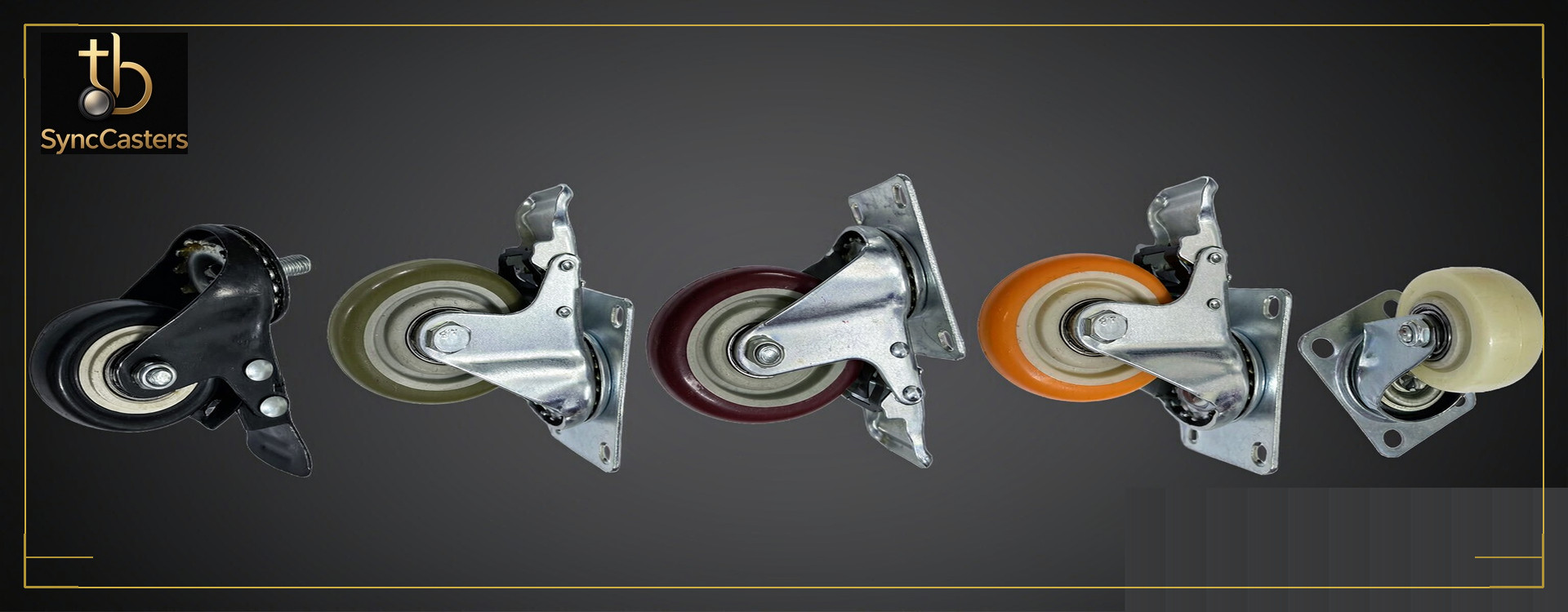
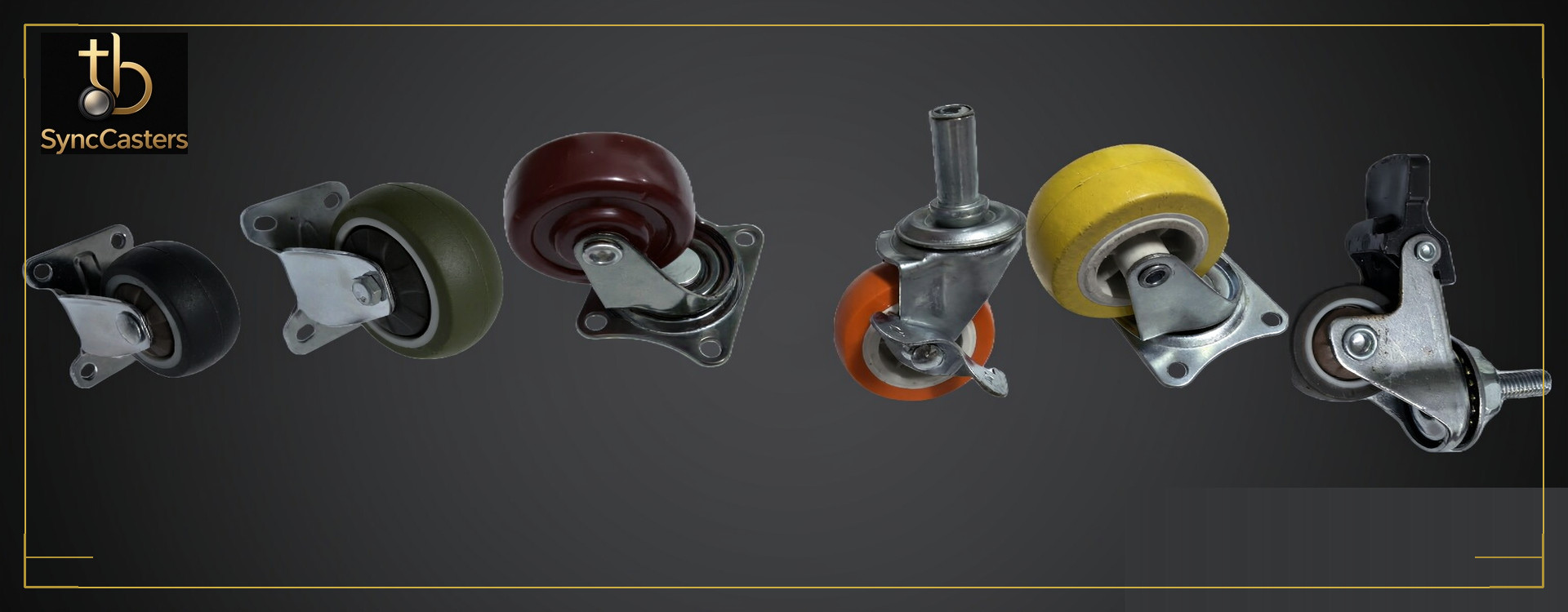
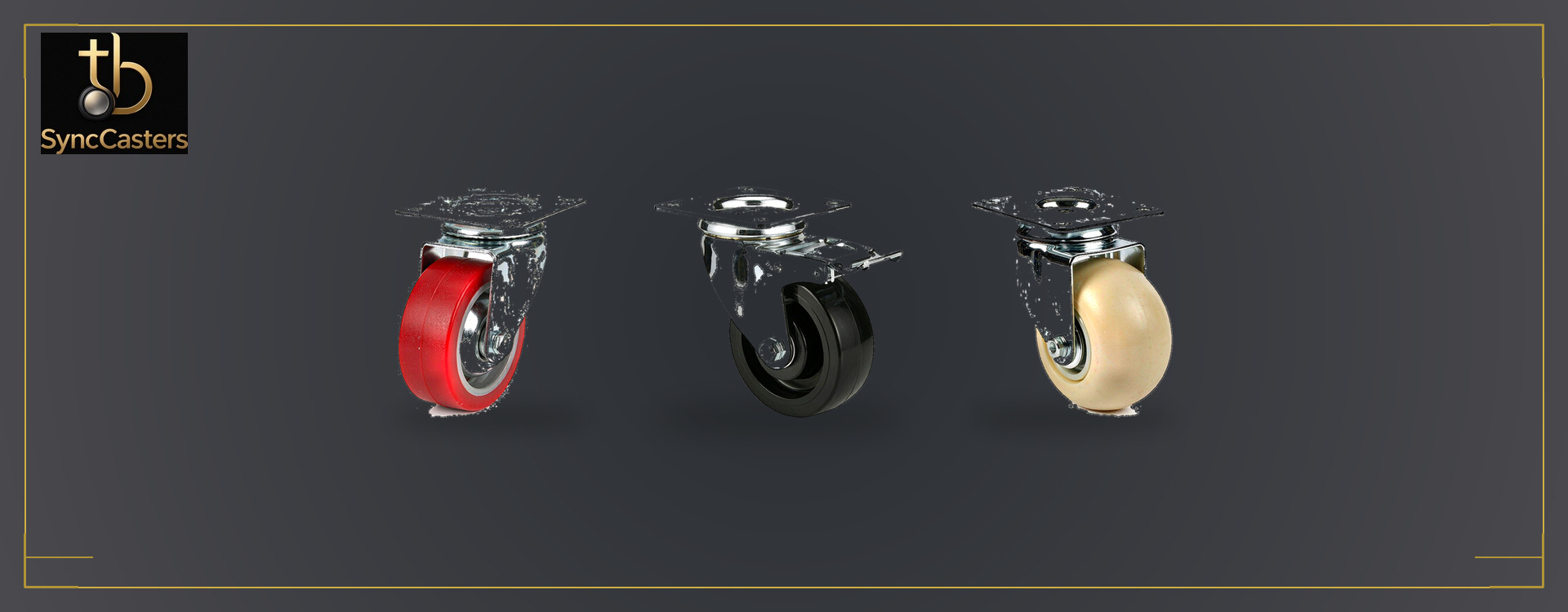
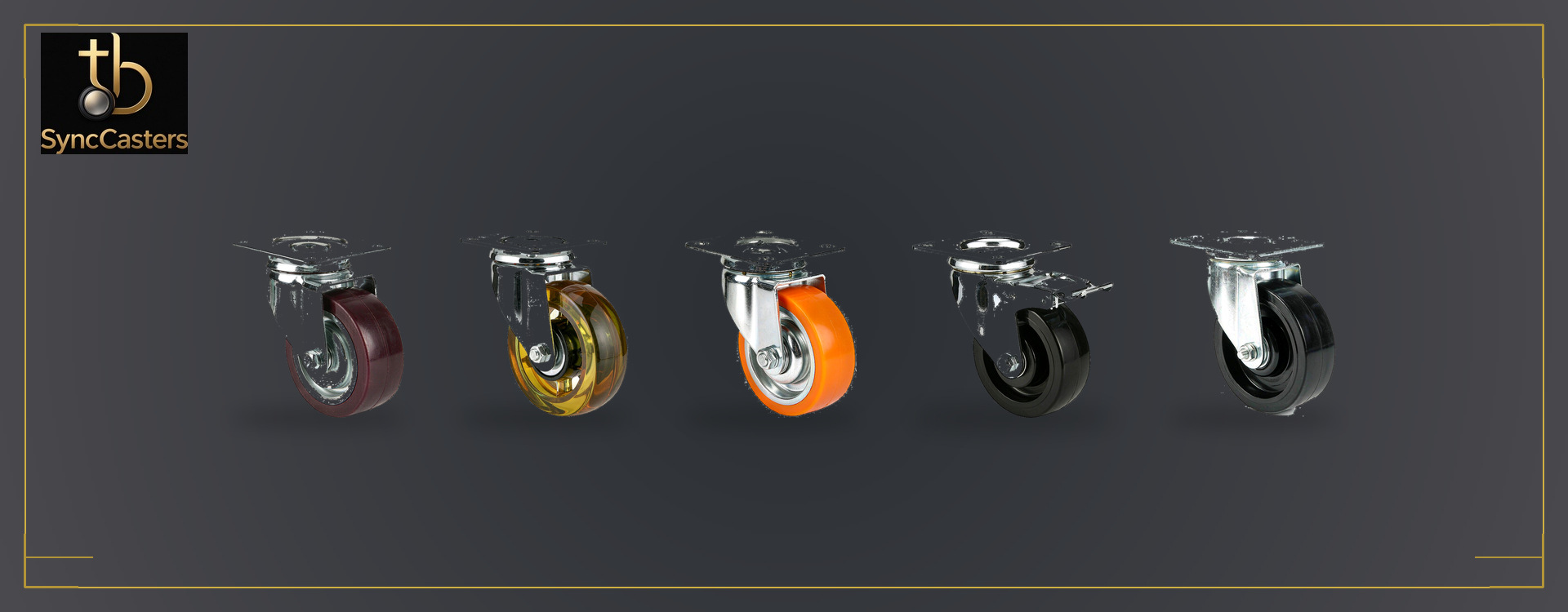
Inside our factory the production flow covers the full caster lifecycle. We start with strip, sheet and bar steel selected to the required strength and finish specification. Bracket components are cut, blanked and formed on presses; swivel sections use nested bearing constructions built to keep the yaw rotation steady under load. Welded joints on load-bearing arms are produced to consistent geometry so that every bracket in a run behaves the same way. Wheel cores are paired with the chosen tread material — polyurethane, nylon, TPR, rubber or cast iron depending on the application — and press-fitted or mounted on precision bearings. Axles, rivets, brake pedals and mounting plates or stems are then assembled in dedicated stations.
Quality control is embedded in the flow rather than bolted on at the end. Incoming materials are checked against the agreed specification before they enter production. Forming and welding stations work from fixed setups so that dimensional variation stays narrow. Assembled casters move through visual inspection, rotation checks, brake function checks and sample load testing before they are packed. Finished goods are labeled, batch-coded and packed for container shipping, with the documentation buyers need for receiving, customs and their own quality files.
We describe our operation as a focused mid-scale factory rather than a mega-plant. That means we run enough dedicated equipment and enough trained operators to deliver stable lead times on standard heavy duty caster ranges and to take on customized OEM and ODM builds, but we keep the organization close enough that engineering, production and sales talk to each other directly. Buyers work with the people who understand the bracket geometry, the wheel compound and the test data — not through layers of resale.
This process supports our four product tiers — Light, Medium, Heavy and Extra-Heavy — within a single engineering family. Because bracket design, tooling and quality methods are shared across the range, moving from a medium-duty swivel caster to an extra-heavy duty double-ball-bearing caster does not mean starting from scratch. The same disciplined approach that keeps a light caster quiet on tile floors is applied, with heavier sections and stronger welds, to a caster that must roll a loaded machine skid across a factory floor for years. That shared engineering base is what lets us quote standard catalog items quickly and still absorb non-standard requests.
Our Quality Philosophy
Quality at SyncCasters is built around four checkpoints that run through every order.
First, incoming material inspection. Steel strip, wire, bar, wheel compounds and brake components are verified against the agreed specification before release to production. Material declarations and batch records are retained so that a particular shipment can be traced back to its raw material lot.
Second, in-process control. Forming dies, welding fixtures and assembly stations are set to fixed dimensional targets, and first-off pieces are checked against the approved sample before a run continues. Operators and inspectors share the same gauges so that what production measures is what QC signs off.
Third, finished caster testing. Every batch goes through visual inspection for weld finish and plating, rotation and swivel checks, brake engagement and release tests, and sample load and rolling checks. Casters that do not meet the internal standard are quarantined rather than shipped.
Fourth, traceable documentation. Each batch is coded, packed and recorded, and we supply the paperwork buyers ask for — packing lists, batch records, material declarations and test summaries — so receiving, customs and downstream audits all have a consistent record to rely on.
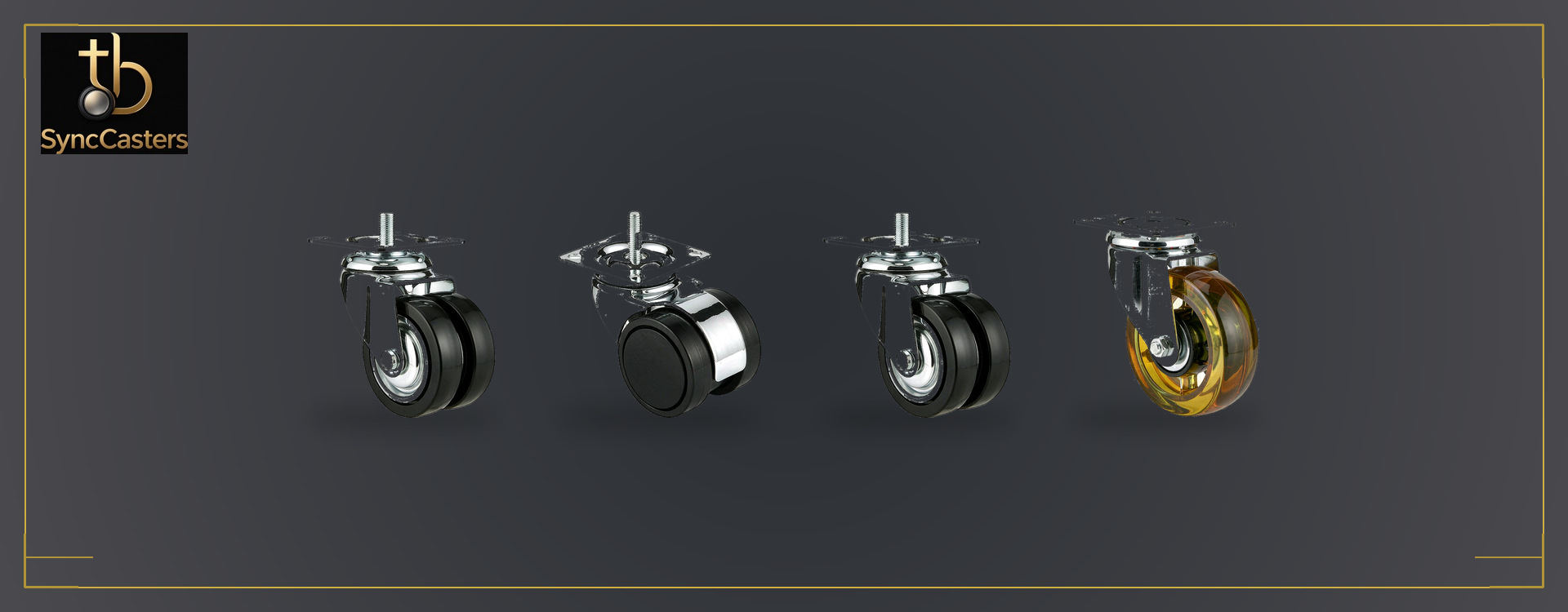
Design & Innovation
post excerpt...
Production
Post excerpt...
Qualification & Certificates
post excerpt...
Quality Control
Post excerpt including keyphrase for the post. Very essential and important content. No need too long. Kinds of the meta...
Catalog & Brochure
Explore our specialized industrial capabilities and certified engineering workflows.
How to work with us?
post excerpt...
Why Buyers Choose SyncCasters as Their Caster Partner
Choosing a caster supplier is choosing a partner that affects your product's reliability in the field. Buyers come to SyncCasters because we combine factory-direct control with the flexibility of a specialized manufacturer. We do not trade under someone else's brand, we do not rebox imported stock, and we do not treat a custom drawing as an exception. Instead we treat every enquiry — whether it is a repeat of a catalog heavy duty swivel caster or a fully ODM bracket — as a project that deserves an engineering answer.
For OEM partners, we build casters to your product's requirements. You define the rated load, the floor type, the mounting interface, the wheel material, the brake configuration and the cosmetic finish; our engineering team converts that into a bracket design, selects the bearing and axle arrangement, and takes the part through tooling, sampling and production. We can ship under your labeling, your packaging and your part numbering, so the caster disappears into your equipment and your customers never see a supplier they did not ask for.
For ODM and modification work, we adapt existing heavy duty platforms rather than starting from a blank sheet. Common requests include non-standard mounting plates or stems, custom wheel diameters and tread compounds, total-lock or directional-lock brakes, corrosion-resistant plating for washdown or outdoor use, heat-resistant wheels for ovens and furnaces, and noise-optimized treads for hospitals, hotels or office environments. Each modification is prototyped, tested against the intended load and floor, and signed off with the customer before serial production begins.
Communication is where many caster suppliers lose buyers. We work in plain technical language: load ratings in kilograms or pounds, wheel diameters in inches or millimeters, mount sizes written out, and lead times stated as a range we can actually hold. Enquiries get drawings or specification confirmations, samples get a tracking number, and production issues — if they arise — are raised early with a proposed fix rather than discovered at the receiving dock. Our sales engineers stay with an order from RFQ to container dispatch, so the person quoting you is the person you can call when the shipment lands.
We aim to be the supplier you do not have to re-quote every year. Stable tooling, retained batch records and repeatable production mean that a caster approved this year will match the same part number next year and the year after. For distributors, that means consistent inventory and fewer field complaints; for OEMs, it means fewer engineering change requests and smoother line-side receiving; for end buyers, it means the wheel that rolls today will roll the same way on the next container.
Because we sell internationally, we are familiar with export documentation, pallet and container loading, and the differences between European, North American and Australian mounting and brake conventions. We can advise on metric versus imperial dimensions, on corrosion protection for sea freight, and on which wheel compound performs best in a given climate and floor condition. The goal is not just to sell a caster, but to sell the right caster for the job.
Working directly with a factory reduces the risk chain. There is no middle layer substituting a cheaper bracket when steel prices move, no surprise on tread compound, and no vague answer when a customer asks which batch produced a returned wheel. Because we control forming, welding and assembly in-house, we can contain a problem quickly: trace the batch, inspect the station, adjust the process and re-test the next run. For buyers who supply equipment into safety-conscious industries, that level of direct control is worth more than the cheapest unit price.
Onboarding a new partner is straightforward. Send us the application, the rated load per caster, the floor, the environment, the mounting requirement and the target annual quantity. We come back with a recommended series, a wheel and brake choice, a sample plan and a production estimate. If your requirement is unusual — extreme load, extreme temperature, cleanroom, food-grade or coastal corrosion — we will say so honestly and propose the platform most likely to work, then prove it in samples before mass production.
Our Commitment to Every Order
Behind every SyncCasters order are commitments we hold ourselves to.
We commit to honest specifications. The load rating we quote is the rating we test to, not a marketing figure. If an application sits near a bracket's limit, we will tell you and recommend the next size up rather than watch a failure happen in the field.
We commit to direct communication. You deal with engineers and sales staff who can read a drawing, not call-center scripts. Questions about wheel material, brake type or mounting dimension get a direct answer in the units and conventions your market uses.
We commit to controlled quality. Incoming inspection, in-process checks and finished testing are non-negotiable; we would rather delay a shipment than release a caster we would not install on our own equipment.
We commit to confidentiality. Custom tooling, drawings and product details shared by OEM partners stay with that partner and are not reused for other customers.
We commit to long-term supply. Once approved, a part number stays approved: we retain tooling, records and batch history, and we support repeat orders with the same documentation and the same geometry, year after year.








