
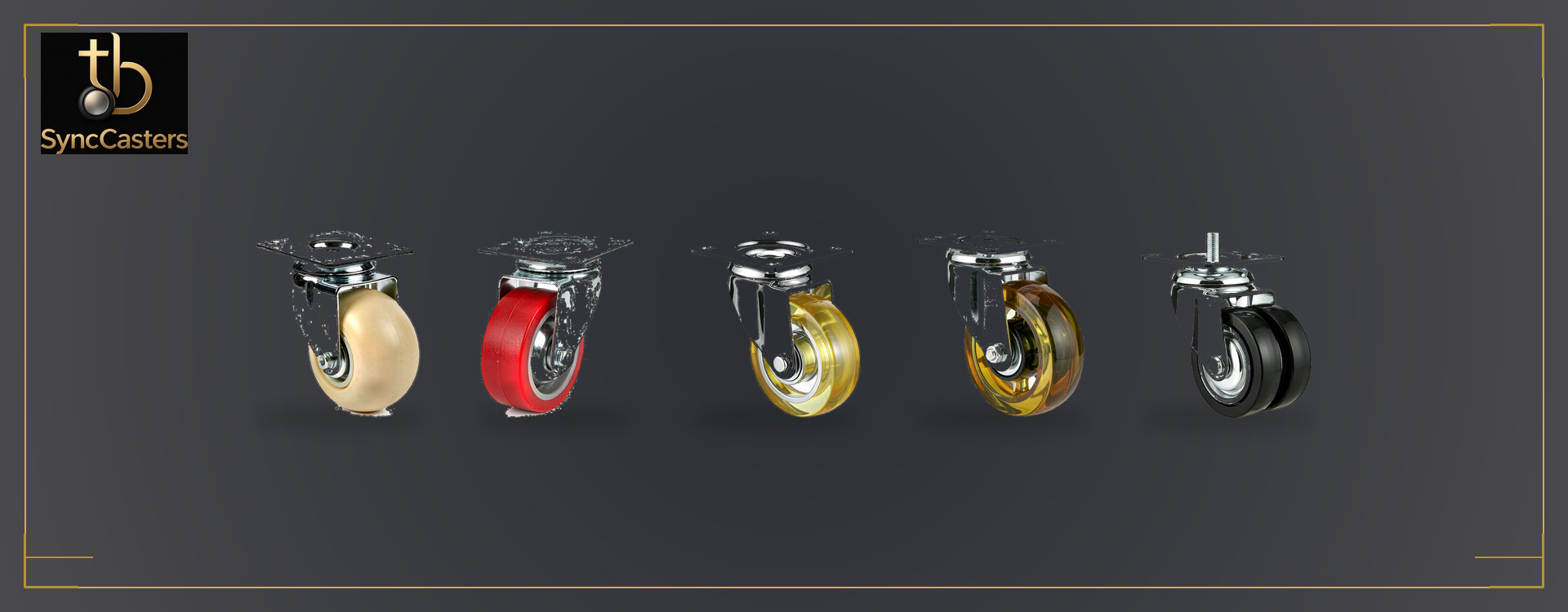
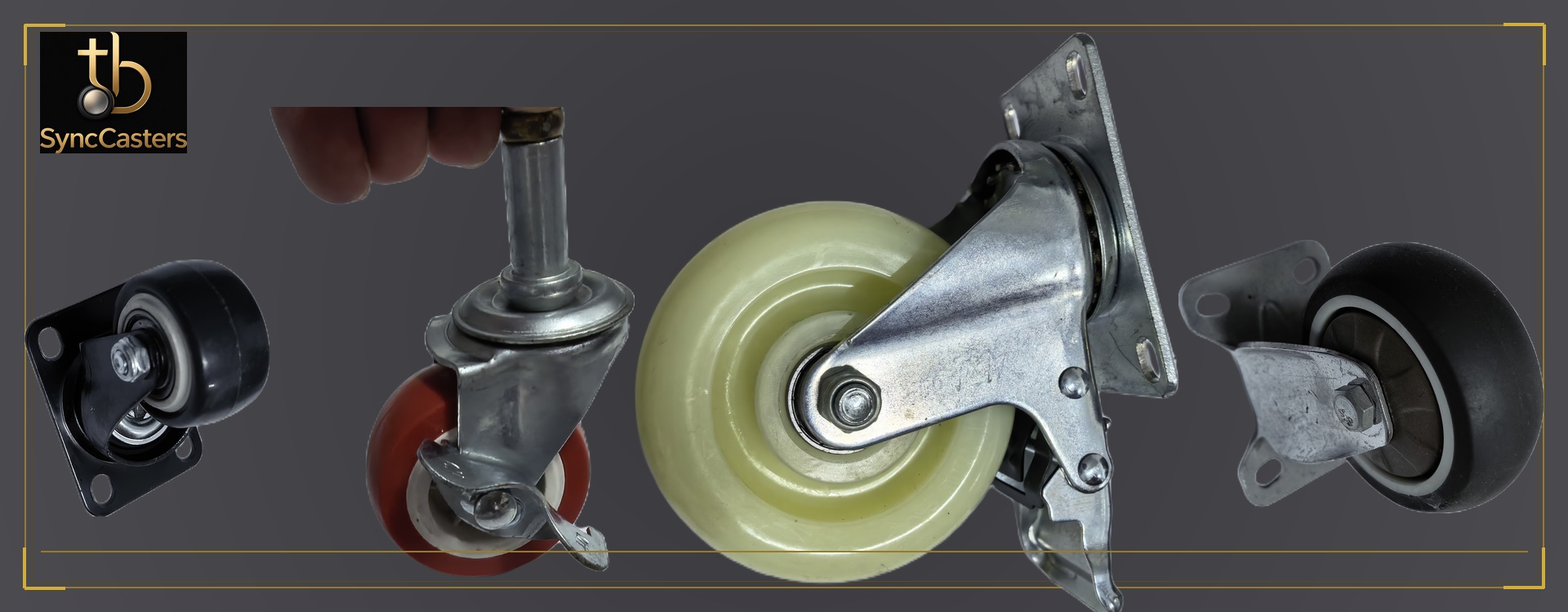
The Four Caster Series in the Catalog
The SyncCasters catalog organizes products by duty class, from light furniture casters to extra-heavy industrial wheels. Each series covers a range of loads, wheel materials and configurations so that buyers can quickly narrow to the right class before refining details. This chapter walks through what each of the four series covers and the kinds of applications they serve.
Light Duty Casters
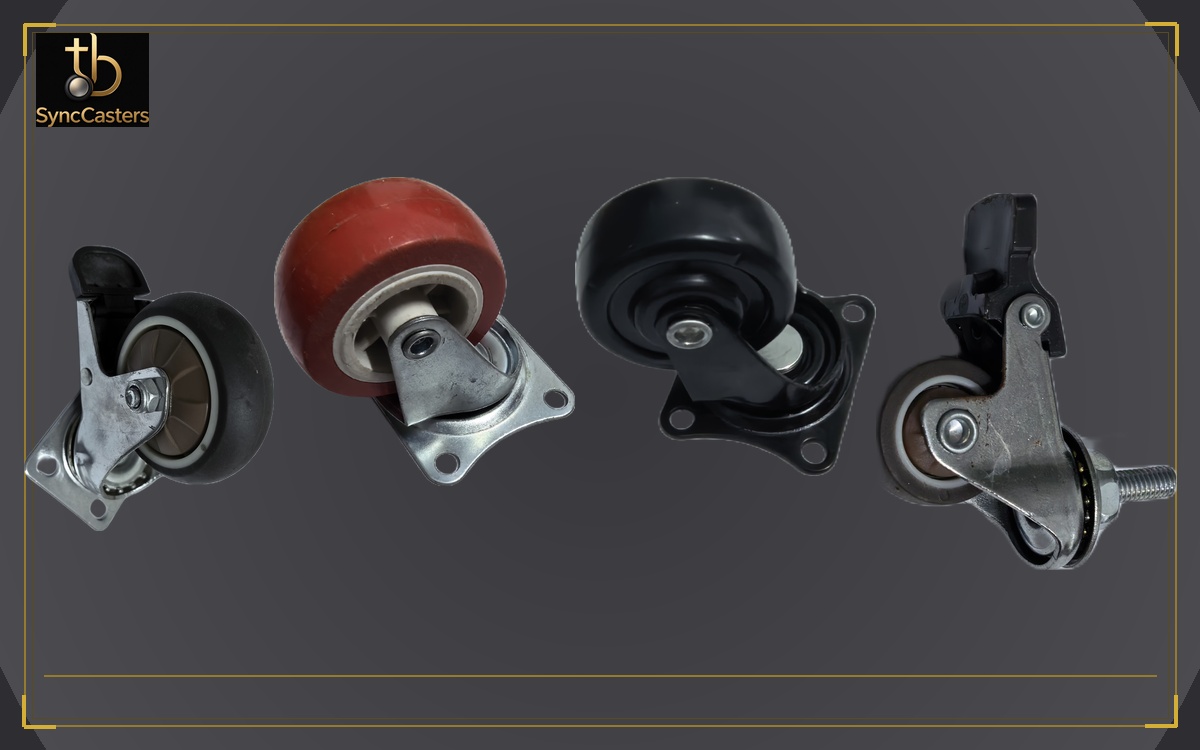
The light duty series covers casters for furniture, display stands, office equipment, racks and small carts where loads are modest and quiet movement matters. Wheel sizes in this class are typically smaller, often 2 to 4 inches, with wheel materials chosen for smooth rolling on finished indoor floors. TPR and soft polyurethane wheels are common here because they protect wood, tile and epoxy surfaces. Brakes, where used, are usually side-lock or small total-lock pedals that suit lighter equipment. Buyers in retail, hospitality and office furniture manufacturing will find most of their standard components in this series. The light duty range is also where customization for appearance is most common, including colored treads and decorative bracket finishes. For these products, floor protection and noise are often more important than absolute load capacity.
Medium Duty Casters
The medium duty series is the workhorse class for carts, trolleys, racks, light industrial equipment and commercial furniture that carries meaningful weight. Wheel sizes expand to 4 to 5 inches, and wheel materials broaden to include steel-core polypropylene, TPR and polyurethane. Brackets in this class are stamped steel with ball-bearing swivels, designed for regular daily movement on concrete and indoor floors. Medium duty casters balance load capacity, economy and maneuverability, which is why they appear on picking trolleys, service carts, workstation cabinets and material racks. This series is also the most popular starting point for OEM projects, because it offers enough flexibility in brakes, mountings and wheel materials to match many equipment designs without requiring heavy-duty pricing. Buyers sourcing general-purpose mobility for light industrial or commercial use usually find their specification in this class.
Heavy and Extra-Heavy Duty Casters
The heavy and extra-heavy series covers industrial carts, die and mold transport, AGV platforms, dock equipment and machinery where loads reach hundreds or thousands of kilograms. Wheel sizes move to 5 to 8 inches and above, with wheel materials including steel-core PU, nylon, cast iron and high-capacity polyurethane. Brackets are reinforced, often kingpinless, with thicker steel and welded constructions designed to absorb impact and repeated lateral loads. Total-lock brakes and heavy swivel locks are standard options. This series is where OEM engineering support matters most: load calculations, N-1 safety factors, floor compatibility and continuous-duty durability all require careful specification. Buyers in manufacturing, logistics and heavy equipment production will work closely with the supplier to match bracket, wheel and brake to the exact duty cycle. The extra-heavy range extends these capabilities to the most demanding mobile platforms and towed equipment.
How the Catalog Organizes Specification Choices
Beyond the four duty classes, the catalog organizes the choices that turn a series into a specific part number: wheel material, brake type, mounting style and customization notes. This chapter explains how these options are laid out so buyers can read a catalog entry quickly.
Wheel Material Options by Series
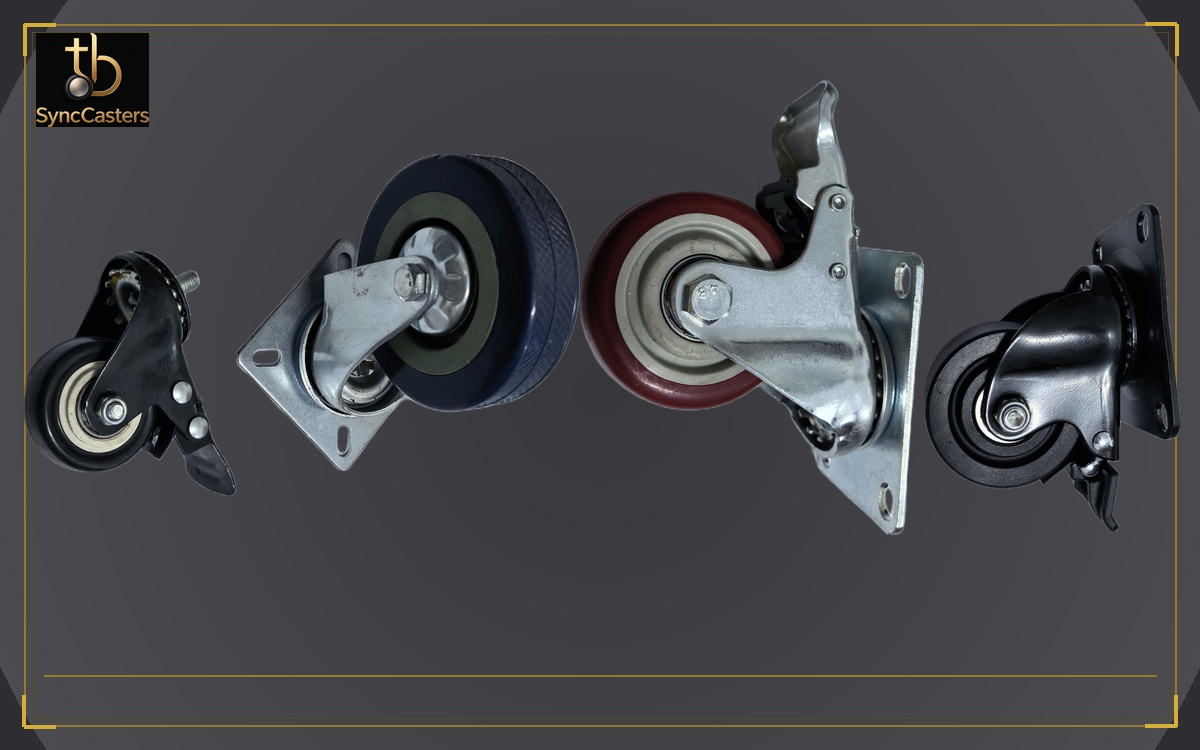
Each duty series lists the wheel materials available for that load class. Light duty casters favor TPR and soft PU for floor protection and quietness. Medium duty expands to steel-core PP and standard PU for a balance of economy and capacity. Heavy and extra-heavy duty offers high-capacity PU, nylon and cast iron where maximum load on smooth concrete is the priority. The catalog notes which materials suit finished floors versus rough concrete, and which tolerate oils, chemicals or washdown conditions. When reading a catalog entry, the wheel material column tells you not only what the wheel is made of but what floor and environment it expects. Choosing the wrong material for the floor is a common mistake that leads to wheel wear, noise or floor damage even when the load rating is correct. The catalog groups these options by series so that buyers can compare materials within a realistic load range.
Brakes, Mounting and Configuration
For each model, the catalog lists available brake types: side-lock, total-lock, directional locks and heavy-duty brake pedals. It also lists mounting options: top plate, threaded stem, expanding stem or other custom fittings. The configuration notes explain which corners should use swivel versus rigid casters, and where brakes are recommended. Reading these columns together turns a part number into a complete specification. For example, a medium duty trolley typically uses two swivel casters with total-lock brakes at the front and two rigid casters at the rear for tracking. The catalog also records overall mounting height, which is critical when the equipment must fit under a work surface or align with a conveyor. Buyers should check these configuration details against their equipment frame before ordering, rather than assuming a standard arrangement.
OEM and Customization Notes
The catalog flags which models support OEM and ODM customization. Customization may include wheel durometer, bracket finish, brake configuration, mounting dimensions, branding and private-label packaging. For buyers developing their own equipment, the catalog is a starting point rather than a final part list: standard models can be modified, and fully custom brackets can be engineered where no standard series fits. The customization notes indicate which models have the most flexibility and which are fixed catalog items. Buyers should treat the catalog as a menu: identify the series that matches the load, then work with the supplier to refine the details. A standard caster off the catalog often works for replacement orders, but new equipment usually benefits from a conversation about wheel material, brake type and mounting. The catalog is designed to support that conversation, not to replace it.








