
How Heavy Duty Caster Load Ratings Are Established
Heavy duty casters carry loads that can injure people or damage equipment if they fail. The load rating on a heavy duty caster catalog is therefore not a marketing number; it is the output of a defined testing and calculation process. This chapter explains the difference between static and dynamic ratings, the safety factors applied, and how impact loading changes the picture.
Static vs Dynamic Load Capacity
A static load rating describes the vertical weight a caster can support while stationary without permanent deformation. A dynamic load rating describes the weight it can safely carry while rolling, turning and absorbing floor irregularities. For heavy duty applications, the dynamic rating is the number that matters most, because equipment rarely stays perfectly still. A bracket that looks strong under a static load may flex and crack under repeated side loads during turns. When comparing heavy duty casters, always check whether the quoted capacity is static or dynamic, and whether the dynamic rating was measured on a floor that resembles yours. A caster rated for 1,000 kg static may carry considerably less in continuous rolling service. Buyers who conflate the two numbers risk under-specifying equipment that will be pushed or towed across real factory floors.
Safety Factors and the N-1 Method
Catalog ratings are further refined by the N-1 calculation method used in service. Because no floor is perfectly flat, one of a caster set will periodically lift off the ground, leaving the remaining casters to carry the entire load. The required load per caster is therefore the total loaded weight divided by the number of casters minus one, then multiplied by a safety factor. For heavy duty indoor use on concrete, a factor of 1.25 is typical; for dock plates, 1.35; for towed equipment, 1.5; and for outdoor operation, 1.75. On platforms with eight or more casters, N-2 is used because multiple casters can lift simultaneously. This method is why two carts with the same total weight may need very different caster ratings depending on how many casters they use and where they operate. Heavy duty buyers should run this calculation before selecting a model from a catalog.
Impact and Shock Loading
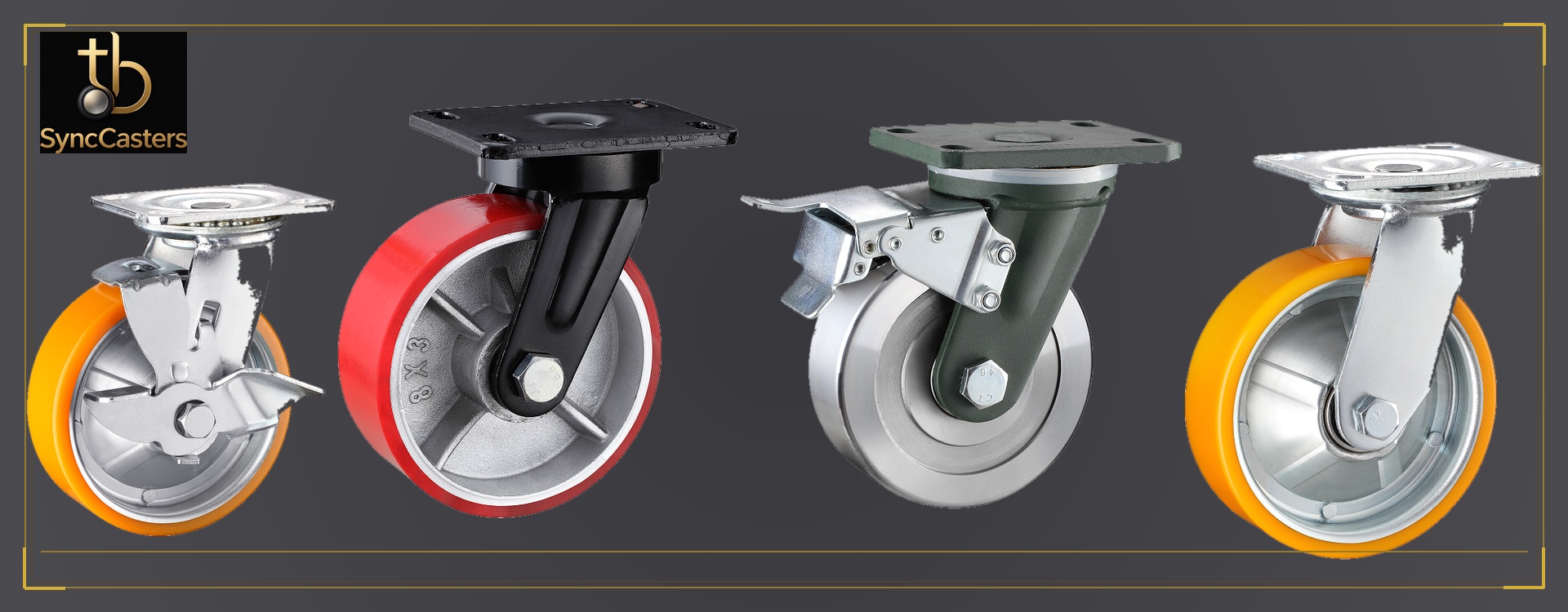
Dynamic ratings assume steady rolling, but real equipment encounters shocks: crossing dock plates, dropping onto a floor joint, driving over debris or being suddenly stopped. Impact loads can briefly exceed the static weight several times over, which is why heavy duty casters use reinforced brackets, thicker steel and often kingpinless swivel constructions. Kingpinless designs distribute impact forces across multiple raceways rather than concentrating them on a single bolt, which improves survival under shock. Wheel material also matters: resilient treads such as polyurethane absorb impact energy, while hard nylon or cast iron transmit it directly to the bracket. When the application includes repeated shocks, specifying a higher safety factor and an impact-resistant bracket is cheaper than replacing failed casters and the equipment they damaged. Heavy duty load testing should reflect these impact conditions, not only smooth-floor rolling.
Brake, Swivel and Durability Testing for Heavy Duty Duty
Load capacity is only one dimension of a heavy duty caster. Under extreme loads, brakes must hold, swivels must not develop play, and the whole assembly must survive years of continuous operation. This chapter covers the testing that validates these less obvious but critical properties.
Brake Performance Under Load
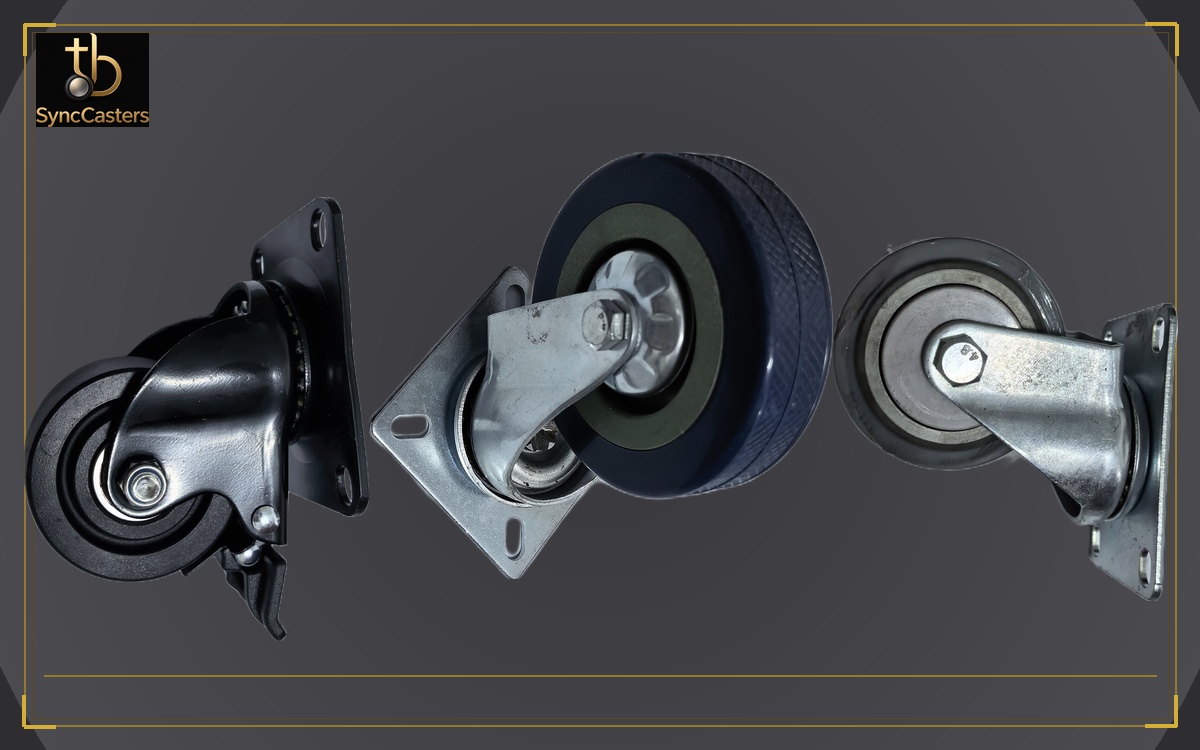
A brake on a heavy duty caster is a safety component. Brake testing applies the rated load, engages the brake and measures whether the wheel and swivel hold against a horizontal push or tow force. Total-lock brakes, which immobilize both wheel rotation and swivel, are tested for both functions. What separates a good brake from a marginal one is performance after repeated cycles: brake pedals can bend, pads can wear and adjustment can drift. Heavy duty buyers should ask whether brake ratings are initial values or values after a defined number of actuations. A brake that holds perfectly when new but slips after six months of daily use creates a serious hazard on a loaded cart. For equipment that parks on inclines or holds heavy fixtures during work, brake durability is as important as raw holding force. Request brake test data that includes cycling, not just a single engagement result.
Swivel Bearing and Kingpin Durability
The swivel joint is the part of a heavy duty caster that takes the most repeated lateral stress. Every time a cart turns, the swivel bearing carries an offset load, and over thousands of turns this can loosen a kingpin or pit a ball raceway. Kingpinless brackets, which use concentric raceways without a single central bolt, are preferred for heavy and extra-heavy duty because they distribute forces across a larger bearing surface. Durability testing runs the loaded caster through repeated swivel rotations and measures whether play develops. Buyers should ask what swivel bearing construction is used: a single ball ring, double ball ring or tapered roller. For continuous-duty equipment such as AGV platforms, the swivel must hold alignment over millions of rotations. A loose swivel makes a cart wander, increases rolling resistance and accelerates wheel wear. This is one of the most common failure points on under-specified heavy duty casters.
Test Conditions That Match Real Duty
The most credible load tests are those conducted under conditions that resemble the buyer's actual environment. That means test floors of realistic roughness, speeds matching operational use, and temperatures reflecting indoor or outdoor exposure. A caster tested in a climate-controlled lab on polished steel will look better than the same caster on a rough concrete dock. When evaluating heavy duty suppliers, ask how their standard tests are set up and whether they can replicate your duty conditions for a custom evaluation. For buyers in demanding sectors such as steel plants, foundries or ports, standard catalog tests may be optimistic. In these cases, a supplier willing to run a modified test or recommend a heavier-duty variant is demonstrating engineering judgment rather than just quoting a number. The goal of load testing is confidence, not a certificate on the wall; that confidence comes from conditions that mirror real work.








